
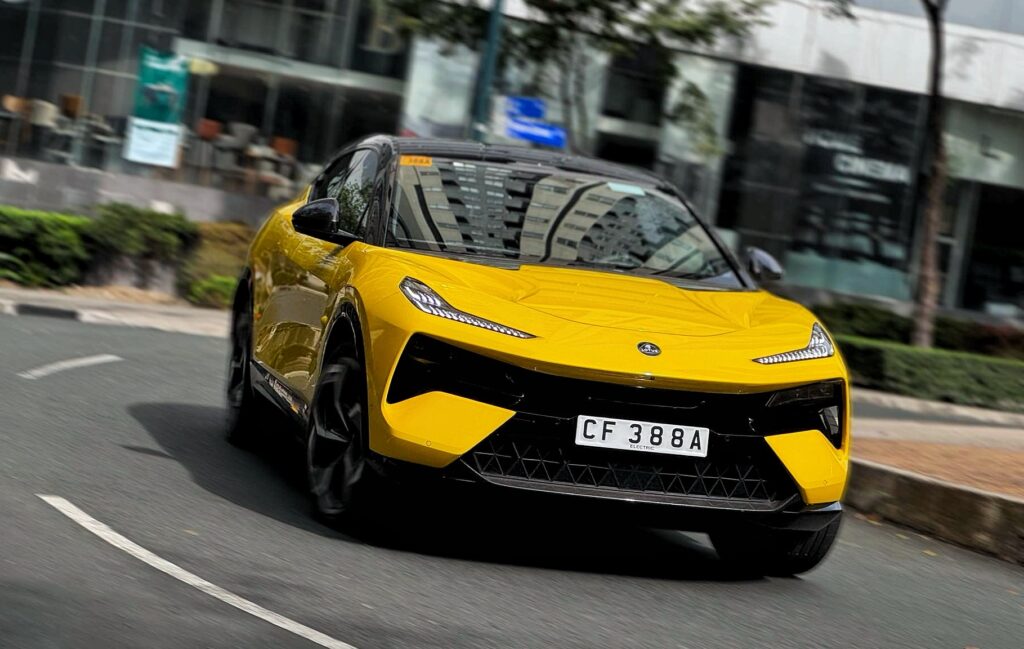

If the late Sir Colin Chapman CBE RDI were alive, the Eletre would never have made it past the proposal stage. The concept would have resolutely stayed on paper.
First is the body style: a sport-utility vehicle! From a man who loved his low-slung, wind-cleaving machines to a towering barndoor of a car?!
Next would be the weight. At just shy of 2,700 kg, the Eletre is a colossal, massive beast, far from the usual 2-door, 2-seat featherweight sports cars Lotus is known for. It’s easy to assume that the Eletre’s sheer weight and size make it a ponderous dunce opposite its stablemates.
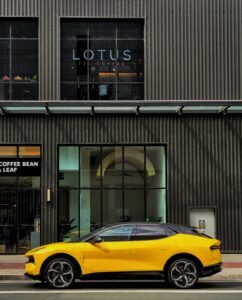
Third is perhaps its complicated powertrain. Gone is the traditional (and far simpler) banshee-wailing internal combustion engine with its high RPM histrionics. In place of its mechanical heart are two electric motors mounted on each axle with a combined output of 905 horsepower and 975 Newton-meters of torque. Providing the electric juice is an equally massive 112 kWh battery pack mounted low in the chassis’ floor to help lower the center of gravity. All controlled by an electronic brain with enough computing power to send you to the moon!
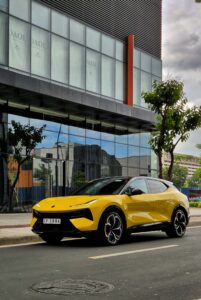
But, if Colin Chapman ever experienced the instantaneous torque, razor-sharp responsiveness, and physics-bending dynamics of the Lotus Eletre, he would no doubt be extremely (albeit begrudgingly) impressed, flabbergasted that such a tall, heavy vehicle moves swiftly and gracefully despite its massive proportions. Besides, the world demands raised crossovers and SUVs. Even Ferrari, Lamborghini, and Porsche, bastions of sports and supercars, have their own. It was natural for Lotus to follow suit, albeit with an electric version.
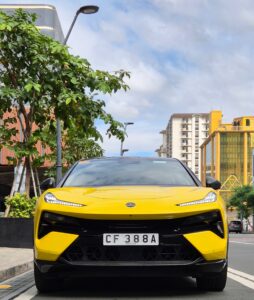
This is, after all, the 21st Century, where unbelievable things are now happening, such as British car brands being made in China.
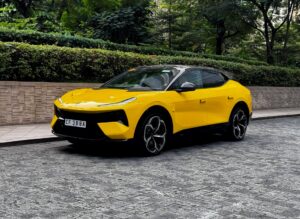
The Eletre is built atop Lotus’ Premium Architecture, which will underpin more C- and E-segment electric vehicles in the future, as well as the current Emeya electric GT twin (watch for a separate feature on this one too soon) and an all-electric sports car in the future. The platform is a multinational effort: conceived and designed in the UK, engineered in Germany, but surprisingly built in Wuhan, China, as Lotus’ first China-made vehicle. The China connection? Thank new majority owners Geely for that, with a 51% stake and providing the R&D budget as well as access to modern electronics and technology.
The other 49% is owned by Malaysian Etika Automotive. Hopefully, we can see more Lotus cars assembled in China and even Malaysia to help bring prices down and allow more Filipinos to enjoy Lotus ownership. Without foreign investment, Lotus would either be six feet under muddy British soil or still stuck building what are essentially kit cars in a literal leaking shed in storm-battered Old Blighty.
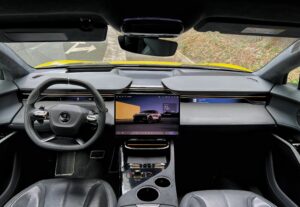
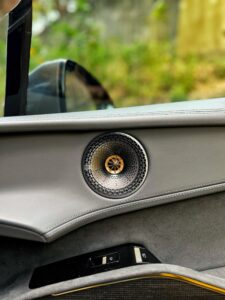
The Geely connection is also very much seen in the in-car electronics, particularly the multimedia system and its enormous 15.1-inch LCD screen in the middle. For audiophiles, you will be pleased to know that the Lotus has a full Dolby Atmos Surround Sound system developed in conjunction with KEF Audio, manufacturers of high-grade speakers and headphones. Like the Eletre, KEF is British in citizenship, but Chinese in origin.
So, how is the Eletre to drive? There is an ease in movement, a fluidity in motion one expects from a highly polished European marque product (despite being Chinese-made). It feels light and easy to drive normally. And if you don’t use (abuse?) the full 905 hp and 975 Newton-meters of torque, the Eletre offers up to a manufacturer-claimed 450 kilometers, although real-world independent tests say ~400 is realistic. Us? More like 350 km, as mashing the throttle to access all the power and torque is addictive despite occasions to do so being rare; the perplexed faces of motorists as we slingshot past all of a sudden, priceless.
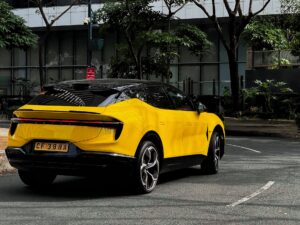
But to the uninitiated driver, or worse, a passenger, the sudden wave of orbit-altering torque literally feels like jumping into warp speed. The instantaneous surge of acceleration is overwhelming: your chest tightens, you run out of breath, you see stars and white lights streaking through your vision, and your brain tries to comprehend what is happening. This truly is light speed!
Thankfully, the massive 6-piston Brembo brakes (10-piston AP Racing Radi-Cal calipers are optional with carbon-ceramic rotors), the equally massive 412mm front and 397mm rear steel rotors, and regenerative braking provide enough stopping power to arrest the 2.7-ton behemoth. But, behind the optional 23-inch wheels, they have a tendency to look rather inadequate.
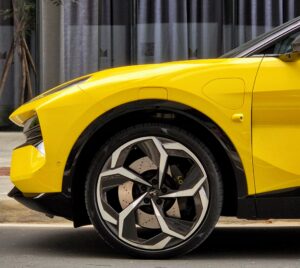
Flat-out, thanks to Lotus’ suspension wizardry, it turns and grips like a champ, like a hippo on ballerina flats. On winding roads, the Eletre R rotates its weight well through its four wheels, maintaining a balancing act of grip, progression, and tactile feedback, endowing the driver with confidence to hustle through switchbacks and chicanes alike. At least given our talents (or lack thereof), nothing we threw at the Eletre seemed to faze it. On the highway, the impressive NVH isolation keeps you cocooned from the outside world. It is yawn-inducing at 80-100 km/h because it’s so planted, so refined, and so smooth. It begs to be driven at 140-160 km/h while cruising.
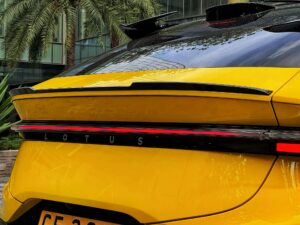
Capable, competent, and confident. Despite the Eletre’s gargantuan girth and heft, the Eletre still demonstrates the Lotus attributes of grace, agility, responsiveness, and speed — just using modern tricks adapted from the 21st century.