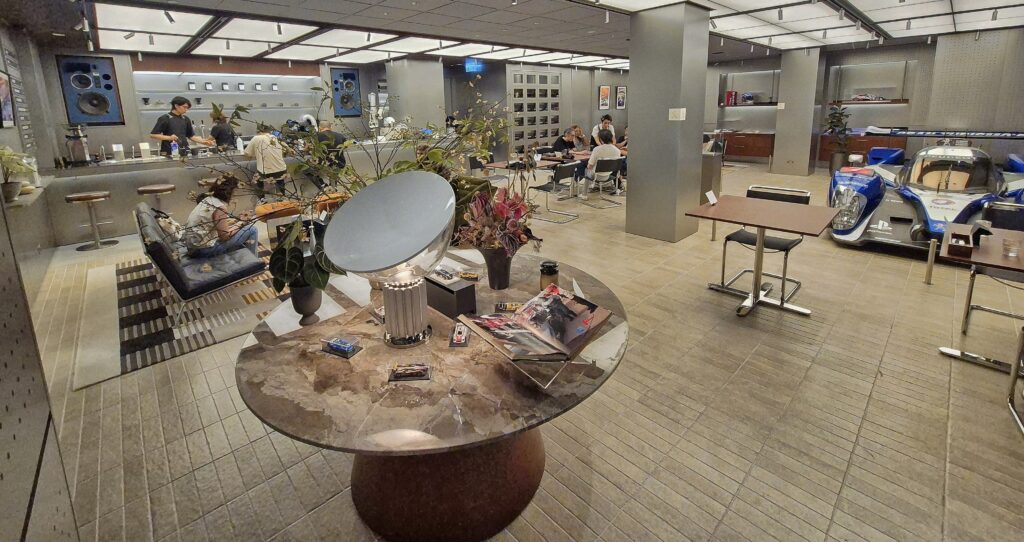

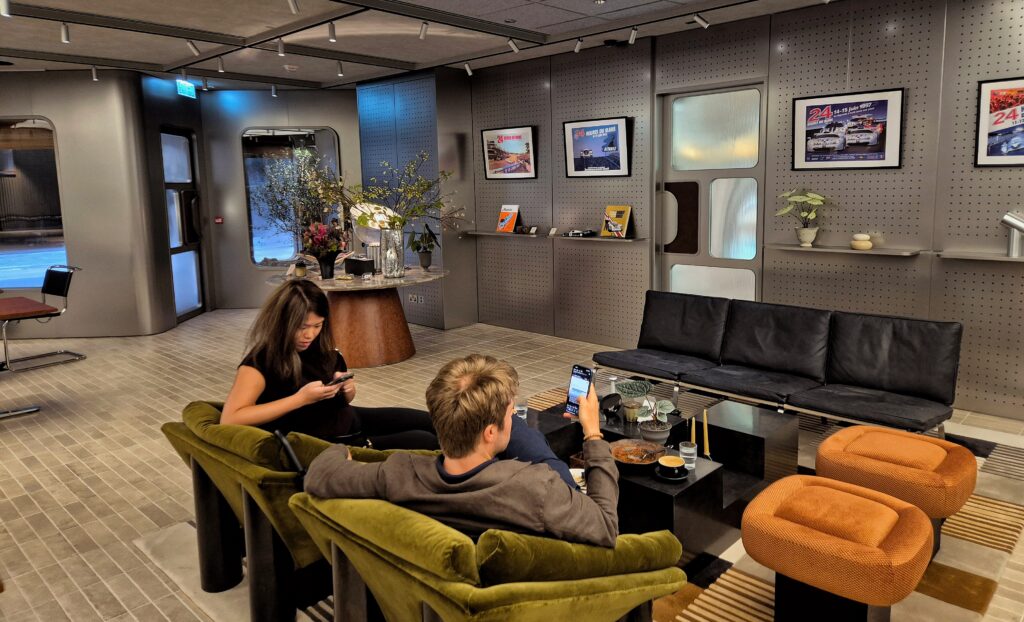
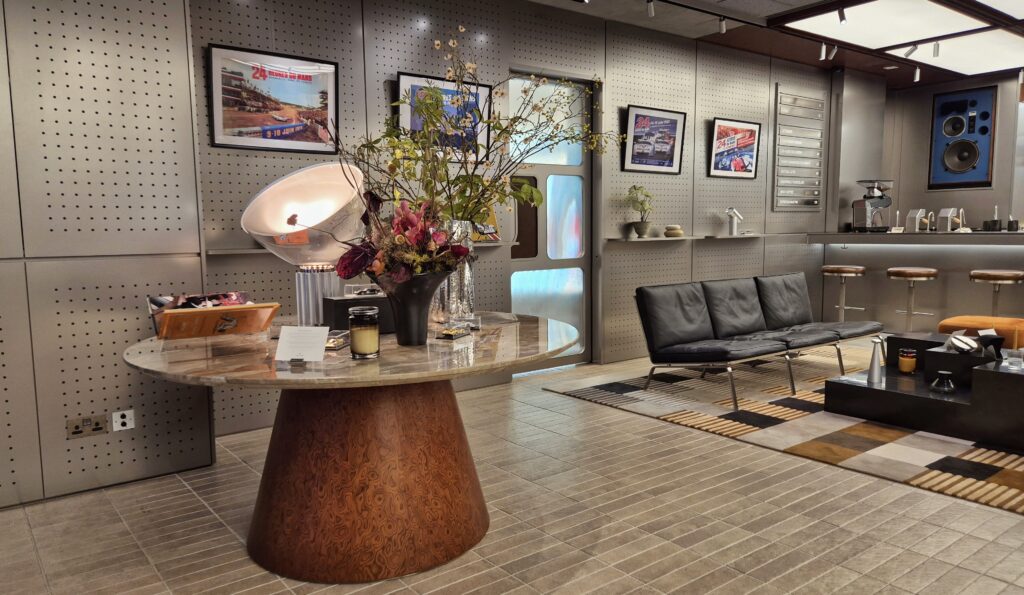
During my recent trip to Hong Kong, I stumbled upon Cafe Macchina, a stylish café in Wan Chai that immediately caught my attention for a very obvious reason: it wasn’t just a place for coffee.
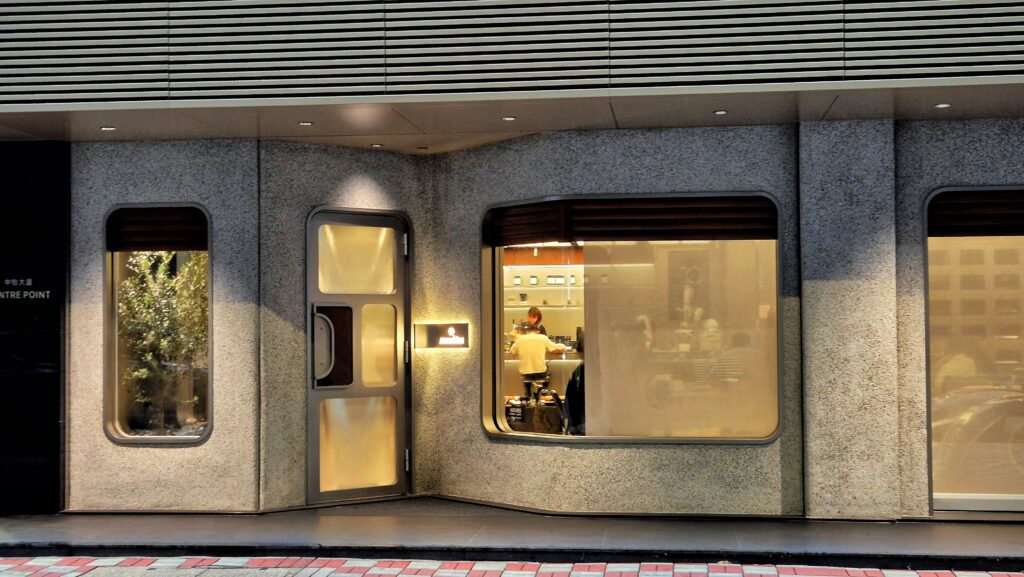
It felt like someone had taken a contemporary café, mixed in an automotive gallery, added a healthy dose of motorsport culture and somehow made the combination work.
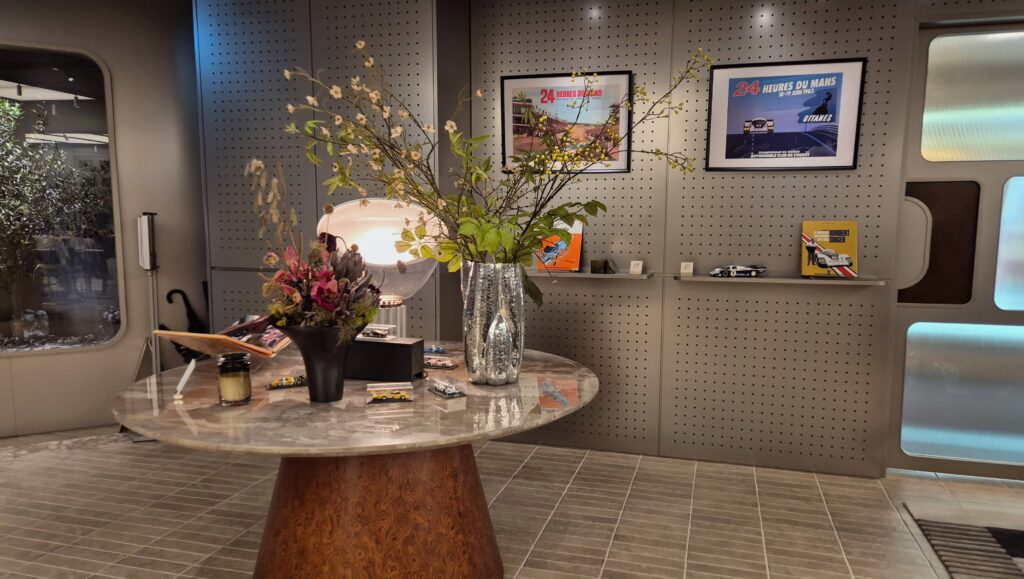
Located along Gloucester Road, Cafe Macchina has a distinctly curated atmosphere. Rather than simply throwing automotive memorabilia around the room, the displays feel considered and intentional. It has the feel of a space designed for people who appreciate cars as objects of art, engineering and culture.
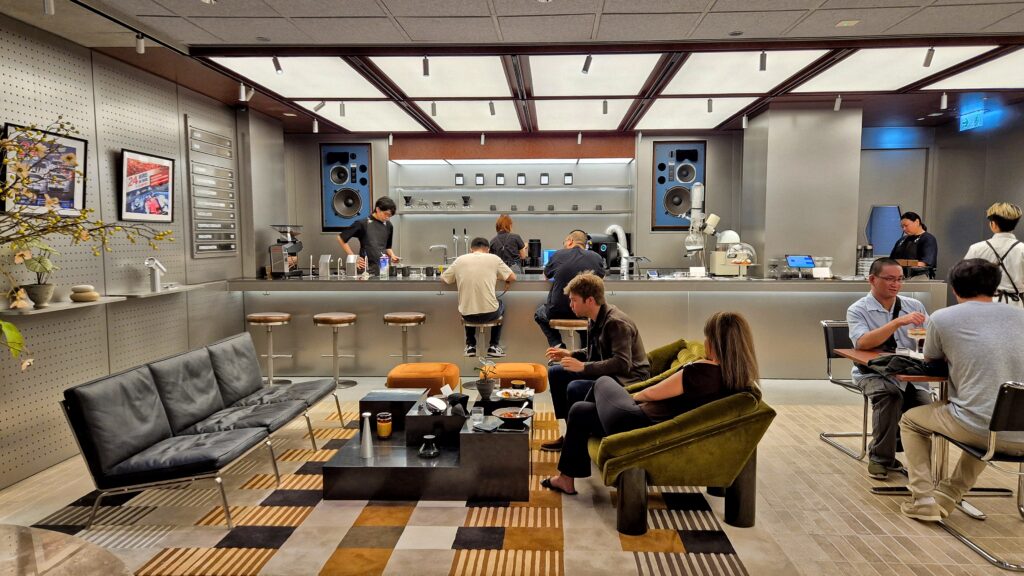
And for someone who spends an unhealthy amount of time looking at cars, it was difficult not to stop and stare.
The Car That Stole the Show
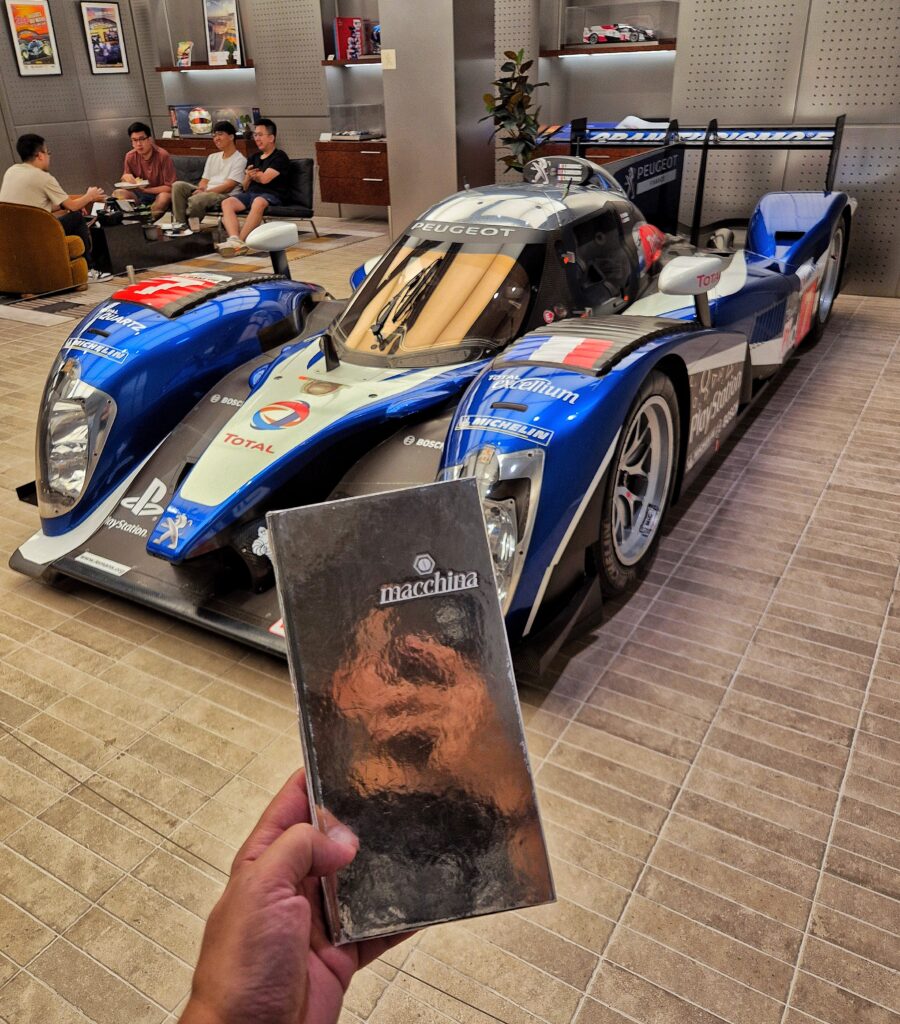
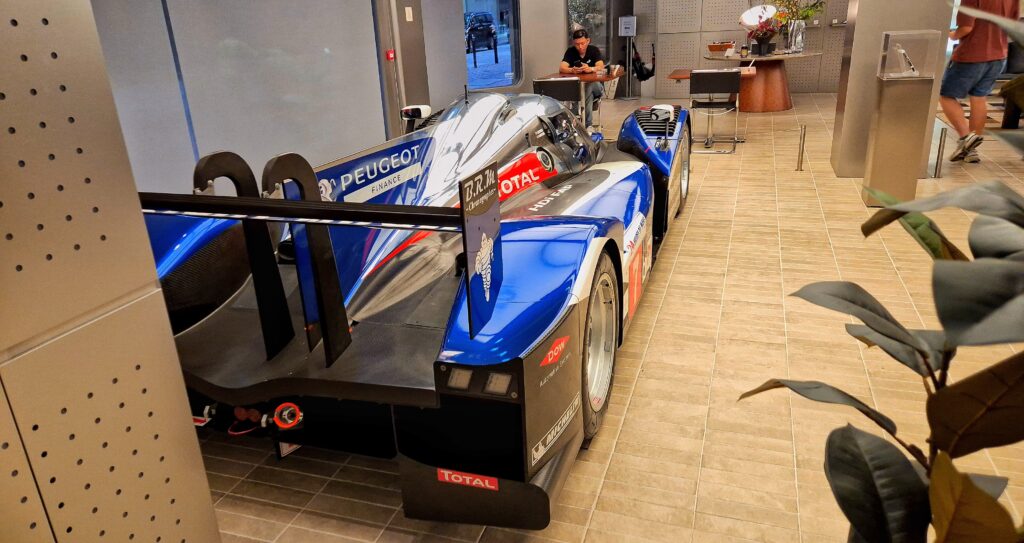
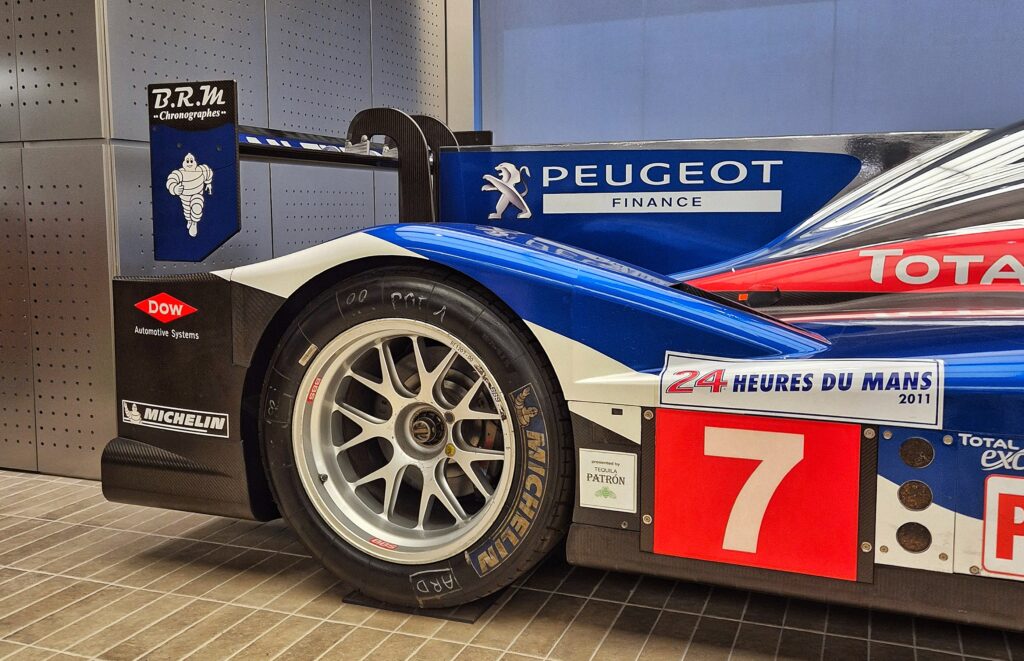
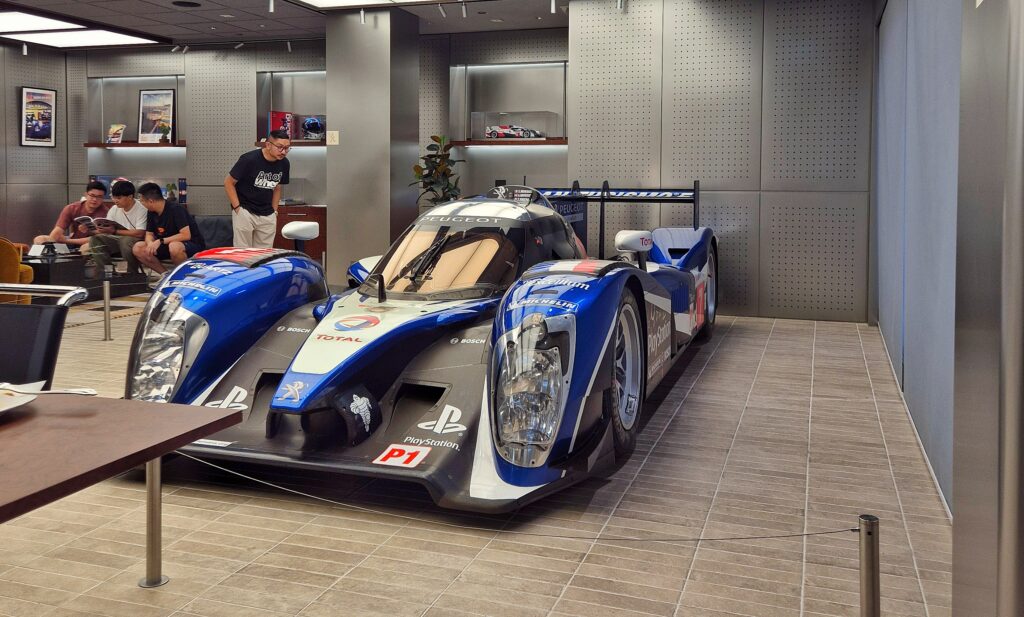
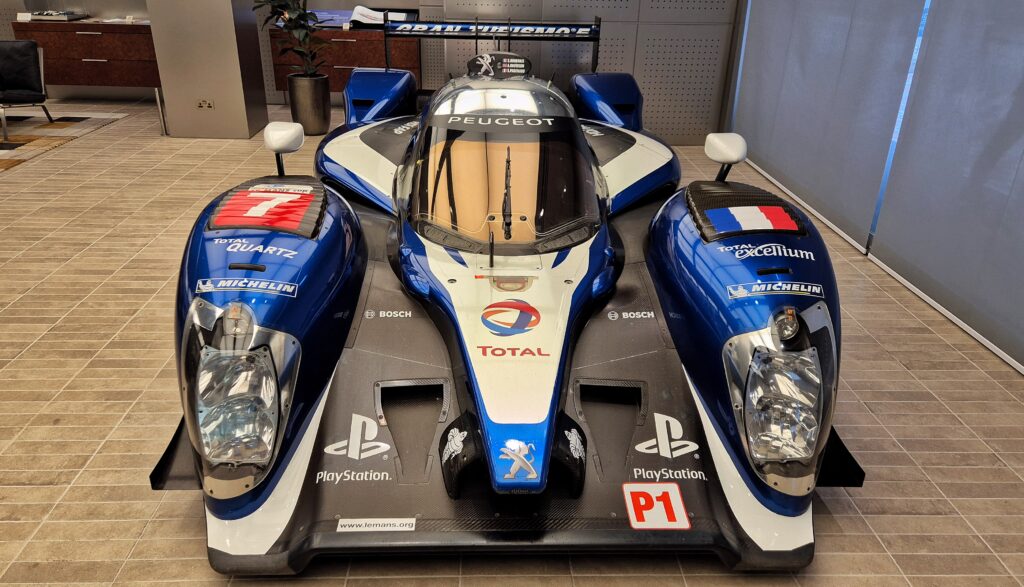
During my visit, the car on display was a Peugeot 908 HDi FAP. If that name immediately means something to you, chances are you grew up playing racing games.
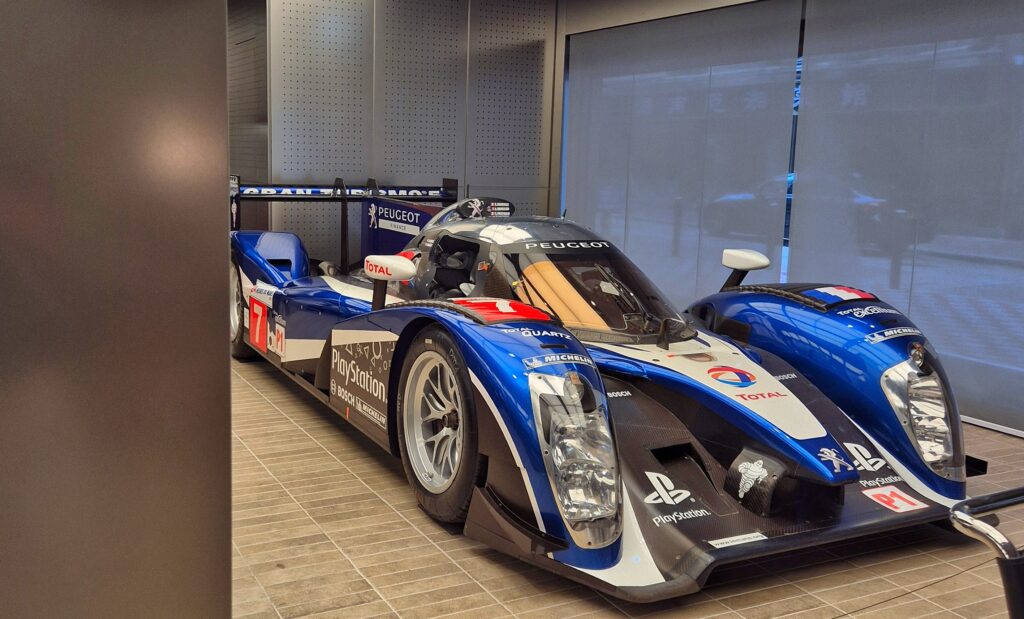
The 908 was Peugeot’s LMP1 prototype developed to take on Audi at the 24 Hours of Le Mans during the great diesel-prototype era of the late 2000s. It was powered by a twin-turbocharged 5.5-liter V12 diesel—an almost absurd combination when you consider how exotic the rest of the car looked. The “FAP” in its name referred to its particulate filter.
The 908 eventually delivered Peugeot a famous 1-2 victory at Le Mans in 2009, with David Brabham, Marc Gené and Alexander Wurz taking the overall win.
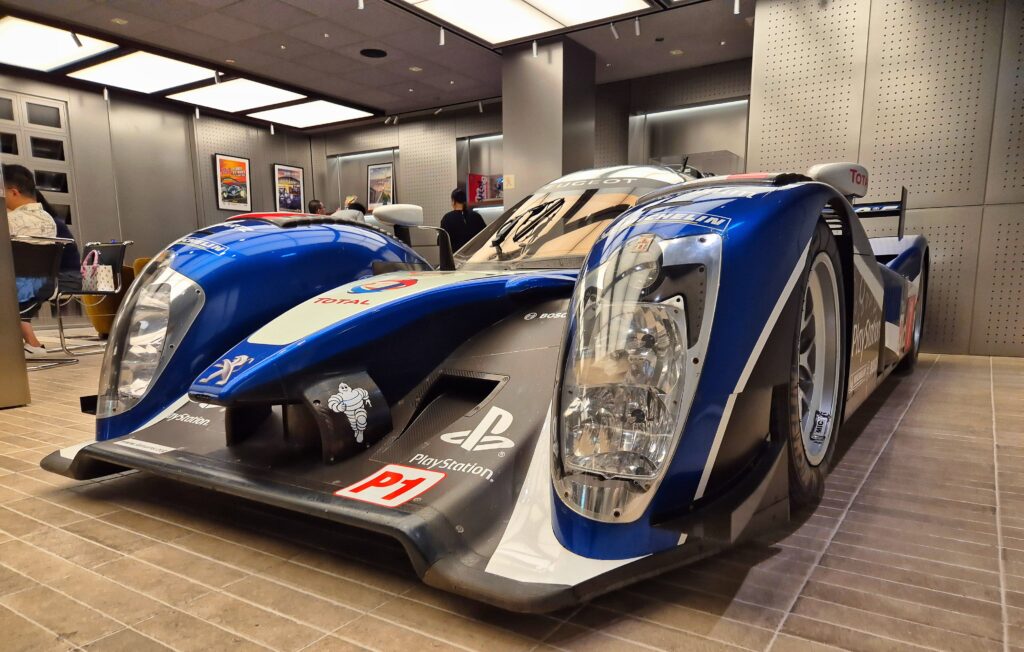
Seeing one sitting inside a café in Hong Kong was therefore quite the surprise. But there was another layer to the experience for me.
A Gran Turismo Childhood Memory
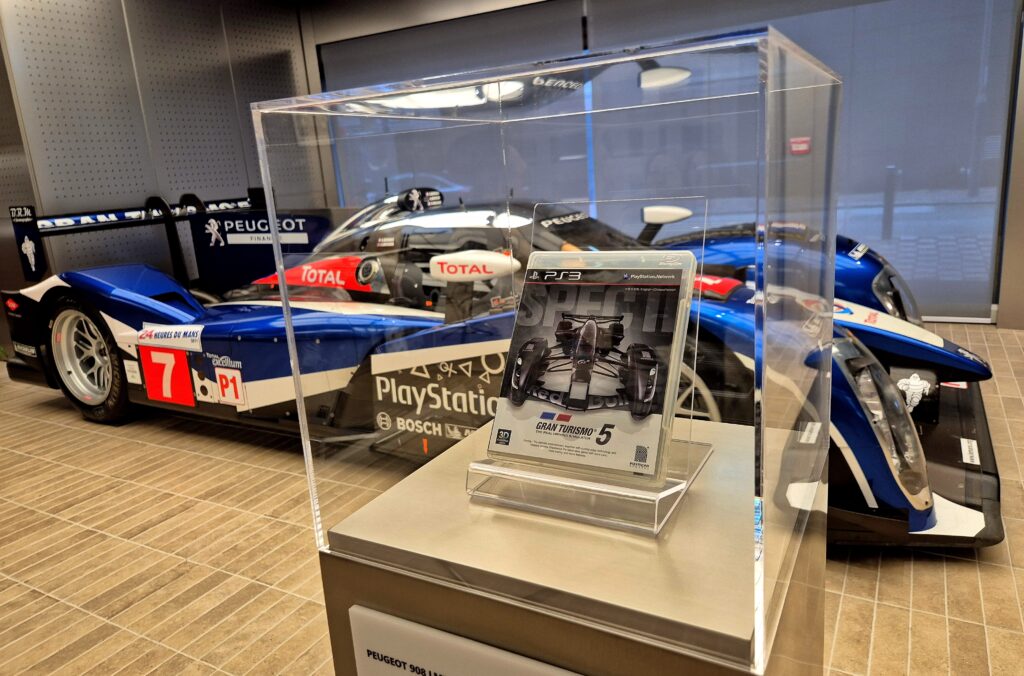
The Peugeot 908 HDi FAP is one of those cars that exists in two worlds: the real world of endurance racing and the virtual world of PlayStation.
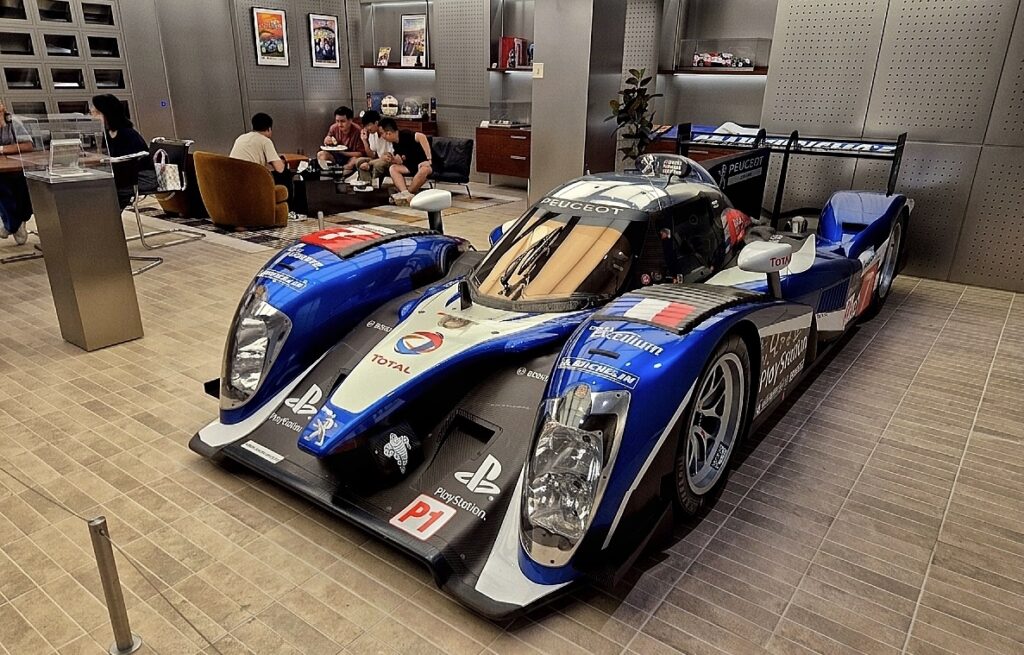
For many enthusiasts, myself included, the 908 became familiar through Gran Turismo. The car appeared in Gran Turismo 5, 6, Sport and 7, becoming part of the digital garage of an entire generation of racing-game players.
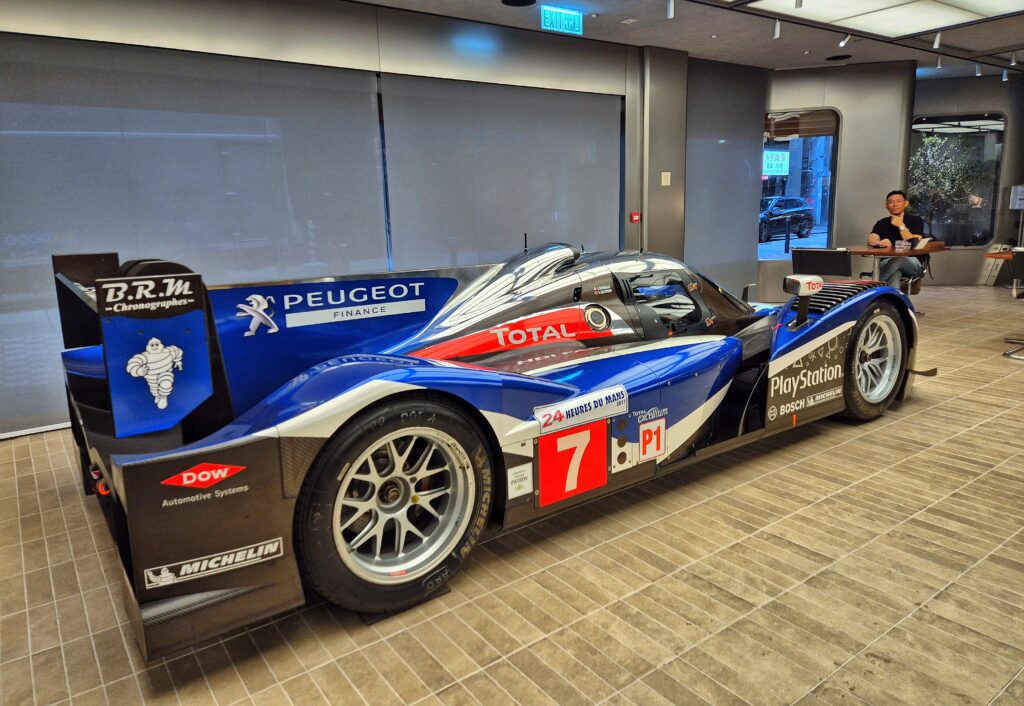
I remember how exotic these cars felt in the game. They were the machines you saved credits for, the cars you brought out when you wanted to obliterate a field, particularly around the long straights and demanding corners of Circuit de la Sarthe.
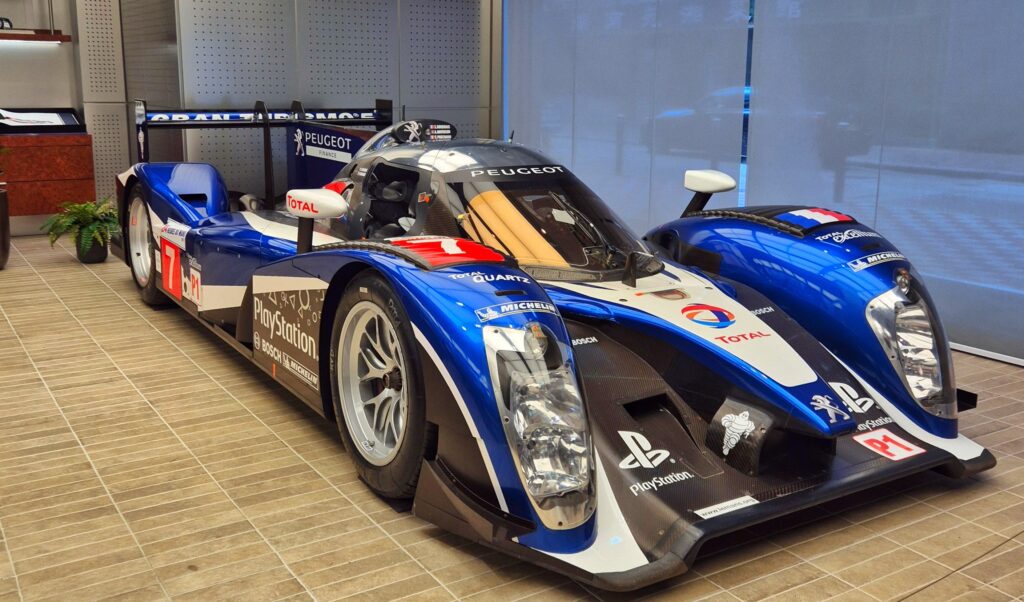
So standing a few feet away from the real thing, rather than staring at it on a PlayStation screen, gave the experience a completely different perspective.
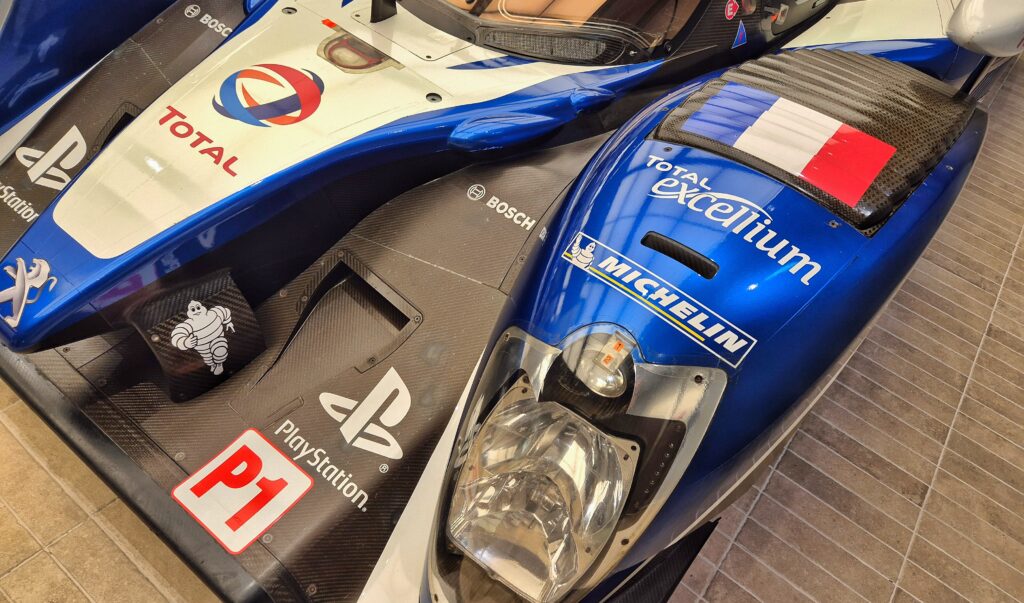
The enormous bodywork, impossibly low roofline and complicated aerodynamic surfaces suddenly make more sense when you’re standing beside them.
More Than Just a Car Display
What I particularly liked about Cafe Macchina was that the automotive element didn’t overwhelm the café. Everything felt curated.
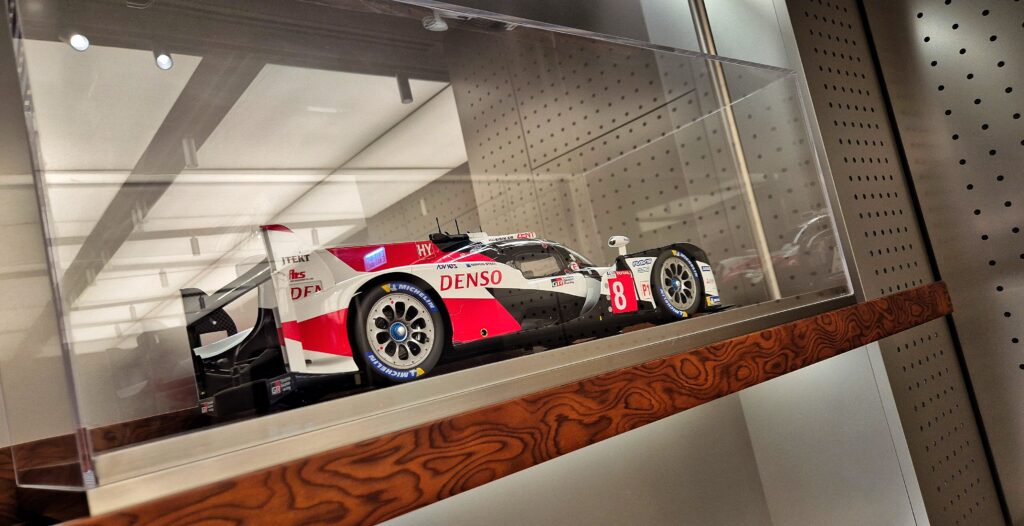
There are plenty of places around the world that put a sports car beside a coffee machine and call themselves a car café. Cafe Macchina feels more deliberate than that.
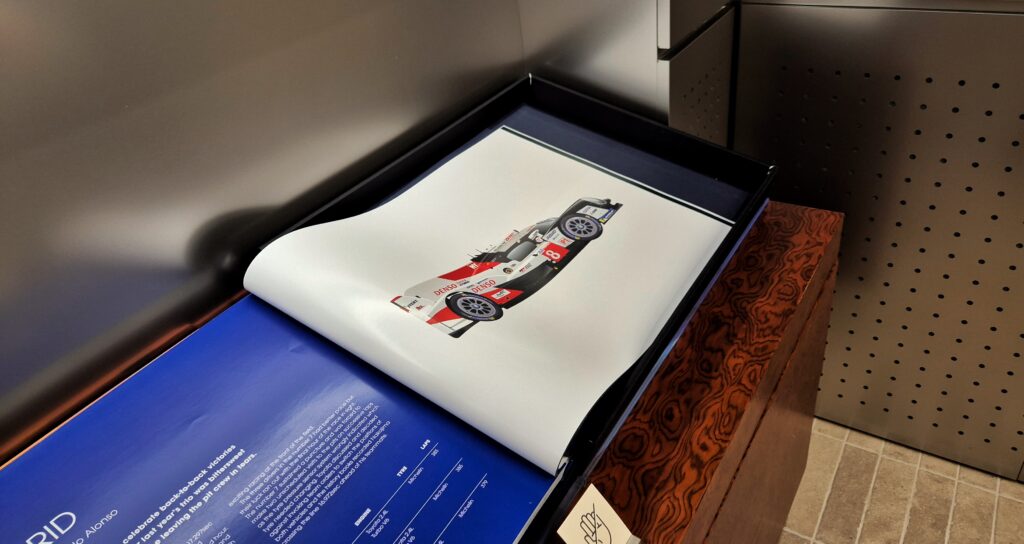
It understands that people who love cars don’t necessarily want to sit inside a garage. Sometimes they want a beautiful space, a good cup of coffee, something satisfying to eat and a very special car sitting nearby.
Coffee, Food and a Proper Pit Stop
Of course, the cars were what initially got my attention, but the café still has to work as a café.
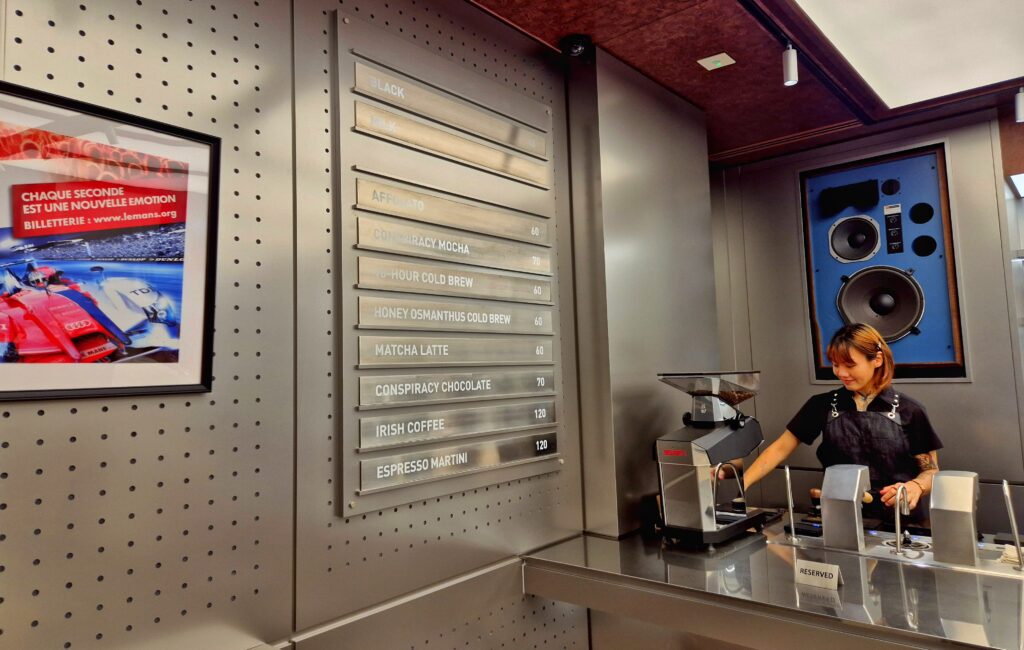
Thankfully, it does. The coffee was good, with enough attention paid to the drinks that it doesn’t feel like an afterthought to the automotive experience. Cafe Macchina has developed its own coffee program and even uses a rotary evaporator as part of its milk-extraction process for certain drinks—an unusually technical approach that fits perfectly with the philosophy of the place.
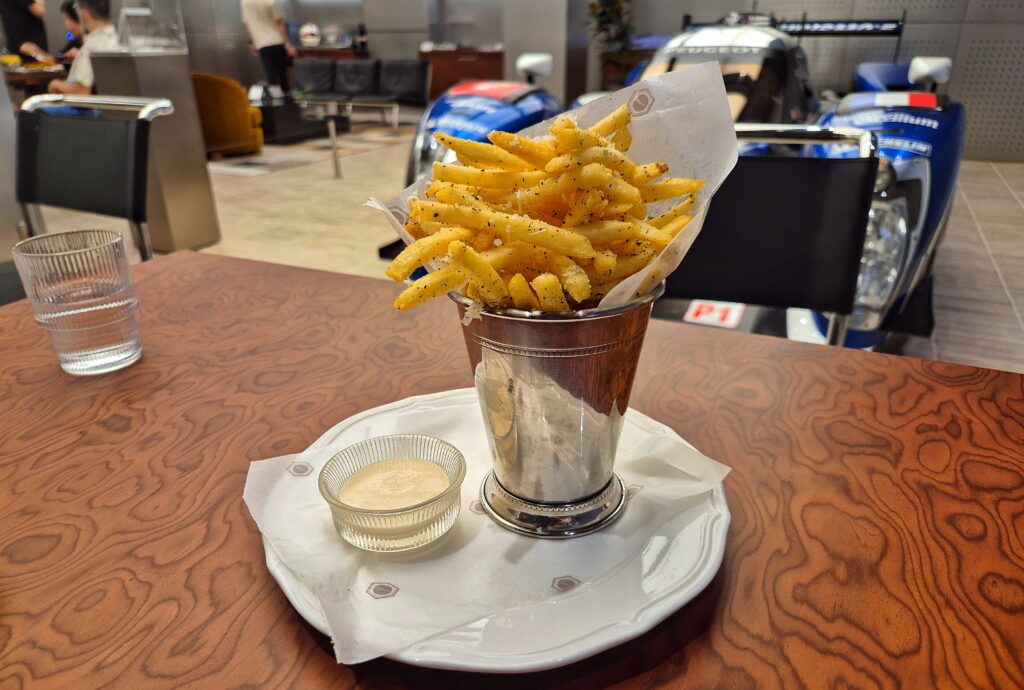
The food was equally satisfying. After walking around Hong Kong, sightseeing and doing the usual tourist routine, it was nice to sit down somewhere that felt relaxed without feeling ordinary. It was the kind of stop where you could actually slow down, have a meal, enjoy your coffee and take in the details around you.
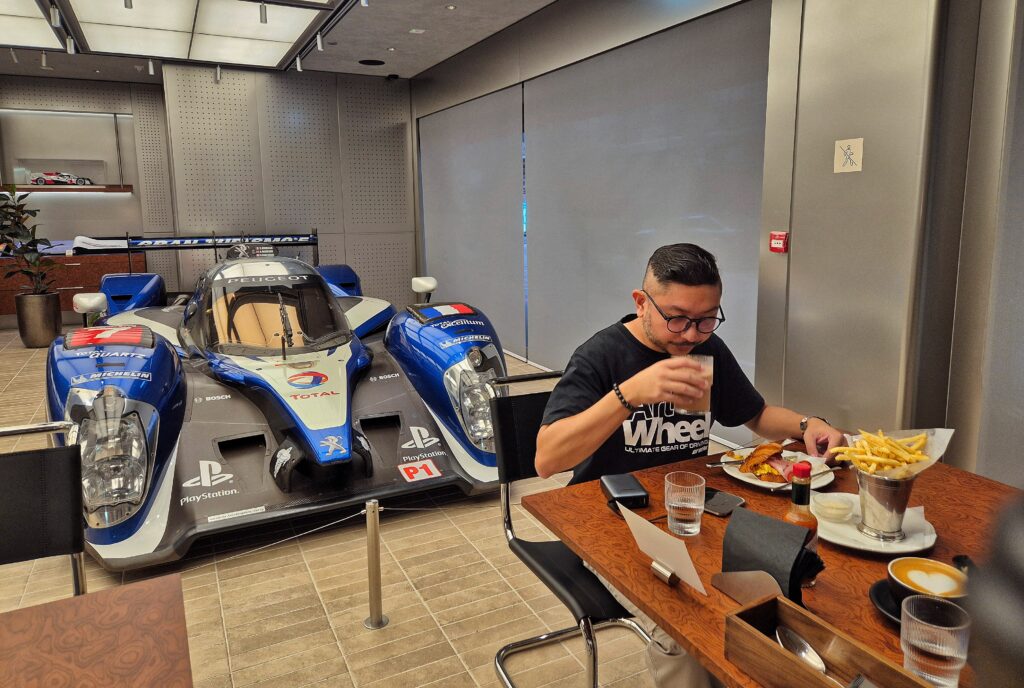
Essentially, it was a pit stop — without the pit crew shouting at me to get back on track.
The Display Doesn’t Stay the Same
One of the more interesting things about Cafe Macchina is that the automotive display isn’t necessarily permanent. The featured car changes from time to time, giving the café another reason to revisit.
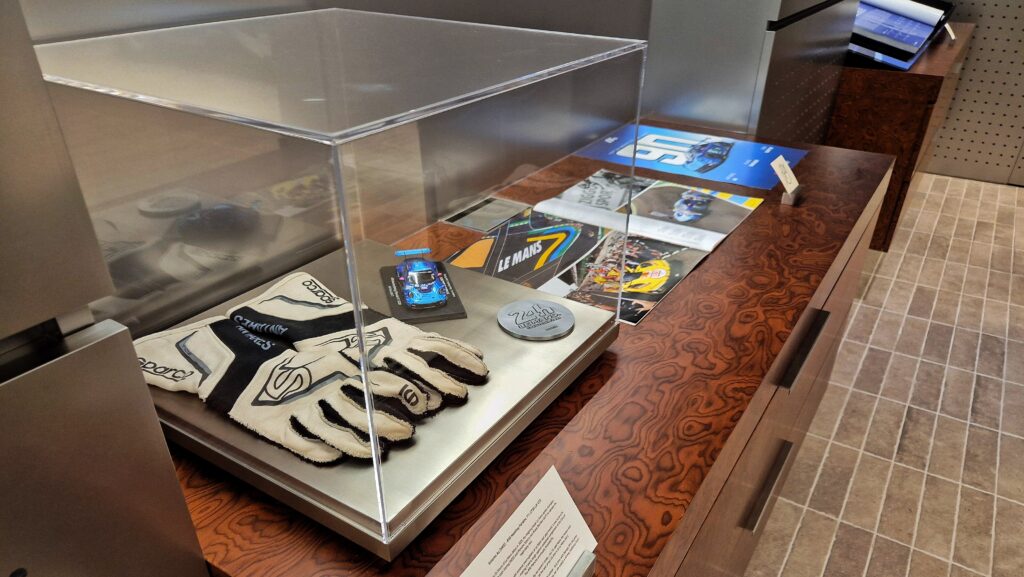
And that makes the place particularly interesting for enthusiasts. You might walk in expecting one machine and discover something completely different.
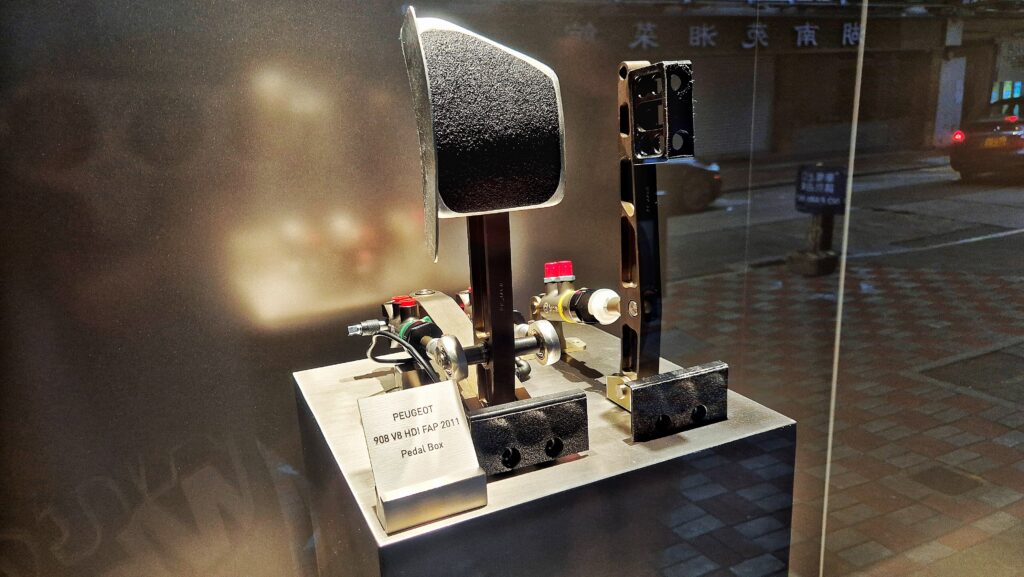
As of writing, the featured attraction has reportedly moved into even more legendary territory, with a McLaren F1-era car associated with Ayrton Senna now on display. For motorsport fans, that’s a completely different level of automotive history.
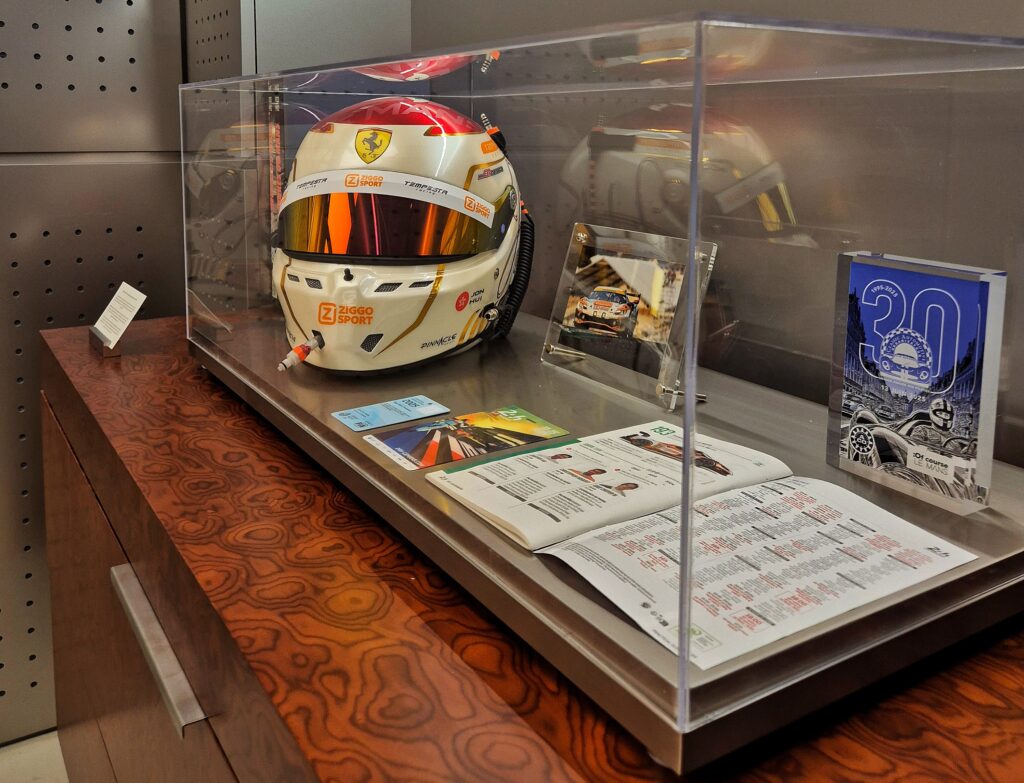
Escape the Usual Tourist Route
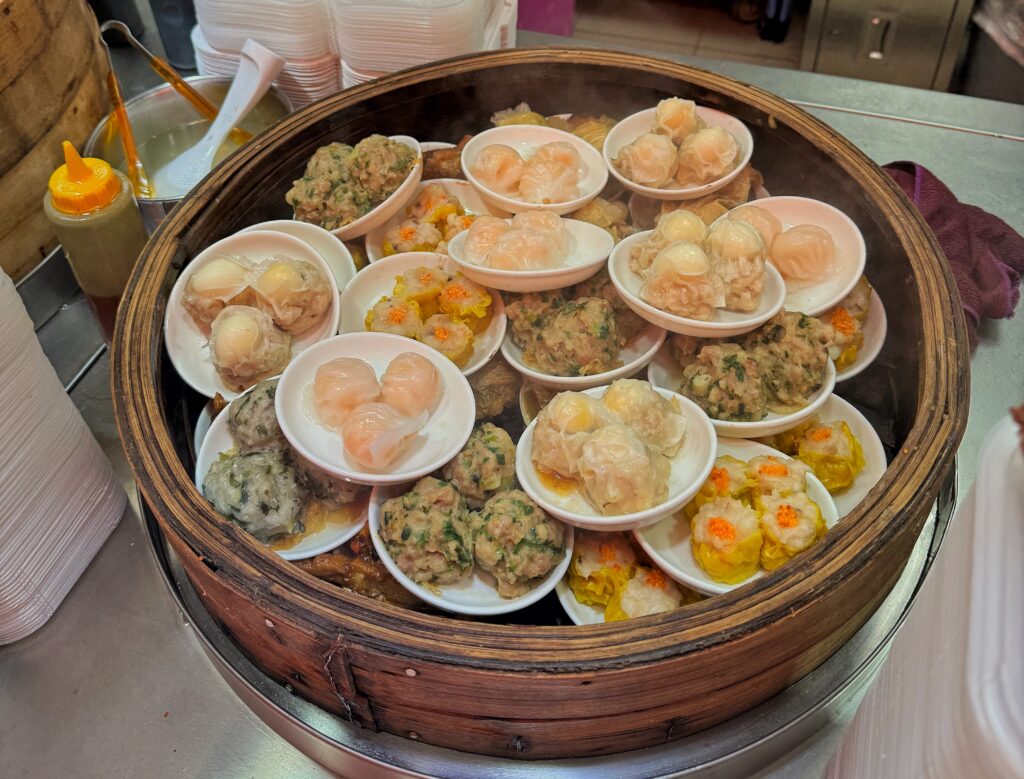
Hong Kong is one of those cities where it is easy to follow the same checklist: Victoria Harbour, shopping, dim sum, markets, skyscrapers and the usual tourist attractions. There’s absolutely nothing wrong with any of that.
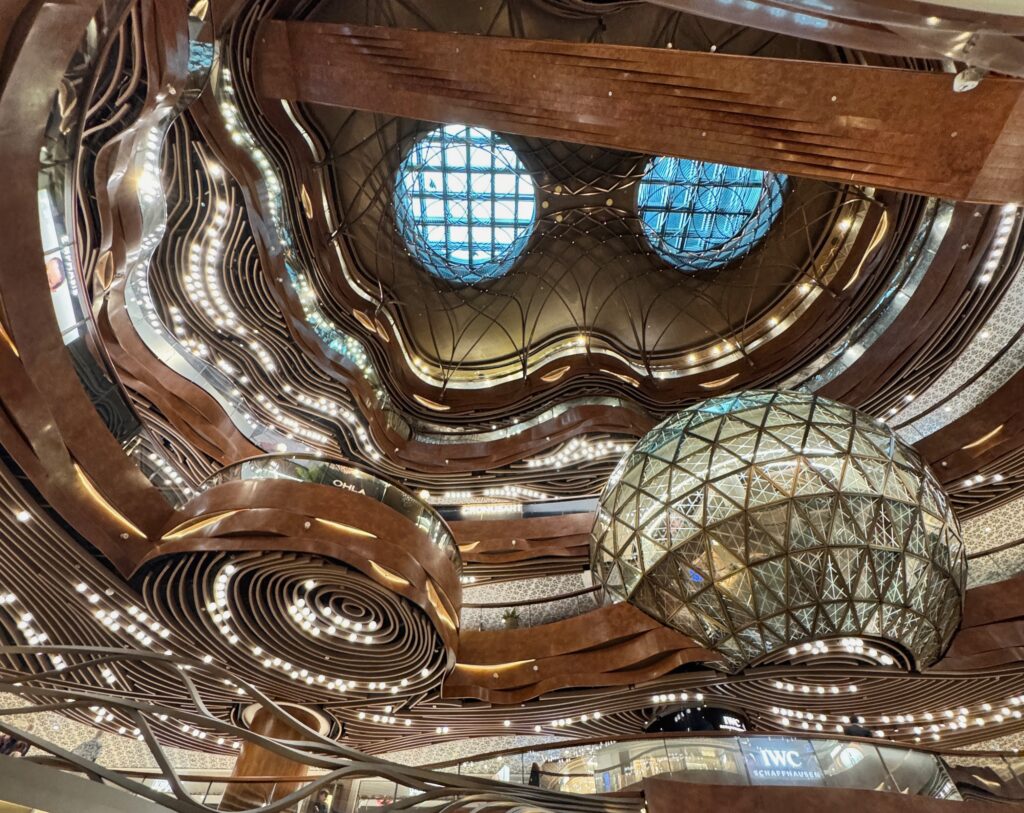
But Cafe Macchina offered something different. It was a refreshing pit stop from the usual Hong Kong tourist thingies—a place where my interest in cars naturally fitted into the environment rather than something I had to seek out separately.
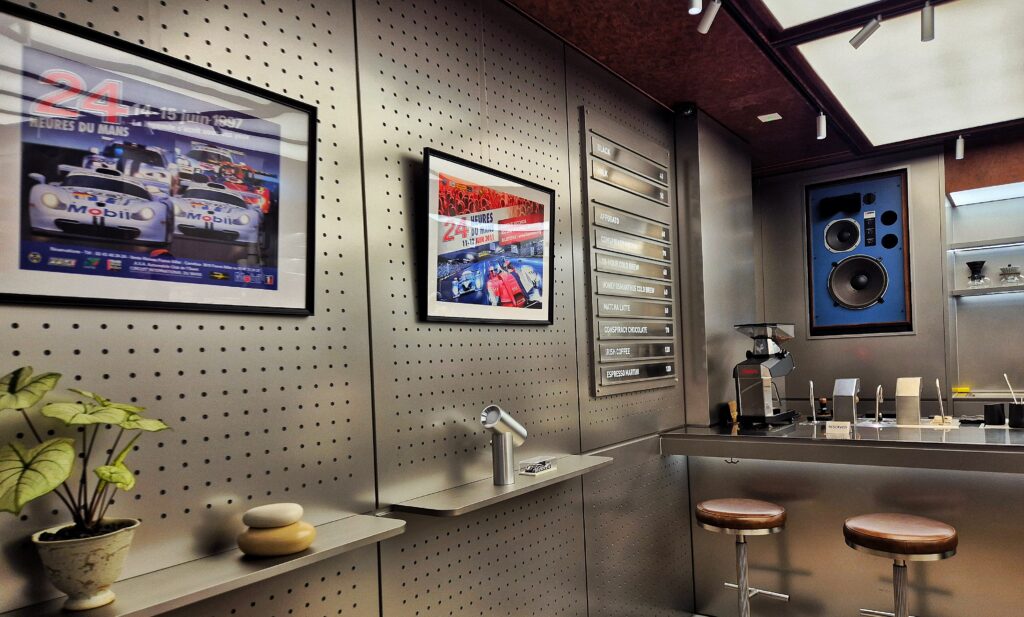
I went in looking for coffee and ended up spending considerably more time looking at a Peugeot 908, thinking about Le Mans, remembering Gran Turismo and appreciating the strange journey from a PlayStation screen to seeing one of these machines sitting in front of me in Hong Kong.
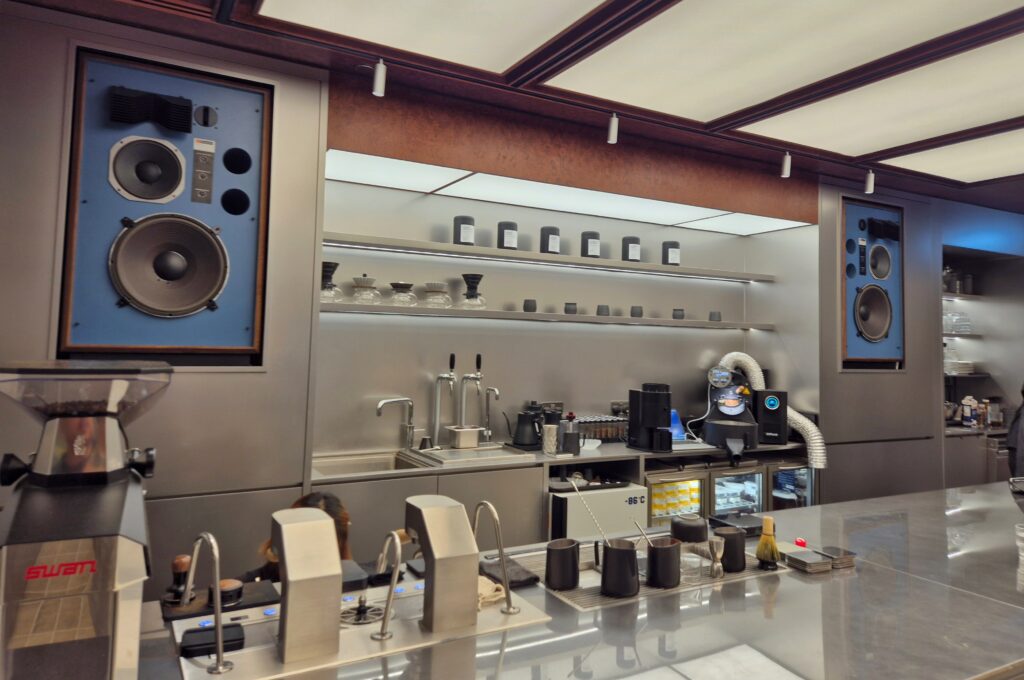
That’s a pretty good café discovery.
And with the featured car changing from time to time, Cafe Macchina might just be worth putting on the itinerary the next time you’re in Hong Kong—especially if you’re the kind of person who thinks a coffee tastes a little better when there’s a race car nearby.