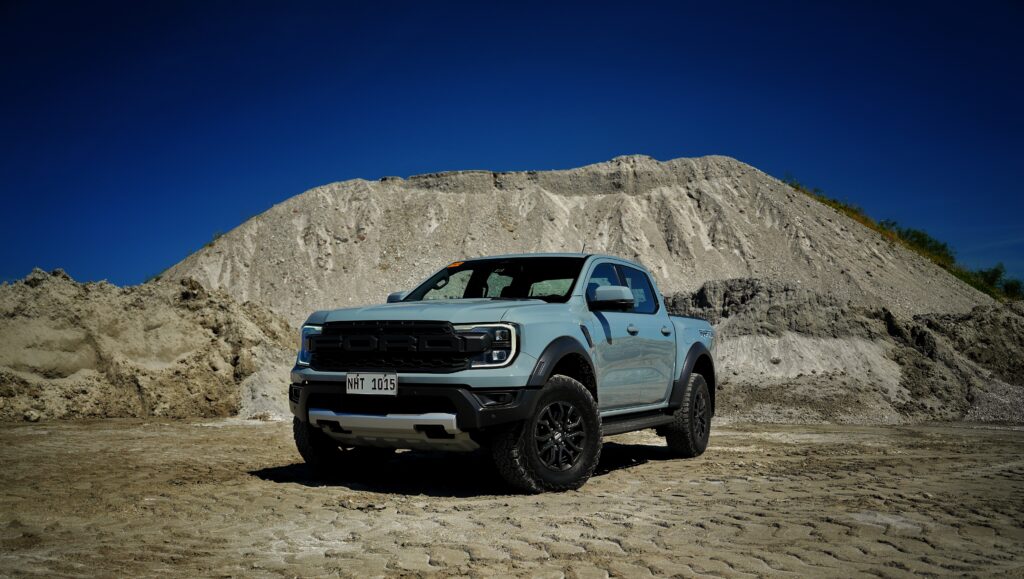
To fully appreciate the Ford Ranger Raptor, one has to dive headlong into its technical intricacies.
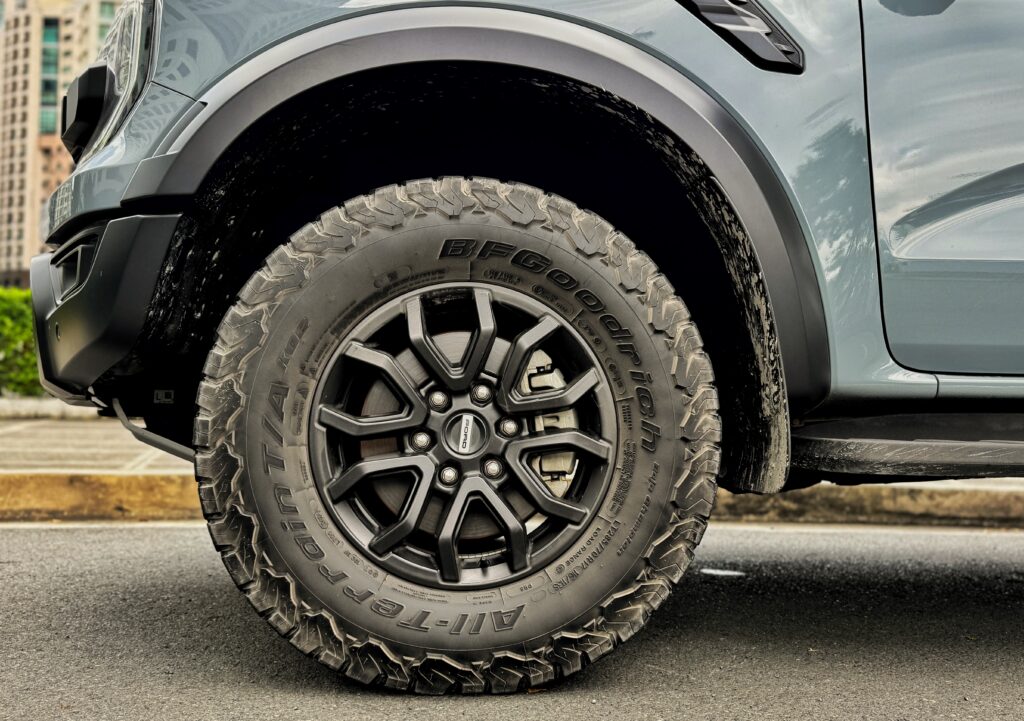
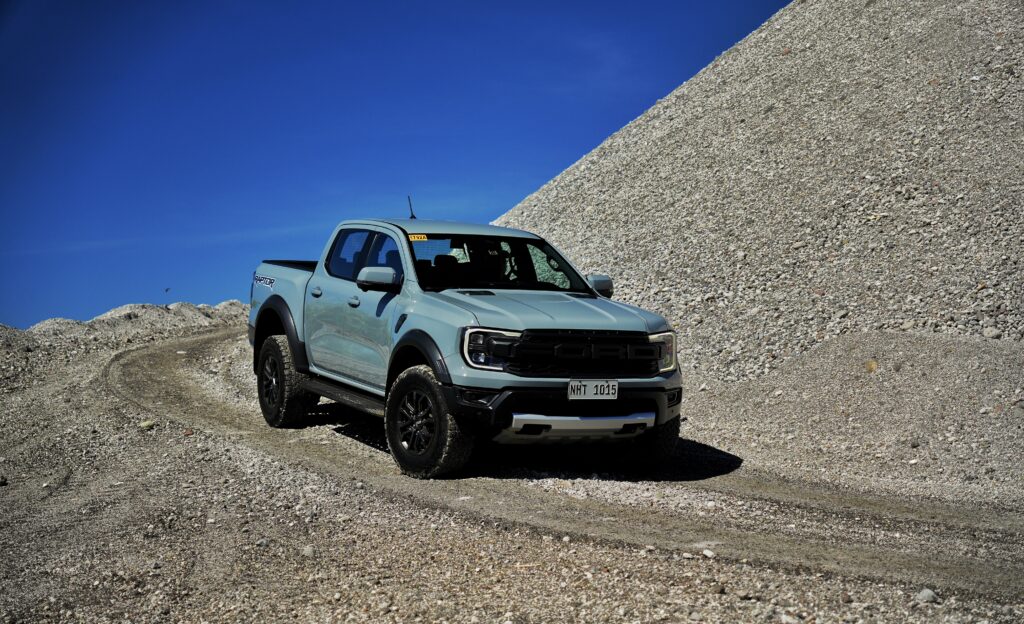
The untrained will see a pick-up with bigger wheels, boxier fenders and a taller ride height. B-segment car drivers will feel bullied. Enthusiasts, however, will experience an unstoppable force of nature.
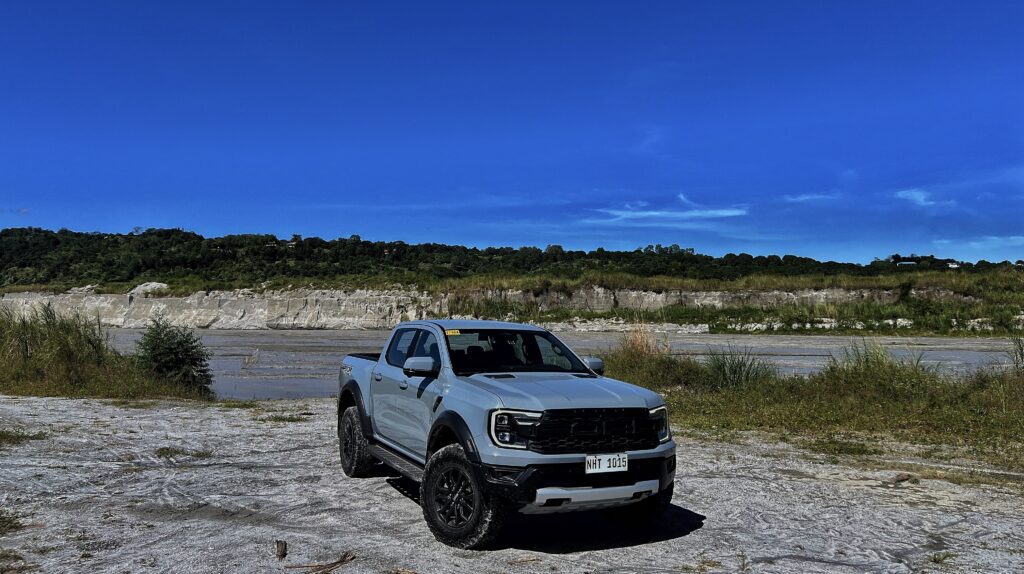
Cynics on the other hand will see a tarted up and overpriced Ranger. Which is a shame for them.
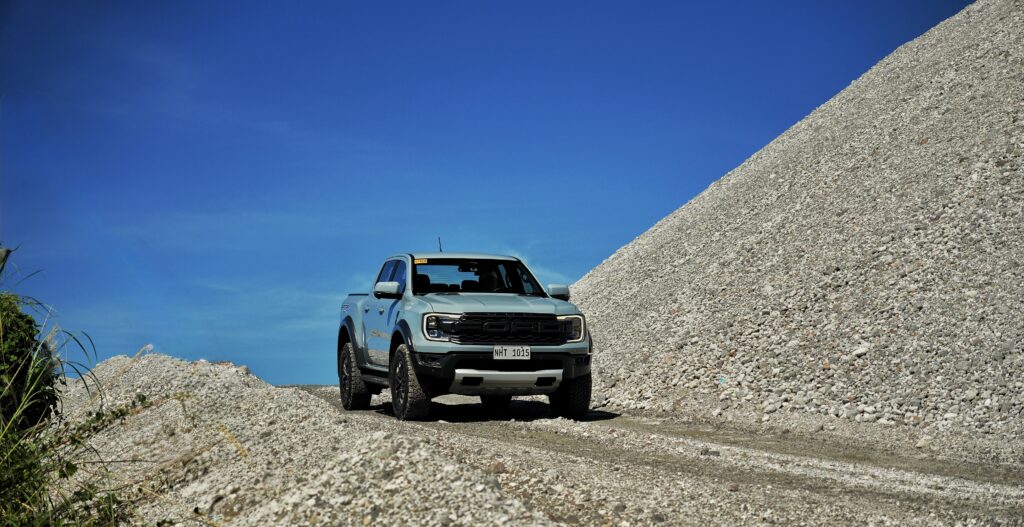
The Ford Ranger Raptor, with its 3.0 liter EcoBoost bi-turbo V6, was built to dominate: the competition, terrain and your overall experience. It is the only purpose-built off-road machine in its segment that’s ready to tackle all challenges straight out of the showroom floor.
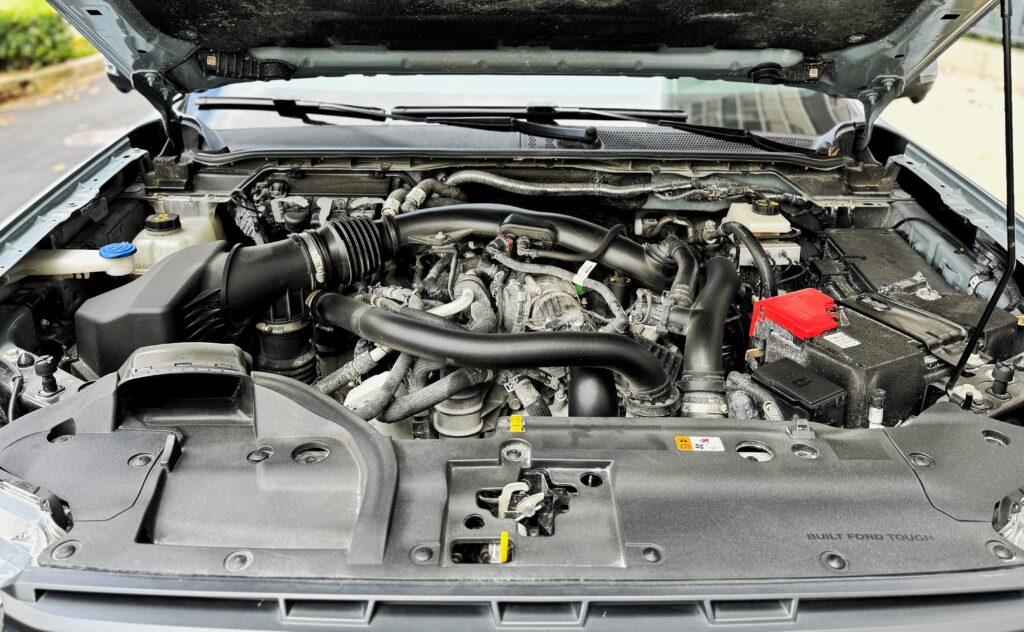
The Raptor’s bi-turbo 3-liter EcoBoost V6 is a direct-injected engineering marvel. It makes an astounding 392hp and an astonishing 583 Newton-Meters of torque. The engine block is made of compacted graphite iron or CGI, which is roughly 22% lighter and crucially 75% stiffer than traditional cast iron blocks. Supercar or super-truck?
It drives the four wheels via Ford’s 10R80 high torque capacity 10-speed automatic that’s been beefed-up to handle abuse. This is the smoothest iteration of this much maligned transmission I’ve yet to try, which makes a huge difference in its day-to-day civility. There’s a switchable on-demand 2-speed transfer case with locking front and rear differentials to ensure power is put down efficiently and effectively to get out of any trouble it finds itself in. The center differential utilizes a unique active clutch that shuffles torque on demand between front and rear axles as needed as well as lock itself depending on condition and drive mode.
The Raptor’s true piece de resistance is the 2.5-inch FOX Live Valve Internal Bypass dampers, considered some of the most advanced dampers ever fitted to a production pickup truck. The Live Valve Technology features sensors that monitor terrain conditions hundreds of times per second, adjusting damping in real time to provide both a comfortable ride and maximum control, regardless of terrain.
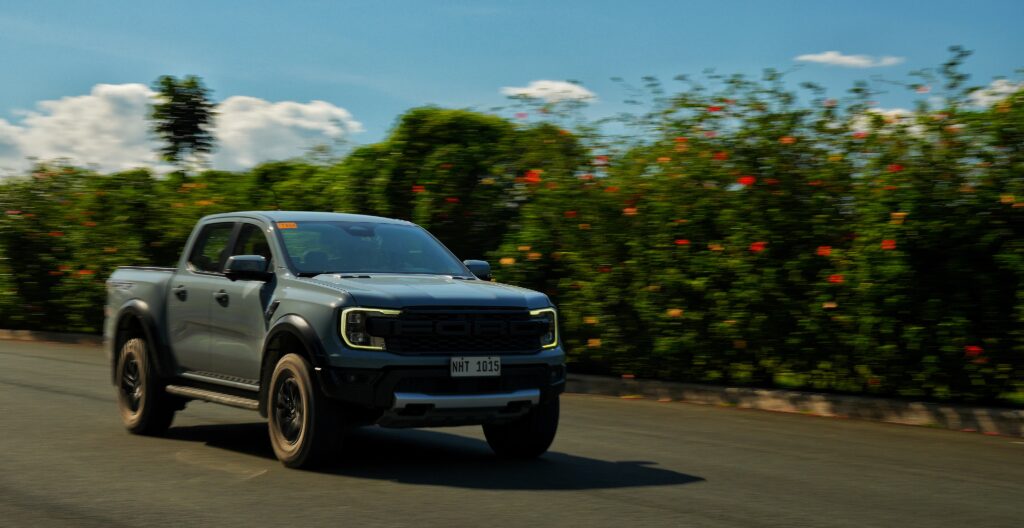
The FOX shocks utilize Internal Bypass technology, allowing for different damping zones—softer in the middle for comfort, and firmer at the ends of the travel to handle hard impacts. These provide maximum damping force in the final 25% of their travel, acting as a “hydraulic bump stop” to protect the truck during severe impacts or jumps. You’ll be doing quite a bit of this in the Raptor.
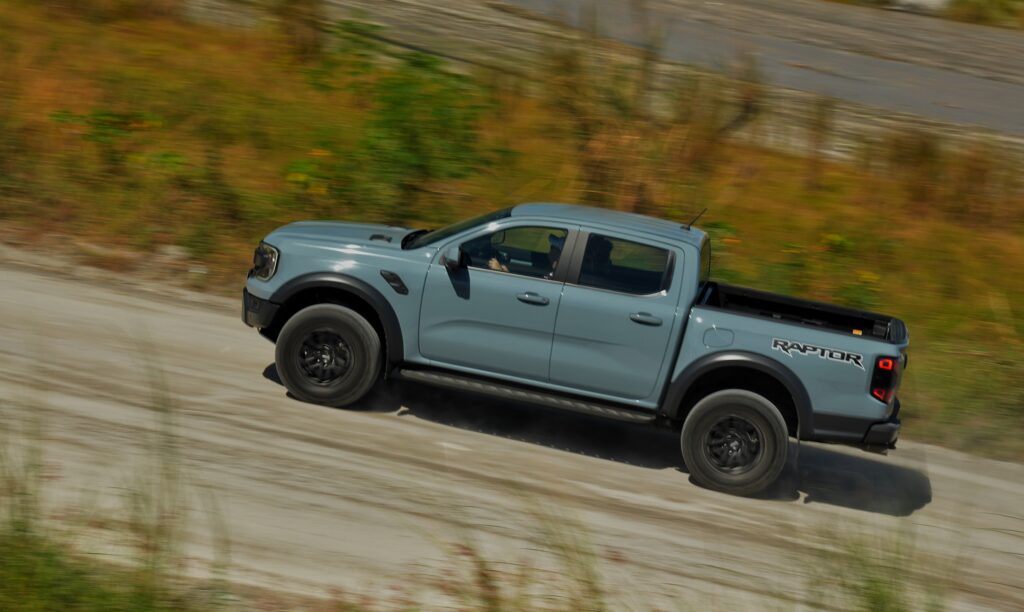
And then there’s the suspension travel: 292 mm in the back and 256 mm up front. These feature 25mm more travel than a garden-variety Ranger. Doesn’t seem much, but the ladies will say otherwise. It gives better comfort and control which will be greatly appreciated in the passenger seats when driven flat out on the rough stuff. When you’re mall crawling instead of rock-crawling or stuck in traffic the way we were coming back from Clark after the New Year break, you’ll want all the comfort you can get.
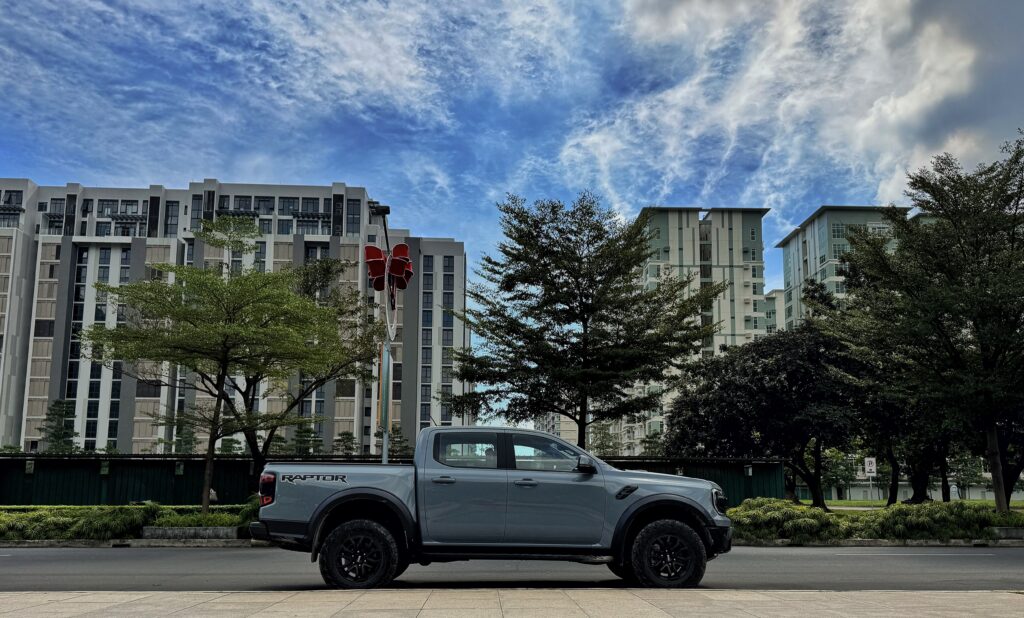
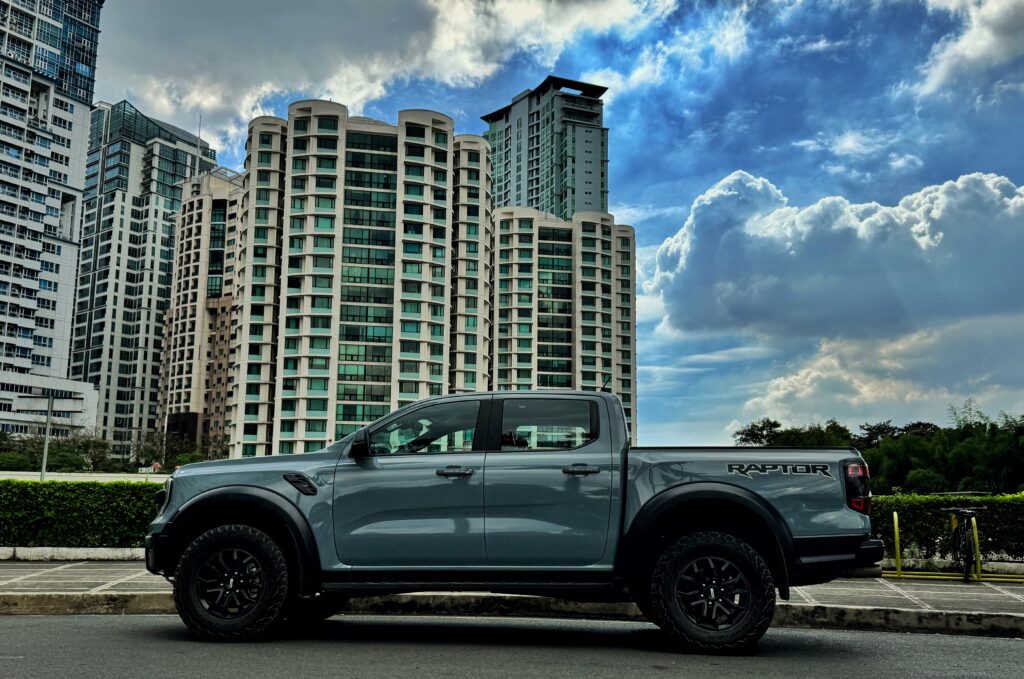
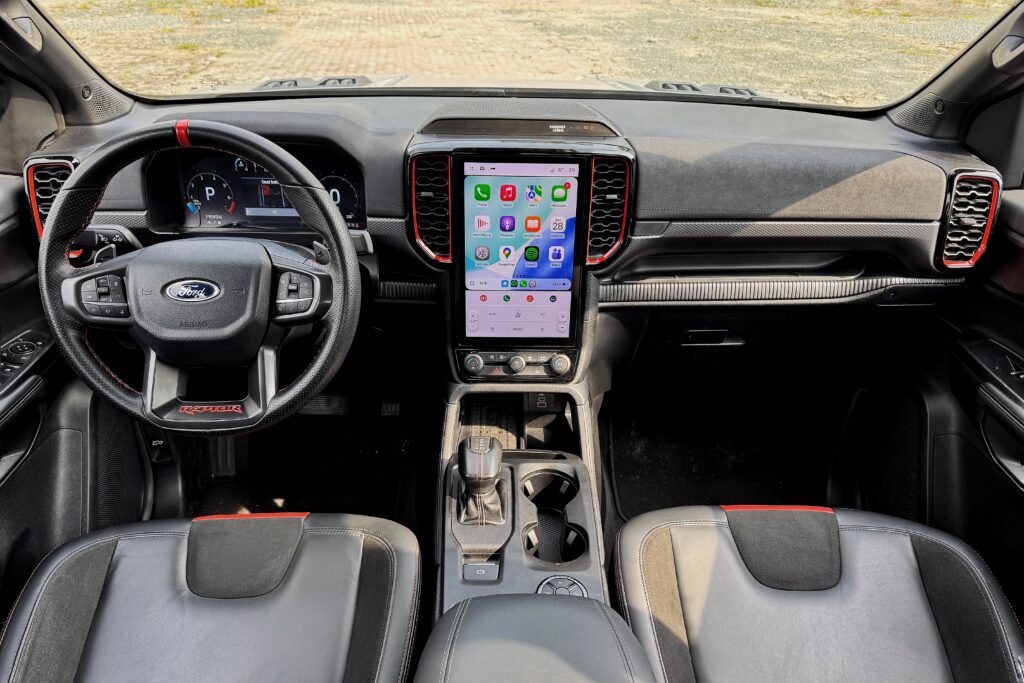
Thankfully, the interior is a comfortable and stylish place to be in.
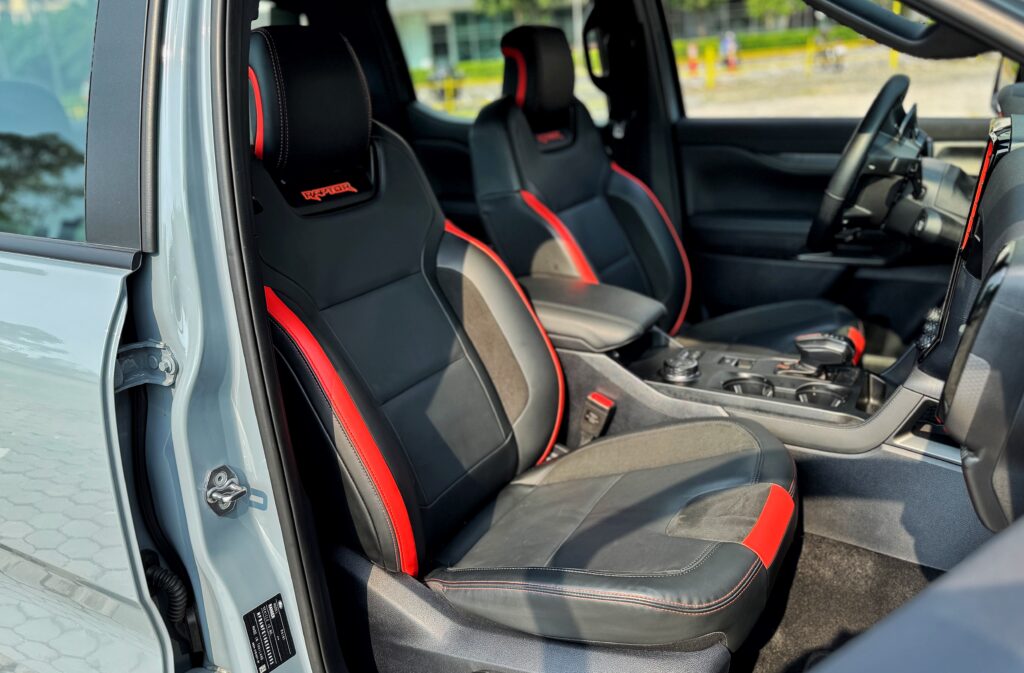
Overall, the Ranger Raptor further impresses dynamically with an 850 mm flood wading depth, a 24.2-degree break-over angle, and a 33-degree approach and 24.6-departure angles respectively.
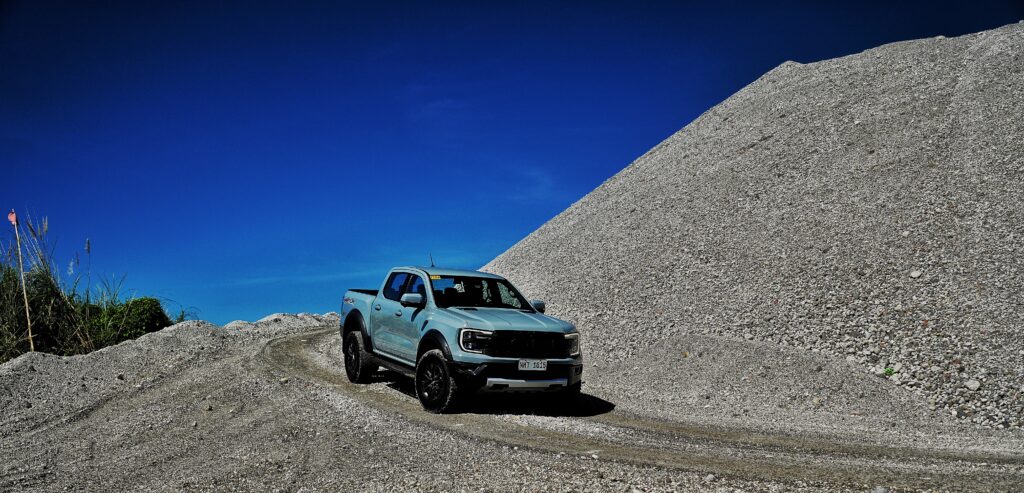
Lots of figures, lots of numbers, but its core market will want to know these figures because the Ranger Raptor is a highly specialized piece of machinery and numbers don’t lie. People buy it to go gallivanting around the rough stuff and get home safely before the missus looks for you.
Then there’s the technology: Ford’s Sync 4A multimedia system features a massive 12-inch LCD screen and supports wireless Apple CarPlay and Android Auto.
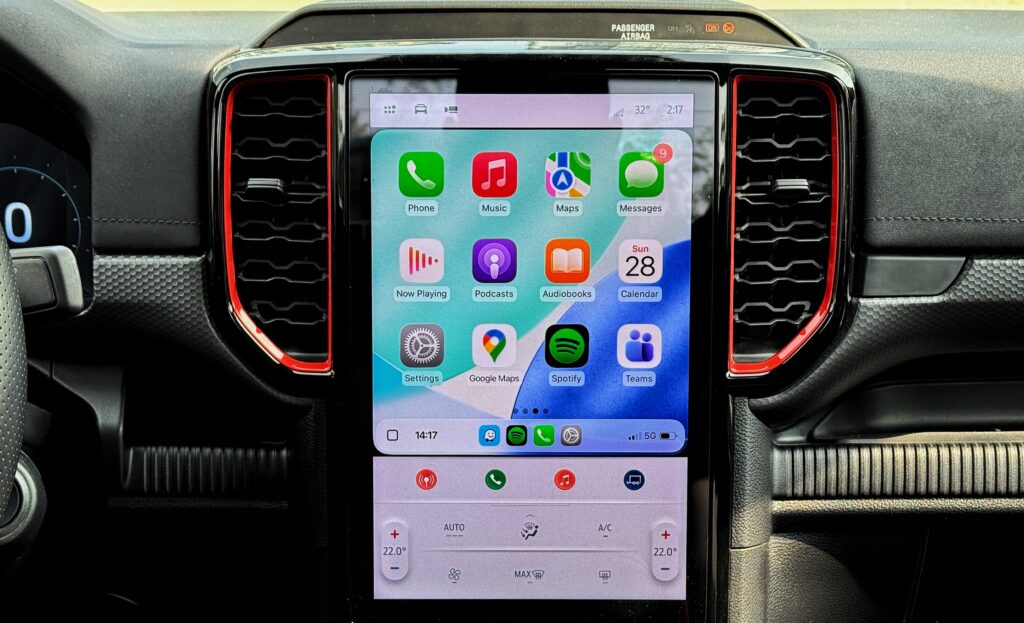
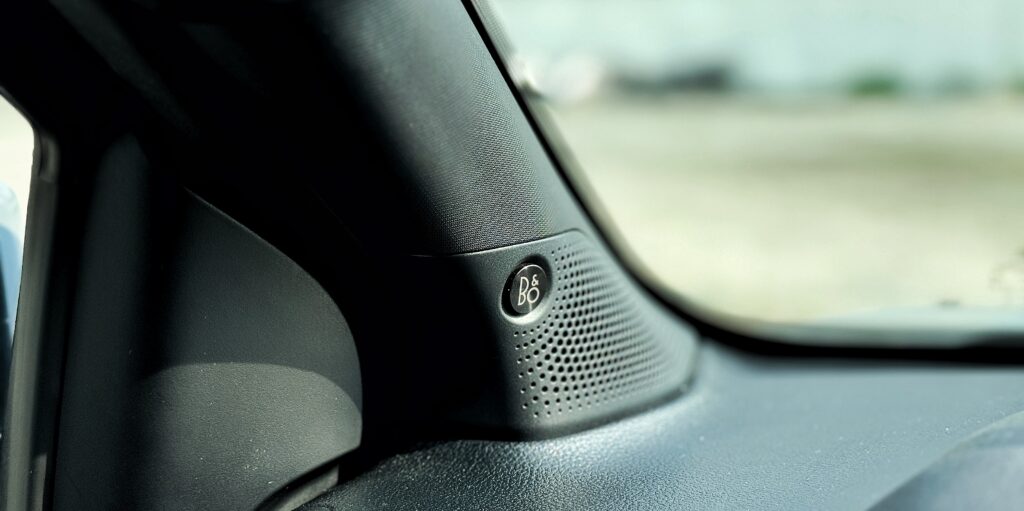
An excellent Bang & Olufsen surround sound system is fitted to play your Spotify tunes to match your mood.
And of course an extensive safety suite. A 360-degree camera system is included. Advanced Driver Assistance Systems (ADAS) feature Adaptive Cruise Control with Stop & Go, Lane Centering, Autonomous Emergency Braking (AEB), and Blind Spot Information System. I do have a confession: I was getting a bit nauseous due to my dropping blood sugar level.
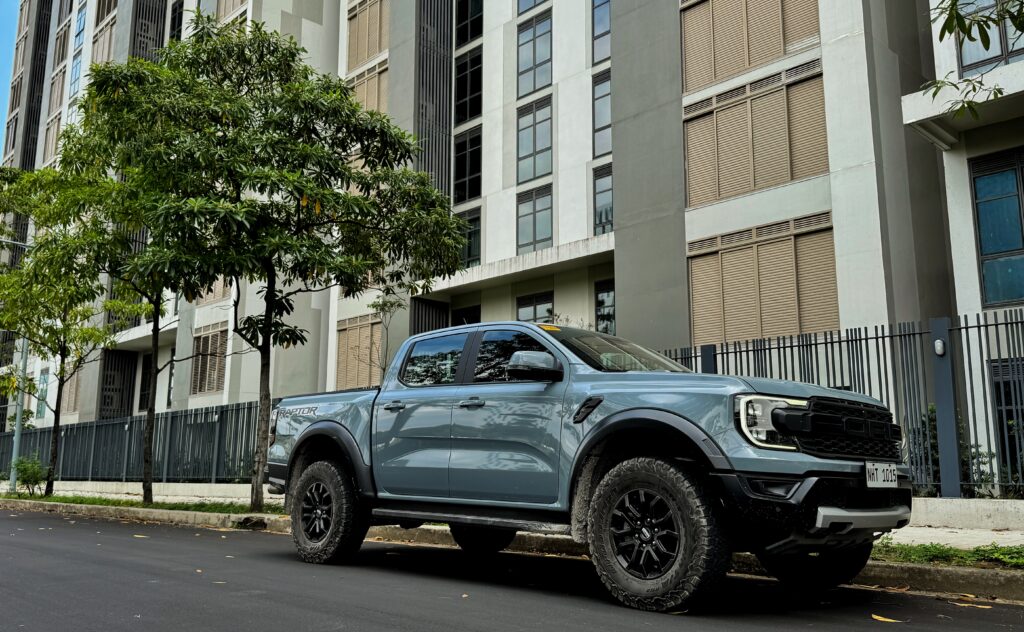
I almost drove into the curb but the Ranger Raptor quickly swerved away and braked for me which was all it took to snap me back out of my state, prompting me to find a convenience store and grab a can of soda. Maybe that’s why I love this Raptor.
The power, the handling, the tech, the civility and the refinement (plus the safety!) all make the Ranger Raptor the unquestionable King of the Hill.
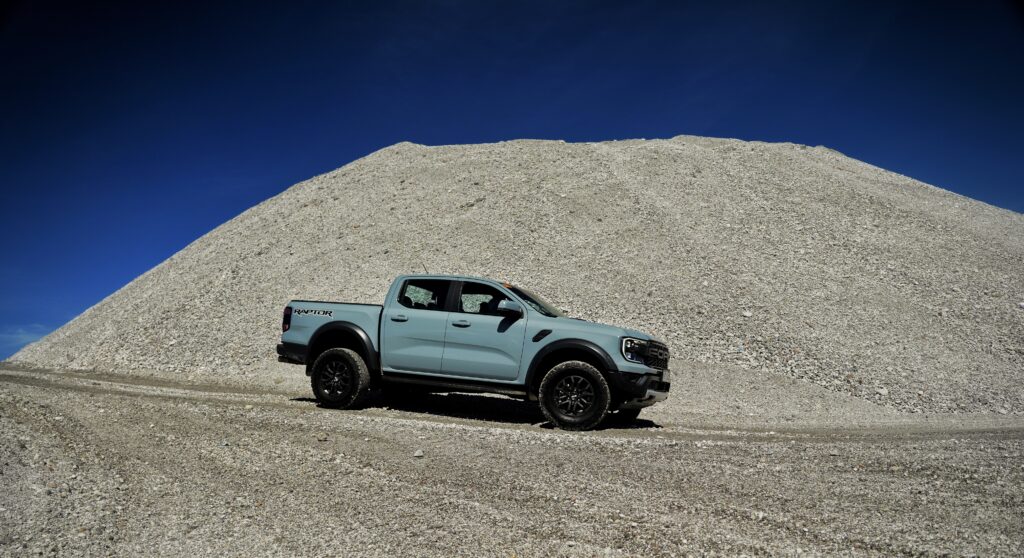
The Ranger Raptor feels unstoppable. It out-accelerates just about anything on the road in real-world conditions. It shrugs off big ruts and bumps, and laughs at punt flash floods. It looks for difficult terrain the way a predator seeks out prey. It mocks foul weather, taunting it to challenge the mighty Raptor.
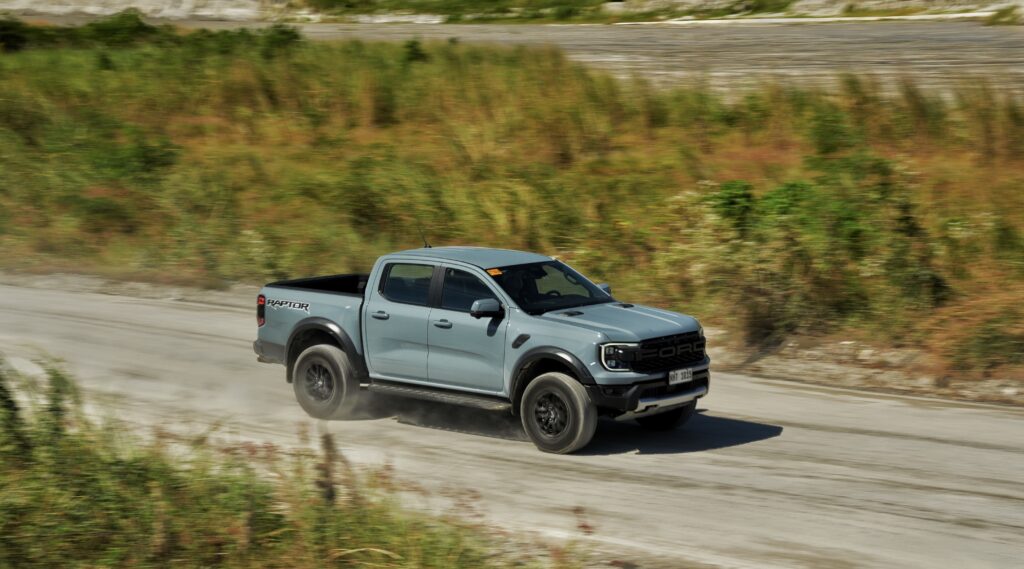
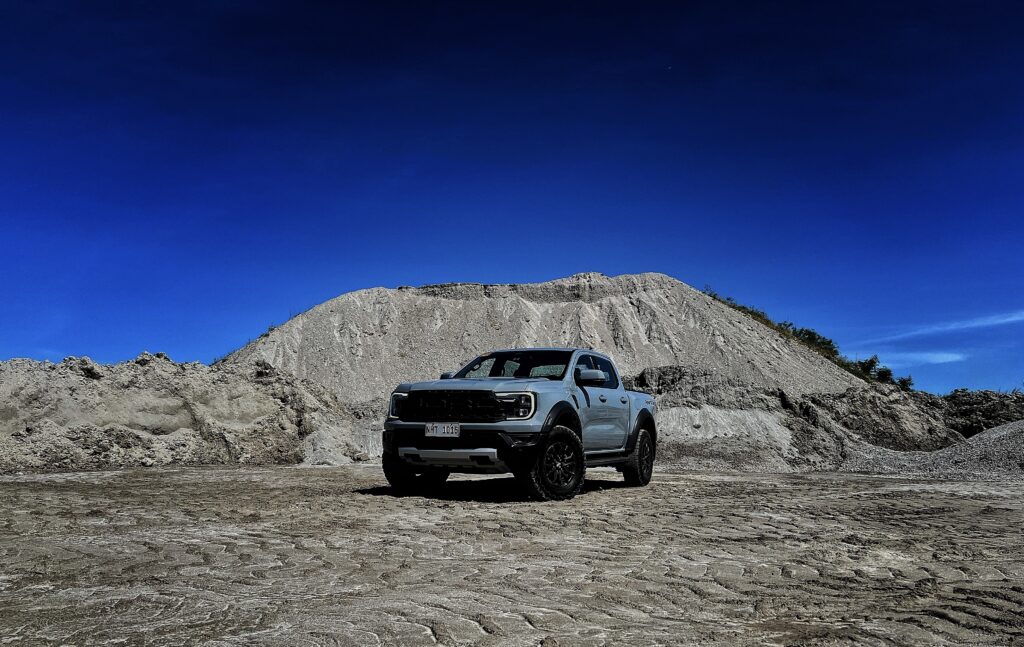
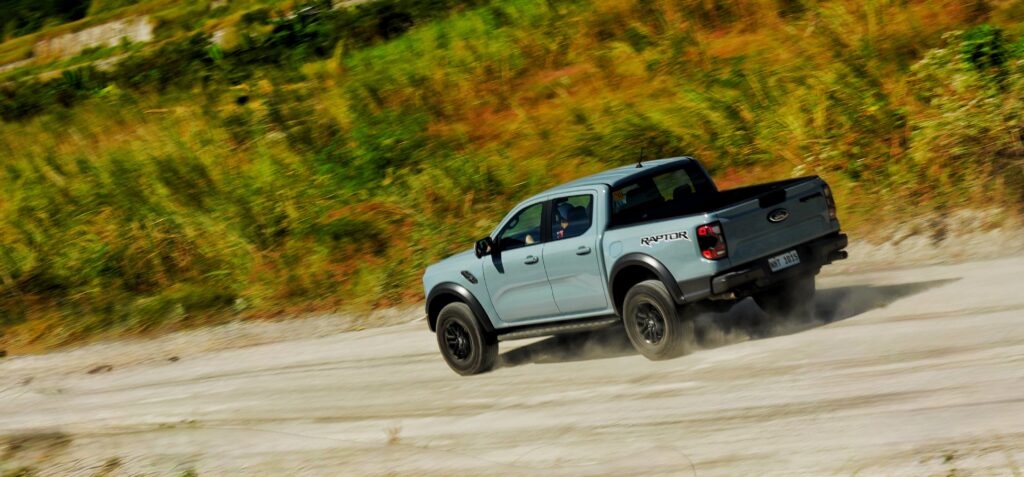
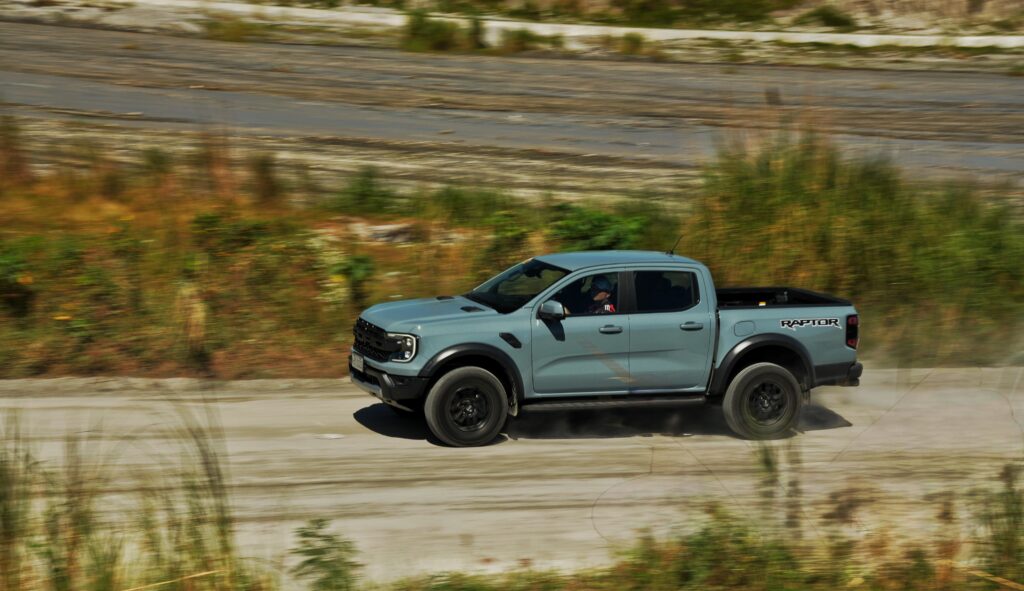
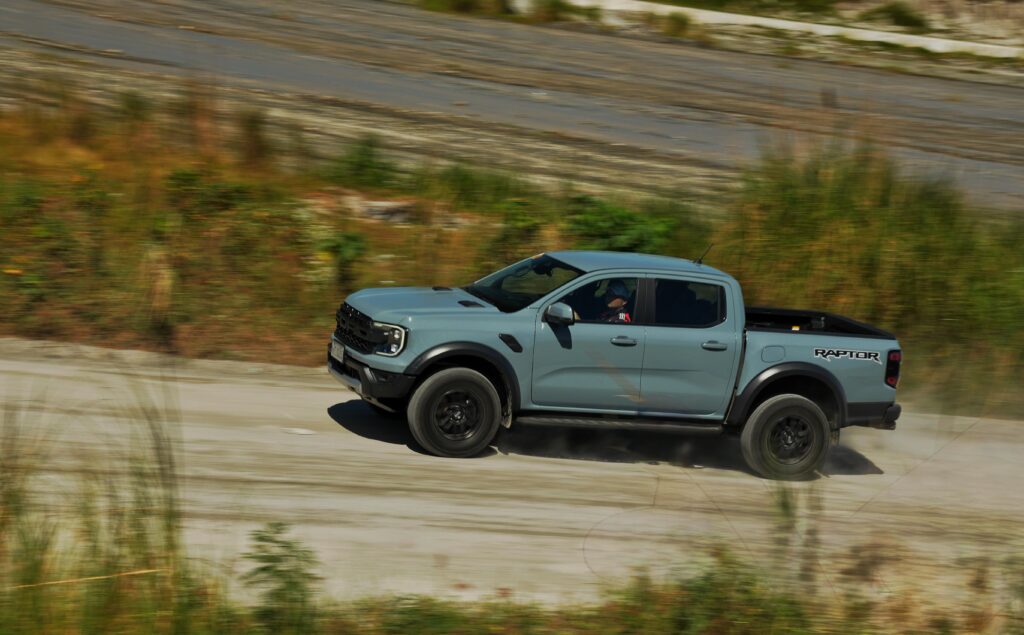
We took it to a quarry and onto the dry riverbed at Sacobia River, tried to drive flat-out and do all sorts of silly stunts but the Ranger Raptor felt bored, like nothing we threw at it even merited its attention.
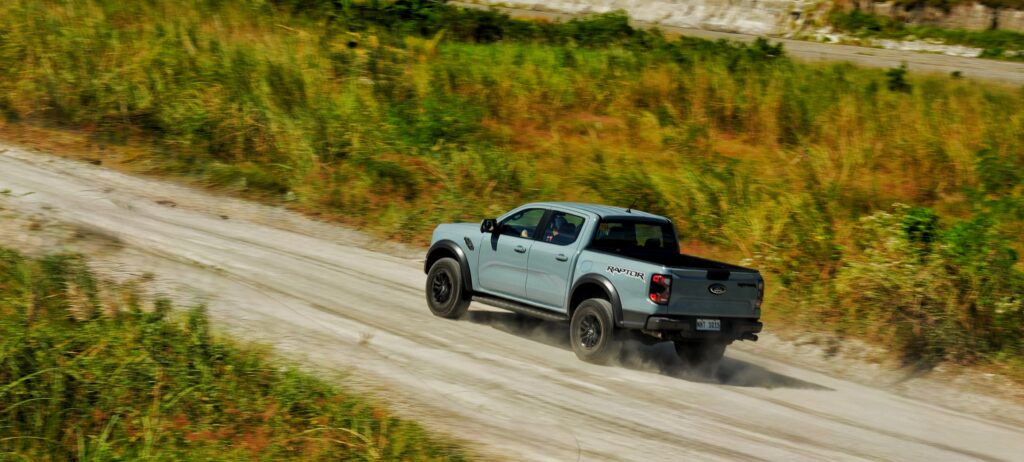
Especially in Baja Mode, it feels overqualified for just about anything we could throw at it. There were noticeable crests, dips and undulations along the dirt roads but the Raptor soaked it all up, confidently catching all the movement without the suspension bottoming out.
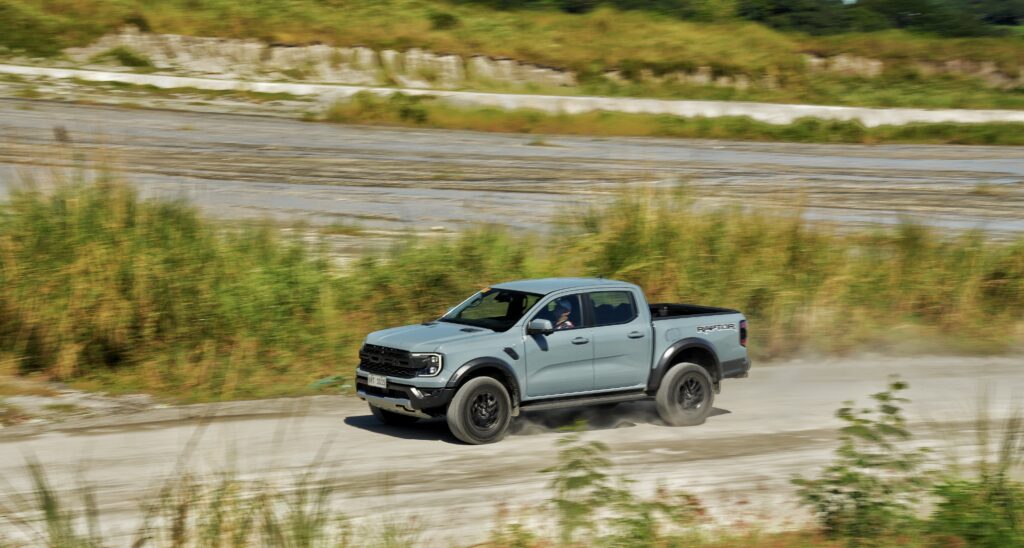
I was tempted to jump it to see just how really good the Fox equipped suspension was and really give credence to the Baja Mode moniker but I was afraid a bad landing would hurt my poor back. Perhaps somebody brave enough can demonstrate to me in the future?
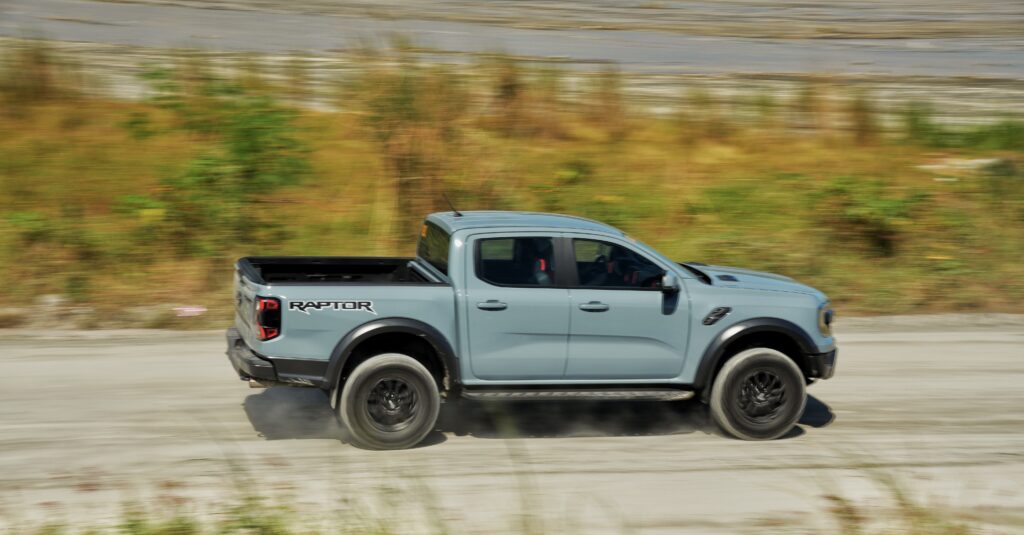
Of course, on the highway, it felt surreal, more sports car than truck as it comfortably and confidently overtook, out-braked and even outweave smaller, nimbler cars when the steady 70km/h traffic gets boring and the Ranger Raptor is putting you to sleep because the legendary Fox shocks are super comfortable and serene on the highway.
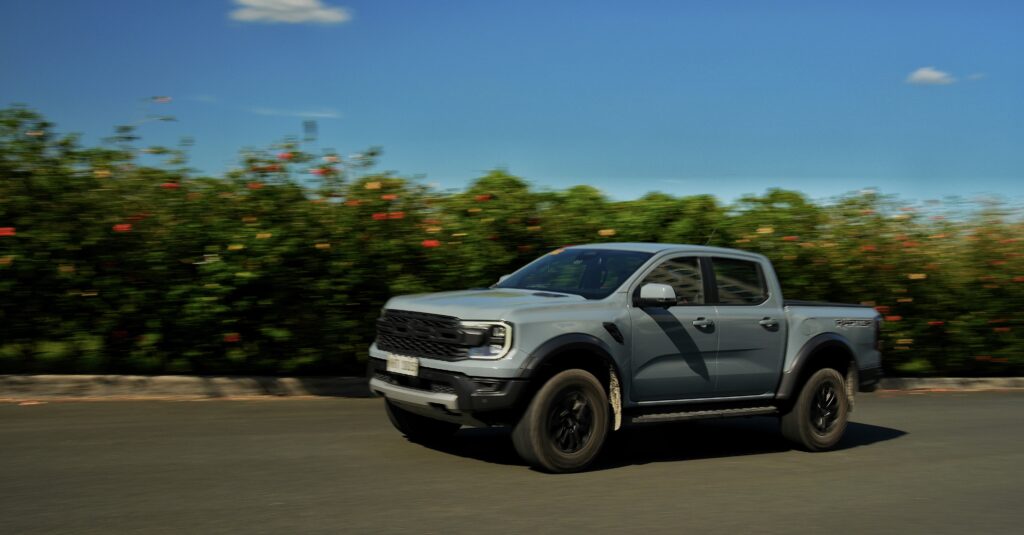
That’s mostly down to the Ranger Raptor’s inherent on-road ability, and partly due to its size as smaller cars tend to back off when they see the Ranger Raptor hustling about. Like King Kong doing some intricate and complex gymnastic sequence.
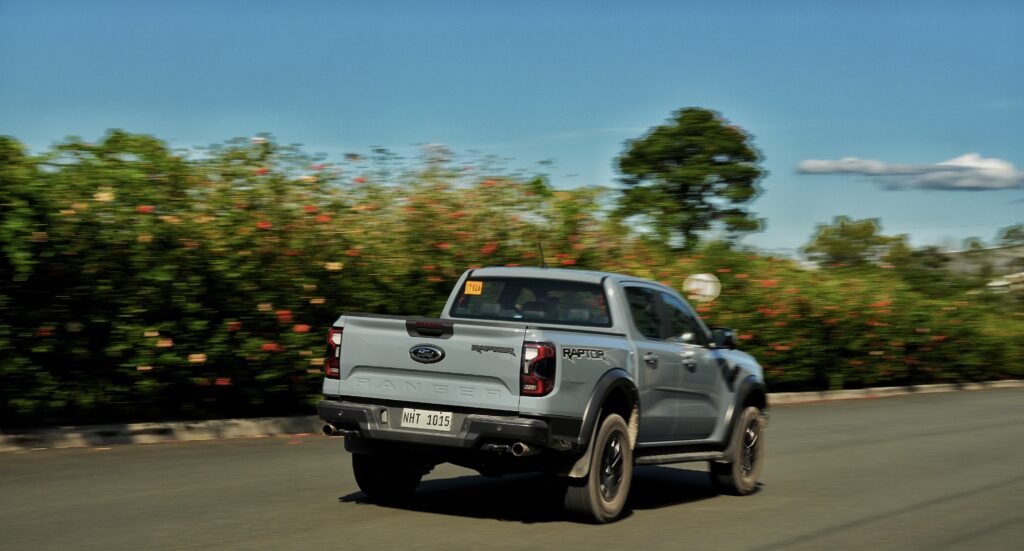
Despite its considerable size and heft, the Raptor feels nimble, quick on its feet. It’s no clumsy oaf, able to make quick low-speed transitions in typical traffic driving. This makes the Ranger Raptor a million times better than almost all other similarly sized pickups in its class.
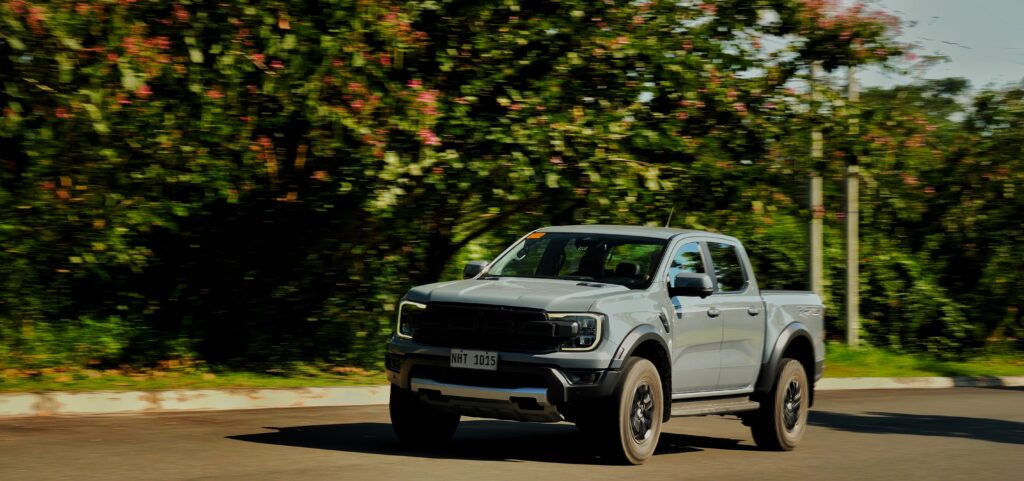
I say similarly sized, because the Ranger Raptor is truly one of one. It’s responsive and quick-witted but you also have to be careful because its sheer size can work against you when making sudden movements as the Ranger Raptor can keep up and you might cause a fender bender.
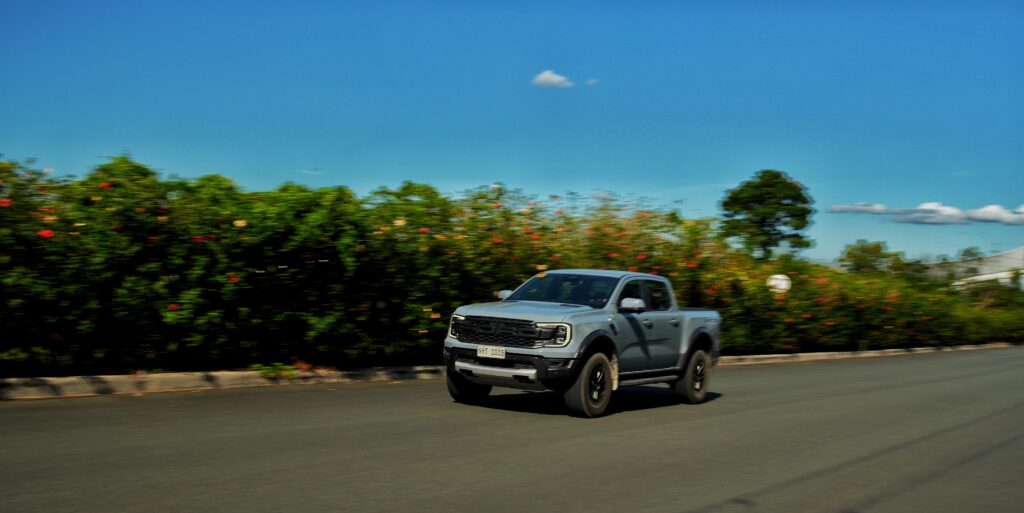
The really amazing aspect about the Ranger Raptor is how un-workhorse-like it feels. It drives like a sporty vehicle, rides like a luxury car, is loaded with tech and has good space. It still also has a 750 kg payload (down from the usual 1,000kg thanks to the compromises of the high-performance Fox dampers) and a towing capacity of 2,500 kg, almost a third less than a regular Ranger.
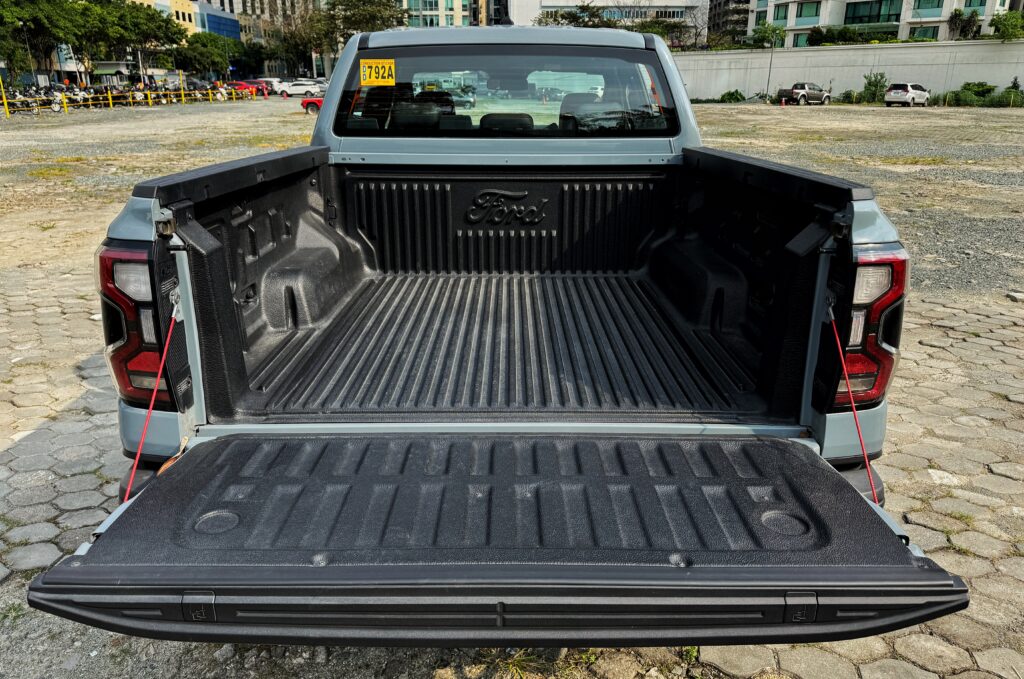
The Ranger Raptor’s only downside? Its sheer size. I live in a condominium in a very built-up area. Getting in and out of the basement parking is tricky with the Ranger Raptor, more so when there’s an incoming car. And it would stick out of the parking slot which causes added difficulty for vehicles entering and exiting the parking complex.
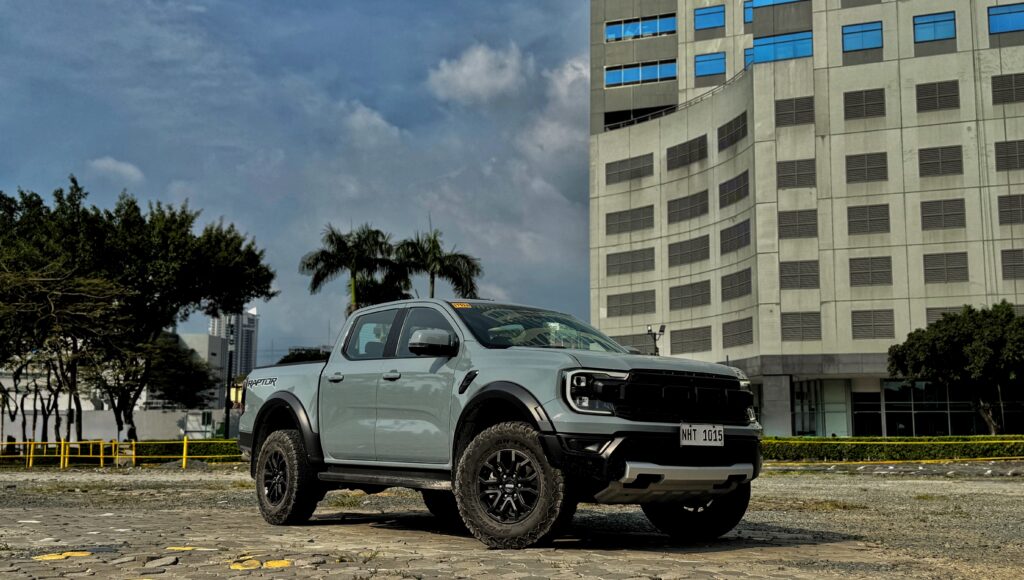
Fuel consumption was horrendous, barely doing 9 km/L on the highway, 4 km/L in the city and 2.7km/L hammering the Ranger Raptor around Sacobia River. But that’s the price one pays for maximum performance.
Is it the best pick-up? You bet. I want one.