
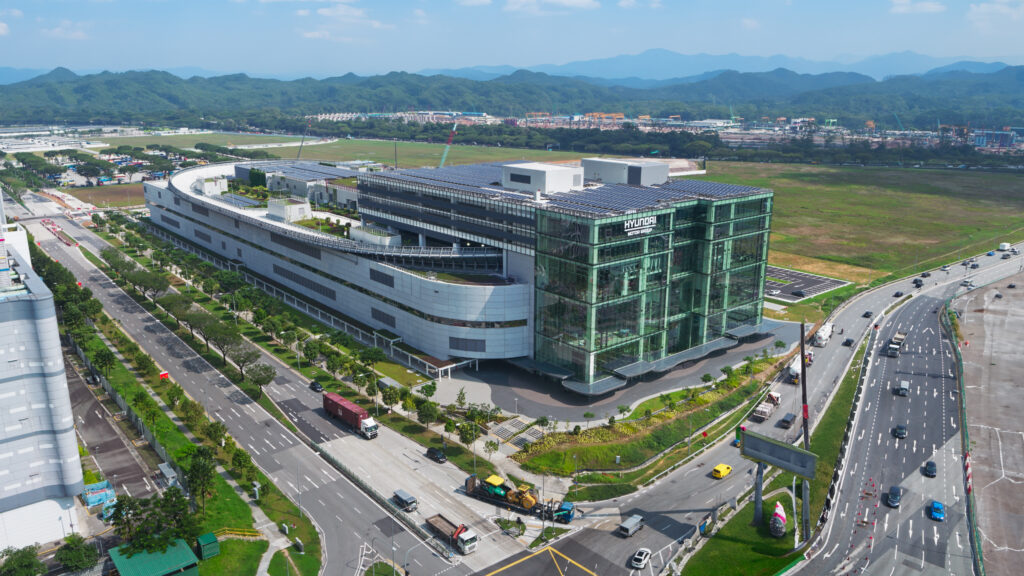
It’s quite odd arriving for dinner inside what Hyundai Motor Group calls its automotive innovation lab located at the Jurong Innovation District. Nothing about a factory, or secificaly an innovation hub , as Hyundai calls it — especially one where robots assemble electric vehicles — feels particularly edible.
And yet, the pairing doesn’t feel ironic. What feels like an odd contrast at first gradually reveals itself as alignment: a shared devotion to detail, whether expressed in steel or in sauce.
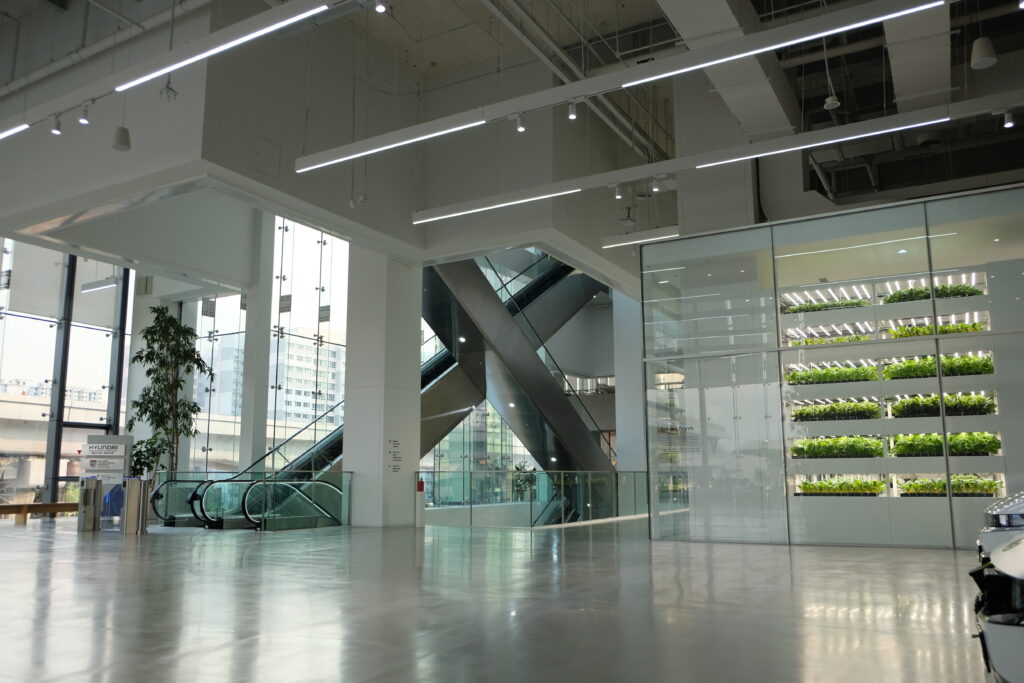
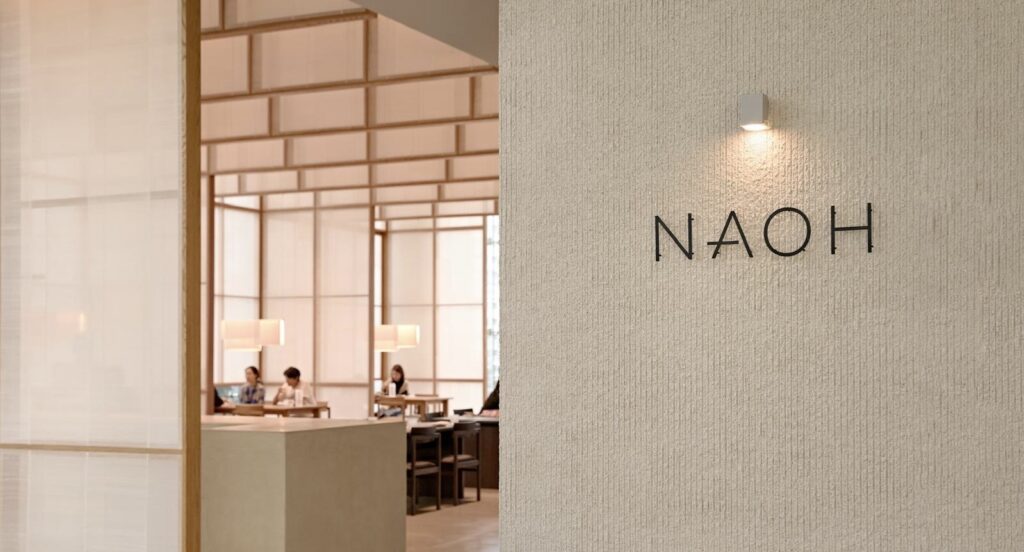
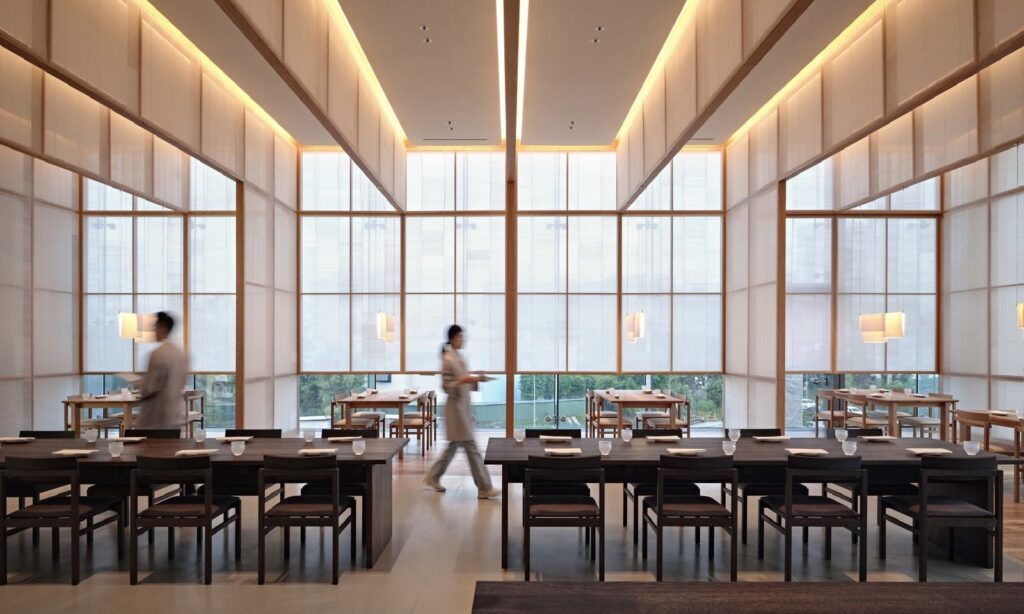
This is Na Oh, tucked within the Hyundai Motor Group Innovation Center Singapore or HMGICS. The building is defined by robotics and engineering precision. Inside the restaurant, however, the mood softens. Warm light settles across pale wood. The air carries the faint perfume of toasted grains and aged soy. It feels less like a factory annex and more like a restrained, almost monastic dining room.
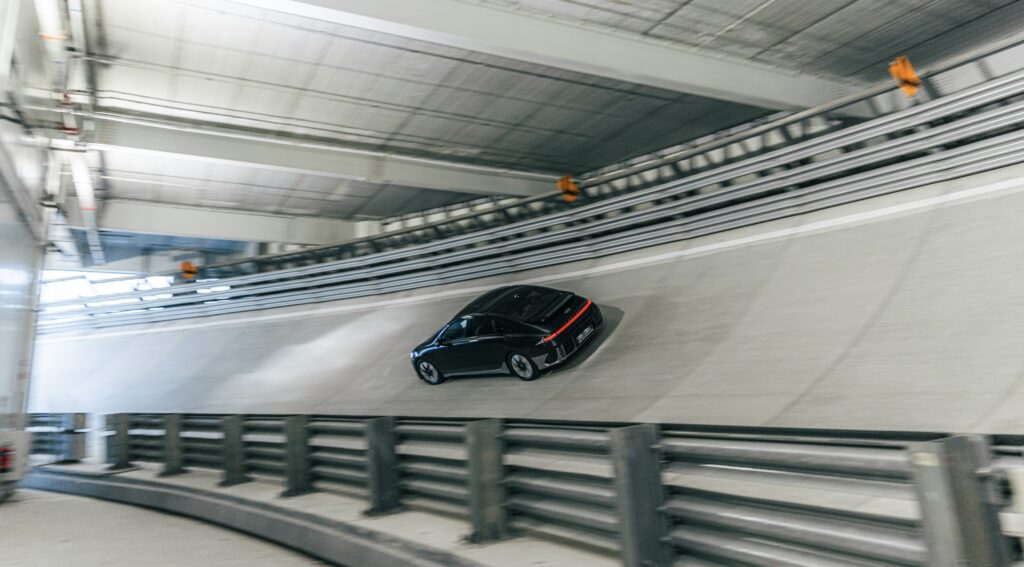
I went with my husband, who was far more interested in the machinery than the menu — at least initially. He had already mapped out the Skytrack, a 620-metrer long rooftop test track, situated 28 meters or roughly five levels above ground that arcs against Jurong’s bustling industrial skyline. Watching a vehicle take its banked turns at dusk is unexpectedly cinematic; an adrenaline prelude before fermentation and fire.
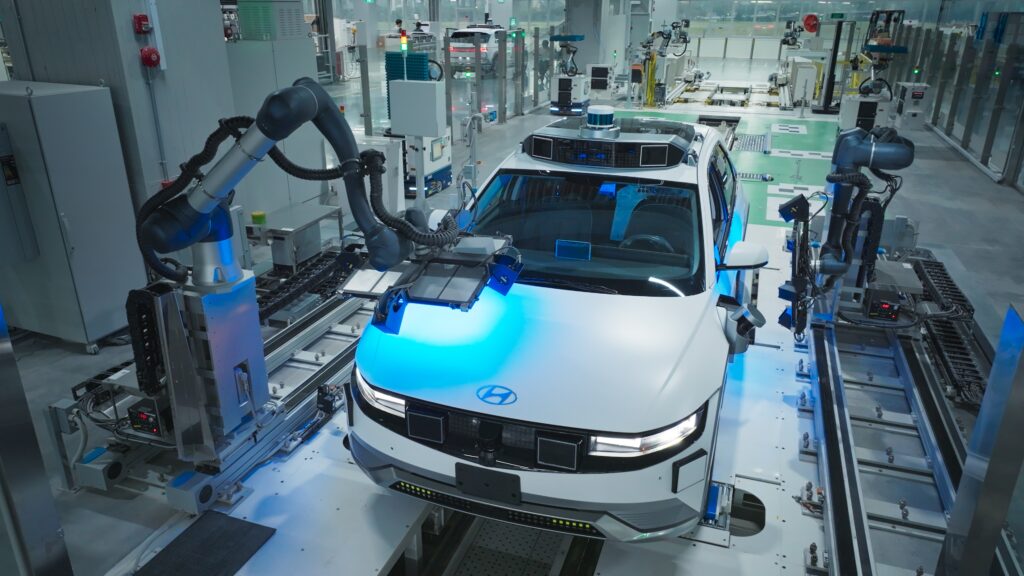
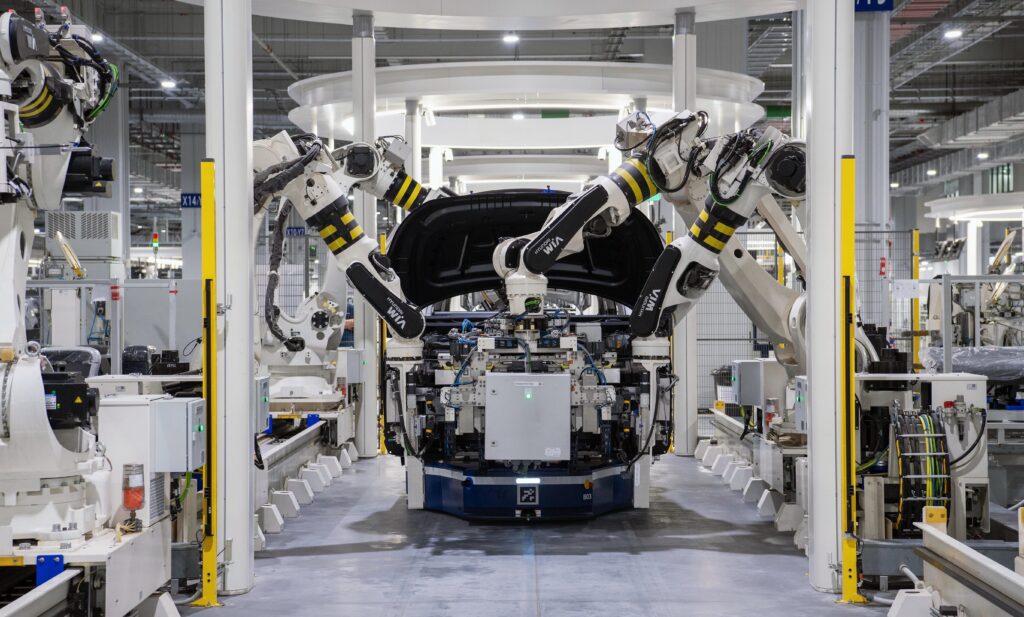
The production floor itself is off-limits, but the assembly line unfolds through a virtual reality tour. Headset on, we stood suspended in choreography — robotic arms pivoting with unnerving accuracy as an IONIQ 6 took shape around us. It was clinical. Precise. Almost balletic.
The more compelling spectacle, however, waited beside the dining room.

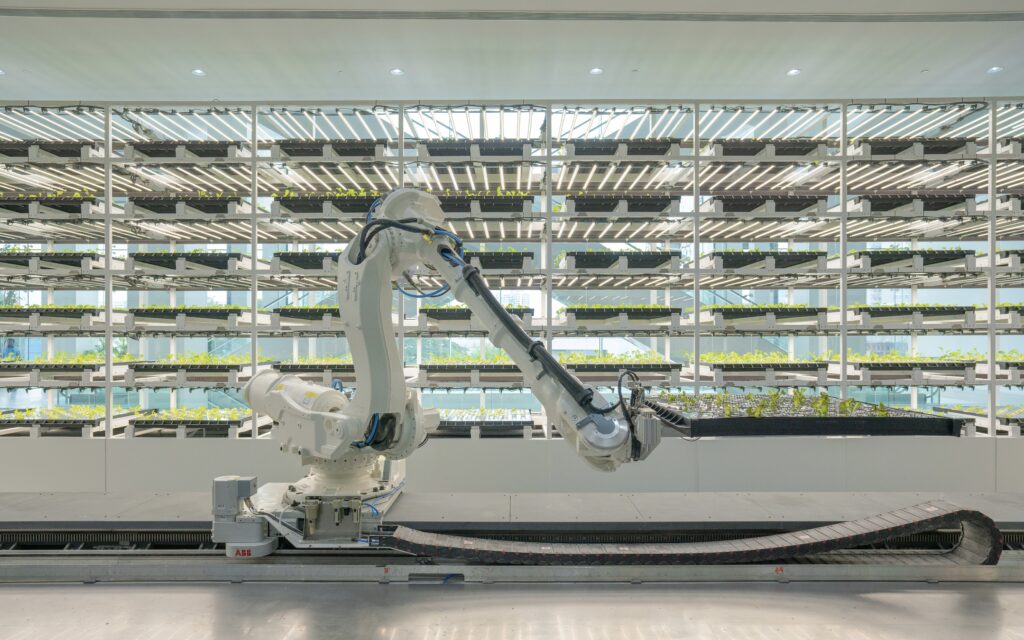
The Smart Farm rises across two storeys of the building: five robotic arms tending rows of greens under calibrated light. They move in near silence — planting, trimming, harvesting. The leaves appear improbably vivid, almost too symmetrical to be edible.
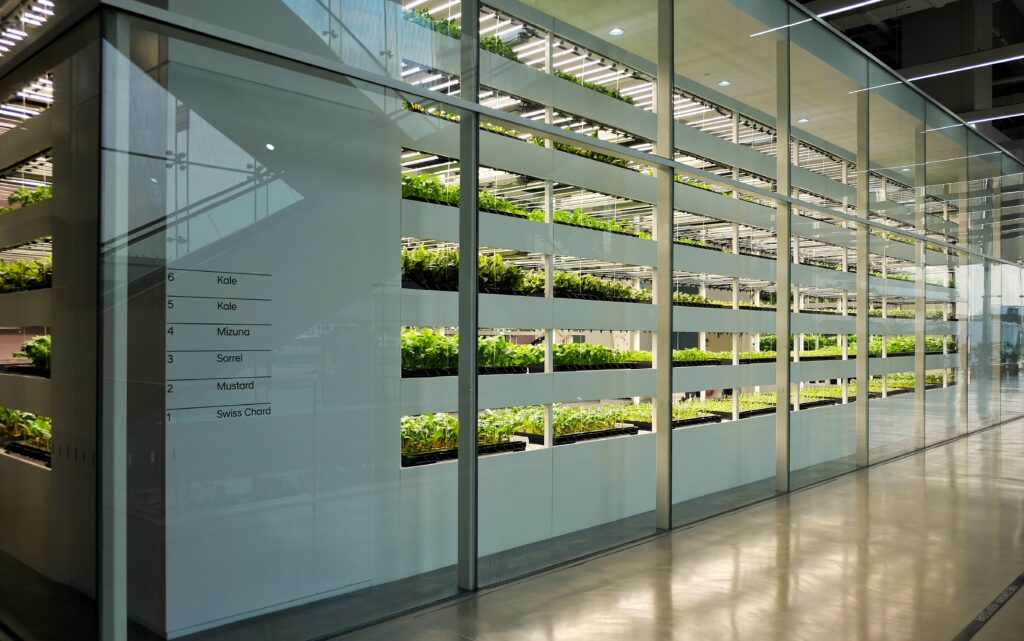
And yet, this is the kitchen’s larder. What lands on your plate was, in all likelihood, harvested a few meters away just hours before.
The Cooking Is the Point
Hyper-local produce only matters if what happens next — the actual cooking — is worthy of it. Here, it is. Emphatically.
Na Oh is the first Southeast Asian project from Corey Lee, the Korean-born chef whose San Francisco restaurant Benu holds three Michelin Stars, the first Korean Chef to attain such distinction. His fingerprints are all over the menu: technically precise, deeply rooted in Korean fermentation tradition, and utterly uninterested in showing off. There’s a discipline to the food that you feel before you can articulate it.

The appetizers announced this clearly. Crisp jeon arrived with a snap to the greens that imported produce simply cannot replicate — that bright, almost peppery freshness that exists for maybe a day after harvest. The acorn jelly with beef tendon in an icy kimchi broth was more complex: cool and funky and quietly extraordinary, the kind of dish that tastes like it was made in someone’s grandmother’s kitchen and someone’s Michelin kitchen at the same time.

The Jinjitsang
The centrepiece is the Jinjitsang — a traditional Korean set that, in lesser hands, risks feeling like a heritage exercise. Here it feels like something lived in.

I ordered the Galbijjim. The beef had been braised in an aged jang — a fermented soy sauce built over months — then finished over charcoal until a gentle smokiness wrapped around that deep, slow-cooked richness. Paired with a Chestnut and Thistle Sotbap, each mouthful tasted like autumn: sweet, earthy, faintly bitter, completely right.

My husband ordered the Ground Soybean Stew with Mangrove Crab alongside a Jeju Pork Collar Suyuk, slow-cooked until the fat had given up entirely and turned silk-like. The stew was thick, heady, and unapologetically comforting — the kind of dish that makes you slow down your conversation just to pay attention. We ate without rushing. The room seemed designed for exactly that.

All of this, at SGD $76 for the full set. In a city where tasting menus can feel like a series of beautiful teases, Na Oh’s version actually feeds you. You leave satisfied — not just impressed. So impressed that my husband had to order extra rice just so he could finish everything on his Jinjitsang, and what was left on mine as well.
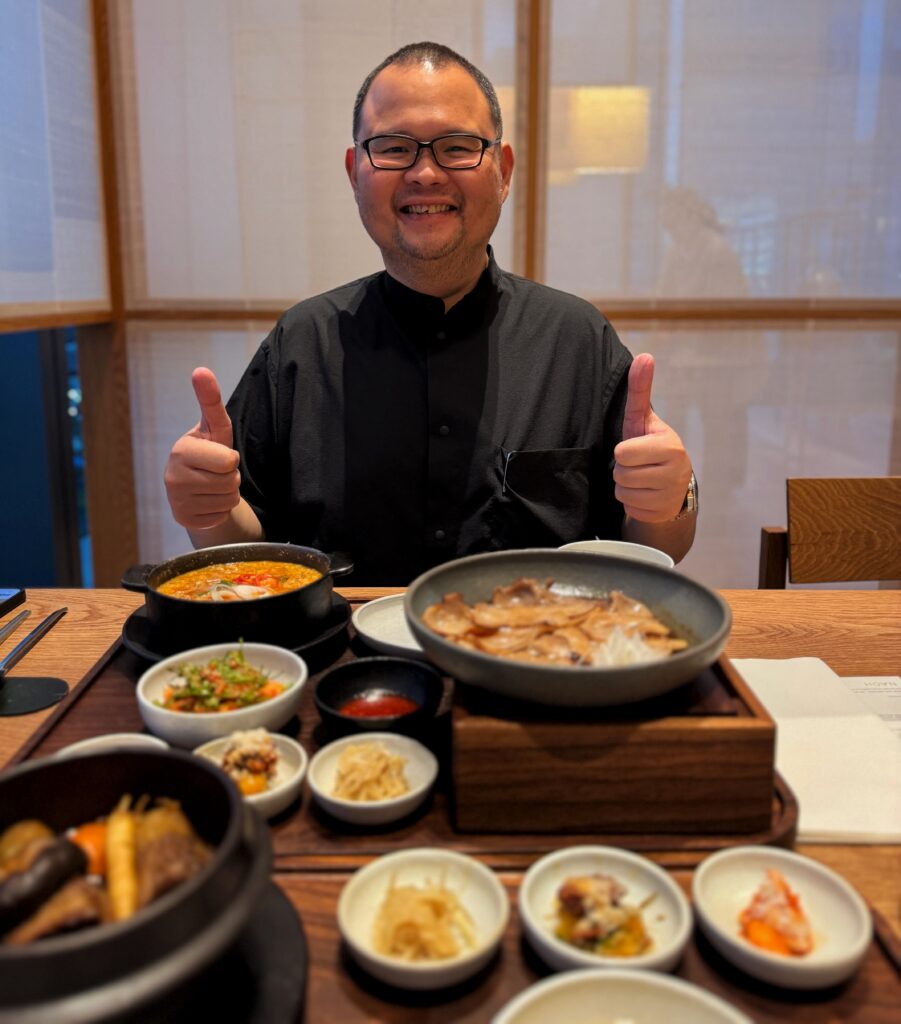
It was the best Galbijim we both have ever tried and we’ve been trying to find a close substitute of it back home, sadly to no avail. The food is exquisite, filling, not something you would expect from Korean fine-dining, but also somehow feels quite homey and comforting.

No meal would be complete without dessert and Na Oh came through with two: Injeolmi cake with candied nuts and seeds and a pear sorbet with fresh and preserved persimmon sujeongwa. Both were sweet and exquisite. Not overpowering, but enough to balance out the palette after a hearty meal.


What Stays With You
Na Oh means “moving from inside out” in Korean, and the name earns itself. The Skytrack, the VR tour, the robotic farm — all of it is genuinely interesting, and none of it is the point. The point is the jang. Na Oh is proud to say they only use jang made from traditional methods using the finest soy sauce, doenjang and gochujang. Their gochujang is fermented using also traditional methods and aged naturally which gives it the sharp and exquisite taste without overpowering your palette.

The charcoal. The greens that still taste like they’re alive. The food at Na Oh is carefully and patiently crafted, seasoned with time. The natural passage of time in the key ingredients is an ingredient in itself that produces food which doesn’t need to explain itself, only savored to be understood.

It turns out that food grown by robots but cooked with soul isn’t a contradiction. At Na Oh, it’s just what dinner looks like when two very different kinds of precision decide to share a table.

Na Oh’s menu changes with the seasons. Since we came in early February, we savored the winter menu. We’ll be back in a few months here in Singapore and we’ll definitely come back to Na Oh to try their summer menu next!

Na Oh is located at the Hyundai Motor Group Innovation Center Singapore (HMGICS), 3 Tanjong Aku Walk, Jurong West. Open Wednesday to Sunday for lunch and dinner. Reservations recommended.