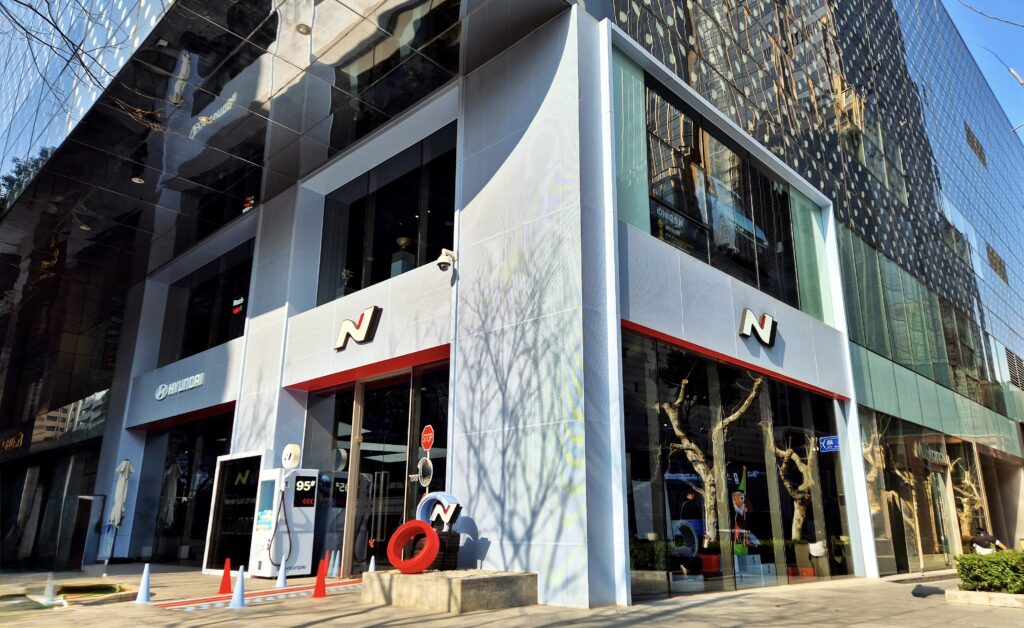

Business trips rarely leave room for automotive indulgence. Schedules are tight, meetings blur together, and most spare hours are usually spent recovering rather than exploring. So during a recent visit to Shanghai, discovering the Hyundai N Center felt like an unexpected reward hidden within the city’s dense urban landscape.
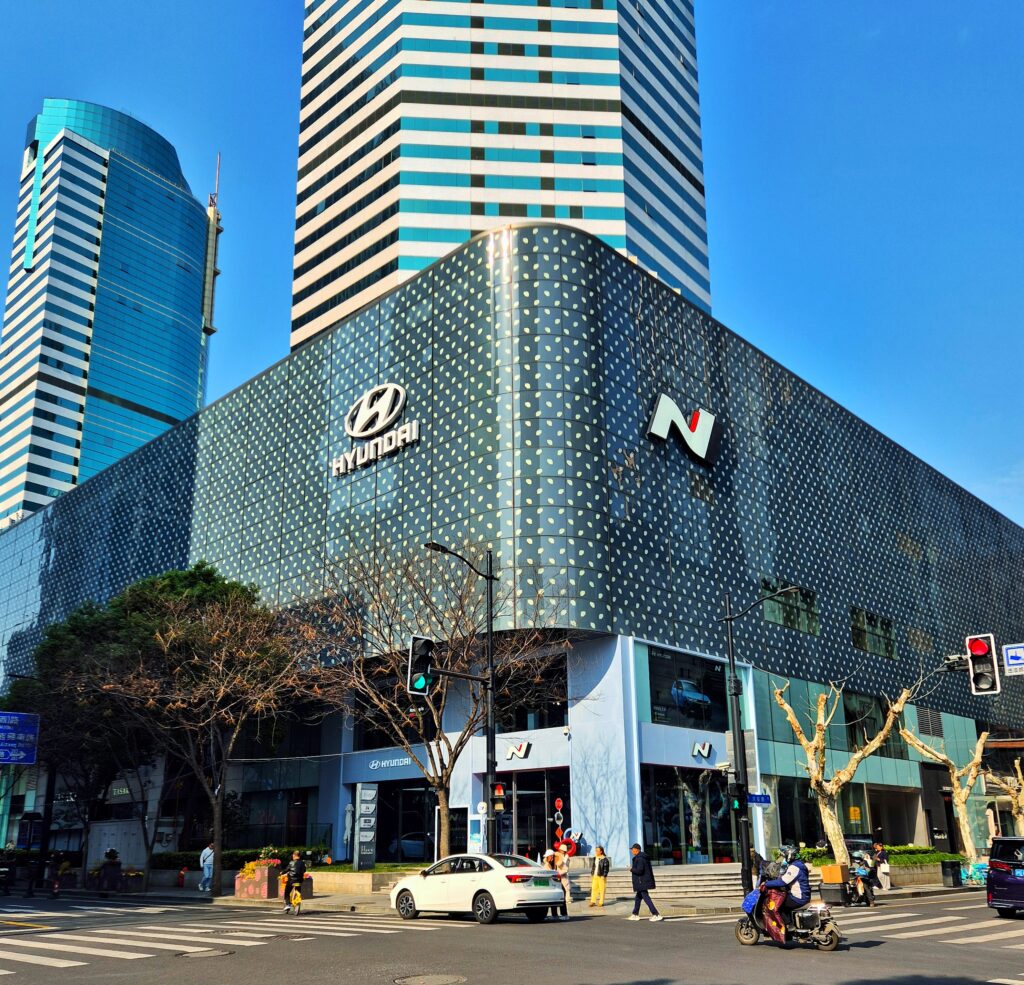
In a market increasingly dominated by domestic EV brands and futuristic technology showrooms, the Hyundai N Center offered something refreshingly different: a focused celebration of driving engagement and performance engineering. For an enthusiast with only a few free hours between meetings, it proved to be the ideal detour.
Located within Shanghai’s central business district, the N Center is impossible to miss. Sharp architecture, bold N branding, and Hyundai’s signature Performance Blue accents immediately distinguish it from the polished minimalism common among neighboring showrooms. Yet despite its obvious performance intent, the atmosphere is surprisingly approachable.
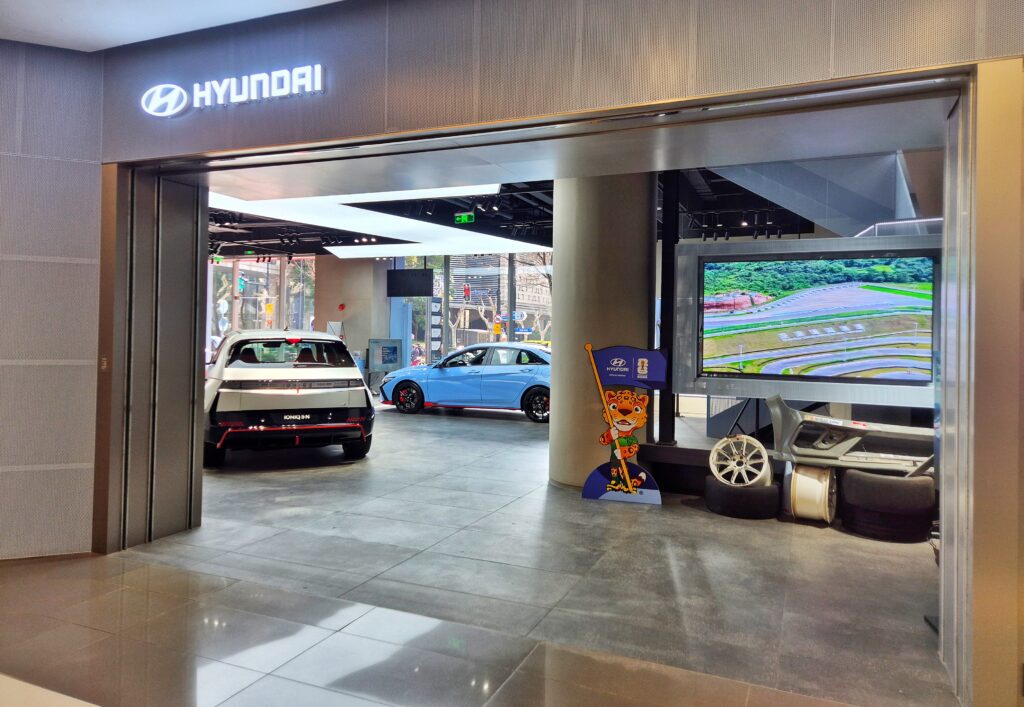
Entry is open to the public, making the space feel more like an experiential gallery than a traditional dealership. Reception is polished and welcoming, with staff comfortably switching between Mandarin and English. The overall tone is relaxed yet professional—more curated lifestyle destination than sales floor.
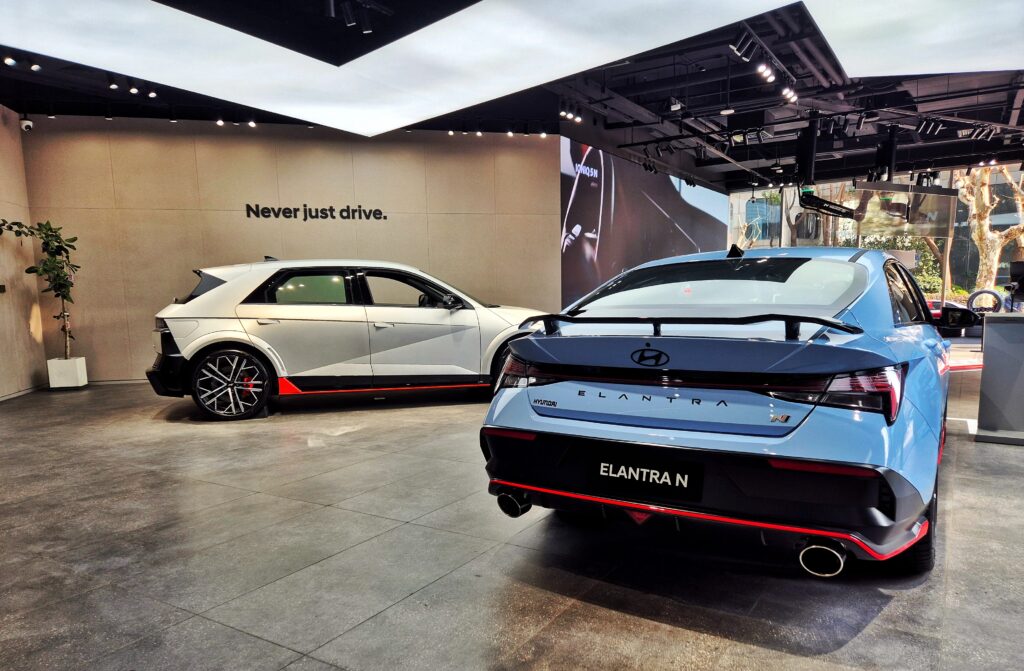
Inside, the center balances storytelling with technical depth.
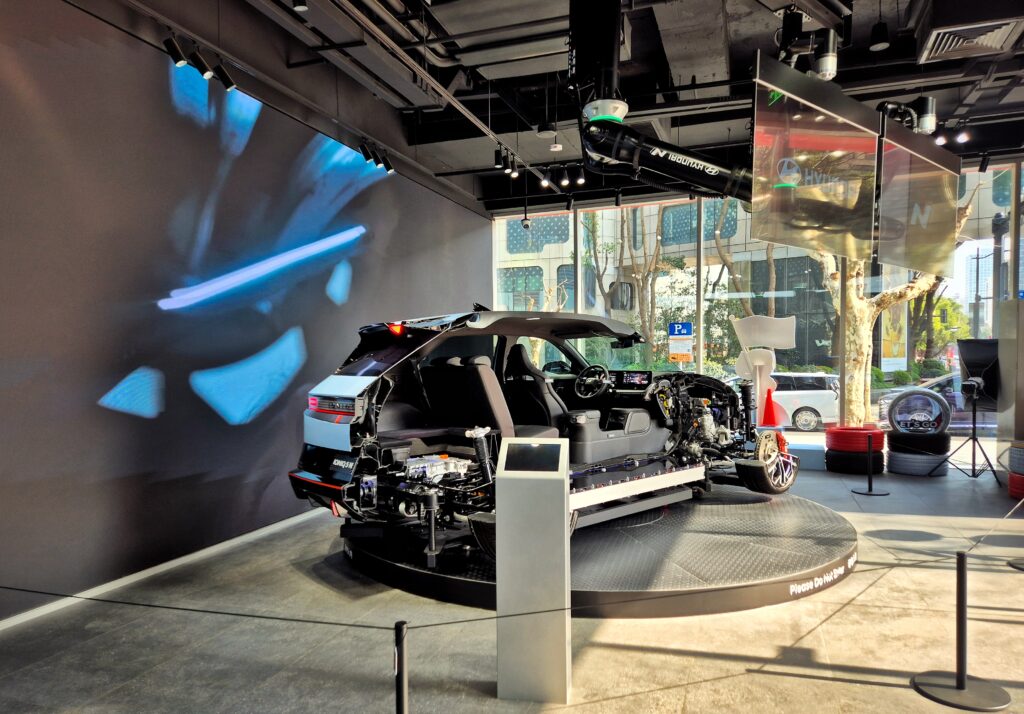
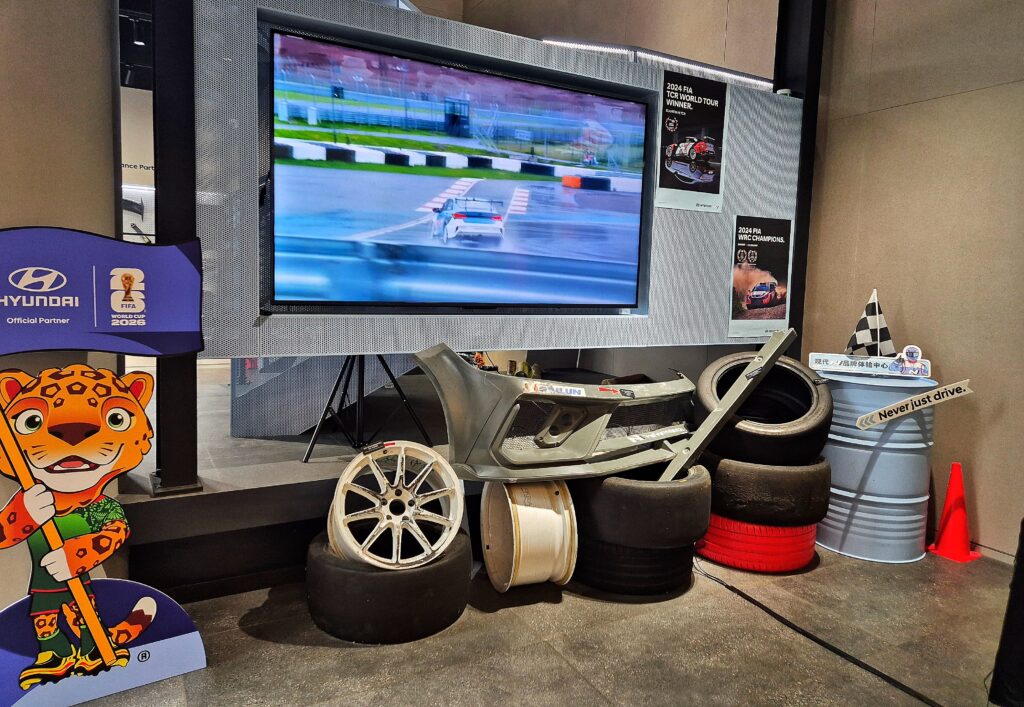
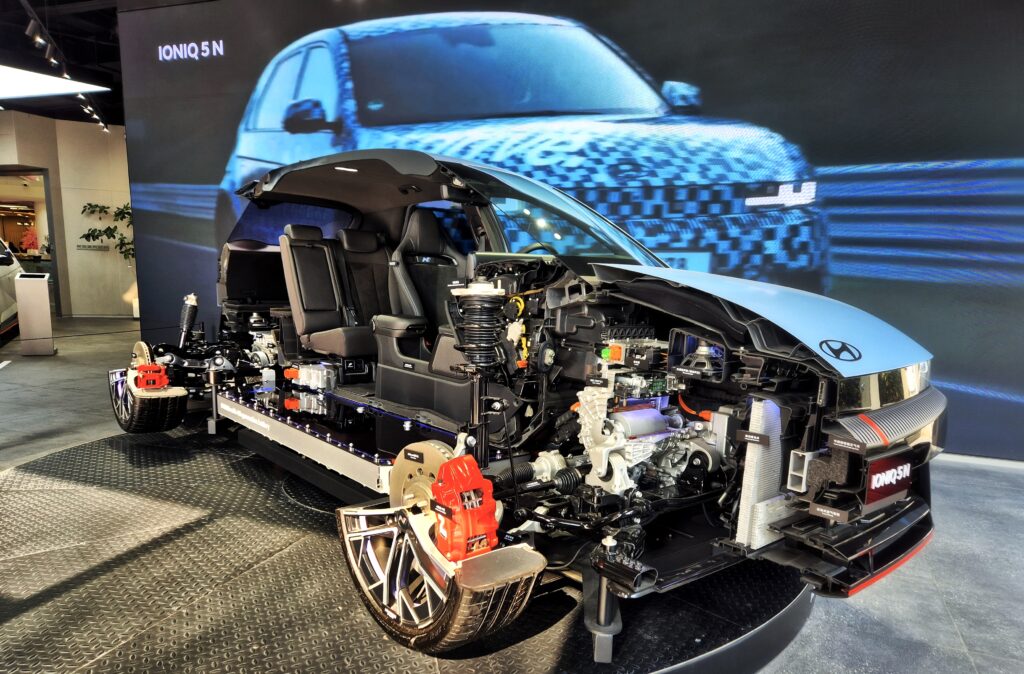
Displays trace the evolution of Hyundai’s N division, from its motorsport roots to its modern high-performance road cars. Design sketches, aerodynamic studies, suspension components, and chassis cutaways are thoughtfully presented, allowing visitors to examine the engineering philosophy behind the badge rather than simply admire finished products.
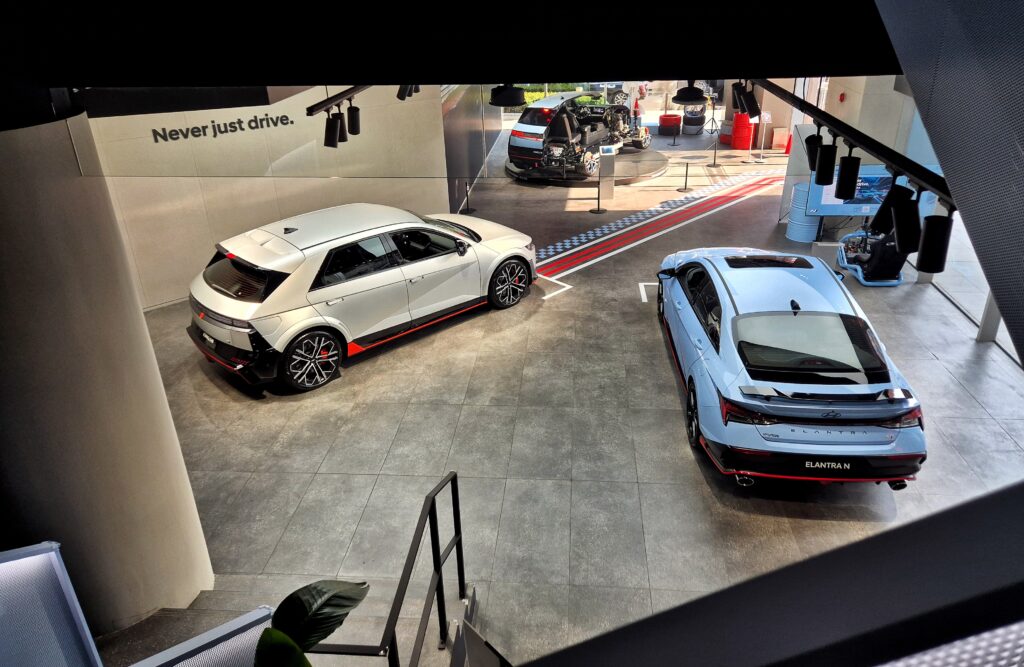
One particularly compelling display featured a cutaway Hyundai Ioniq 5, exposing the architecture of its electric platform and battery systems. Interactive kiosks and augmented reality demonstrations further explained how differential tuning, chassis setup, and software calibration influence vehicle dynamics. For someone working within the constraints of a business schedule, the exhibits delivered a concise but genuinely informative overview of Hyundai’s growing performance ambitions.
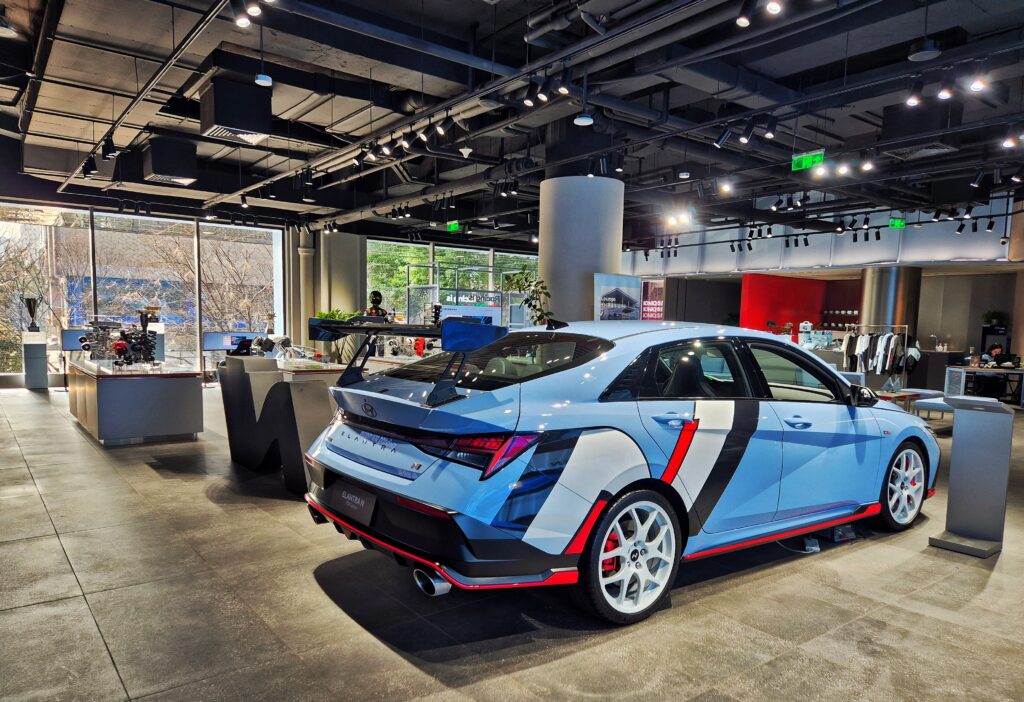
The vehicles themselves remain the centerpiece.
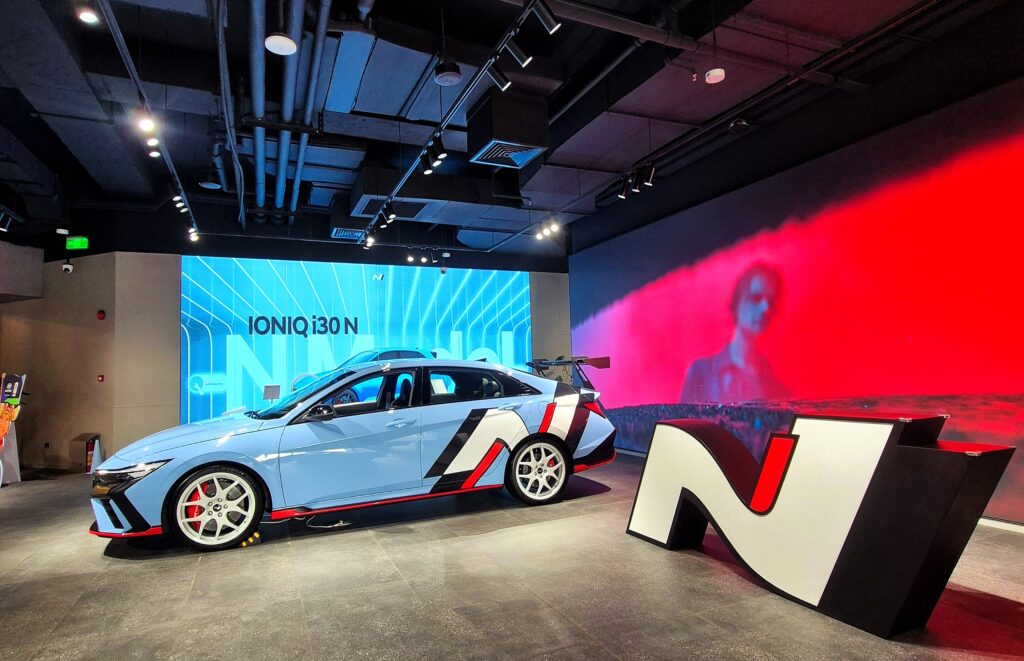
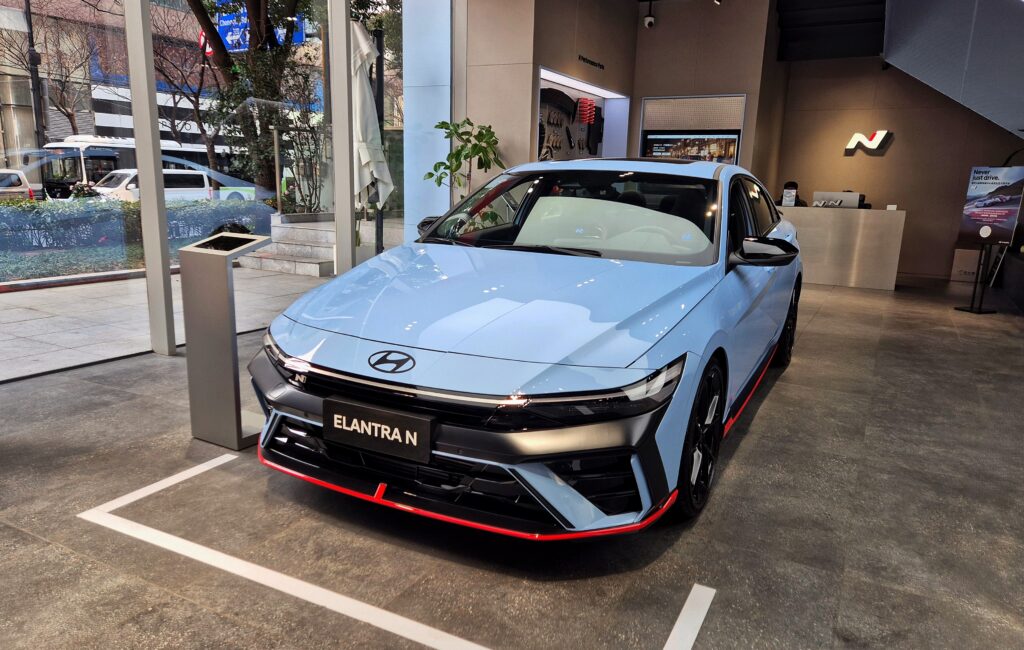
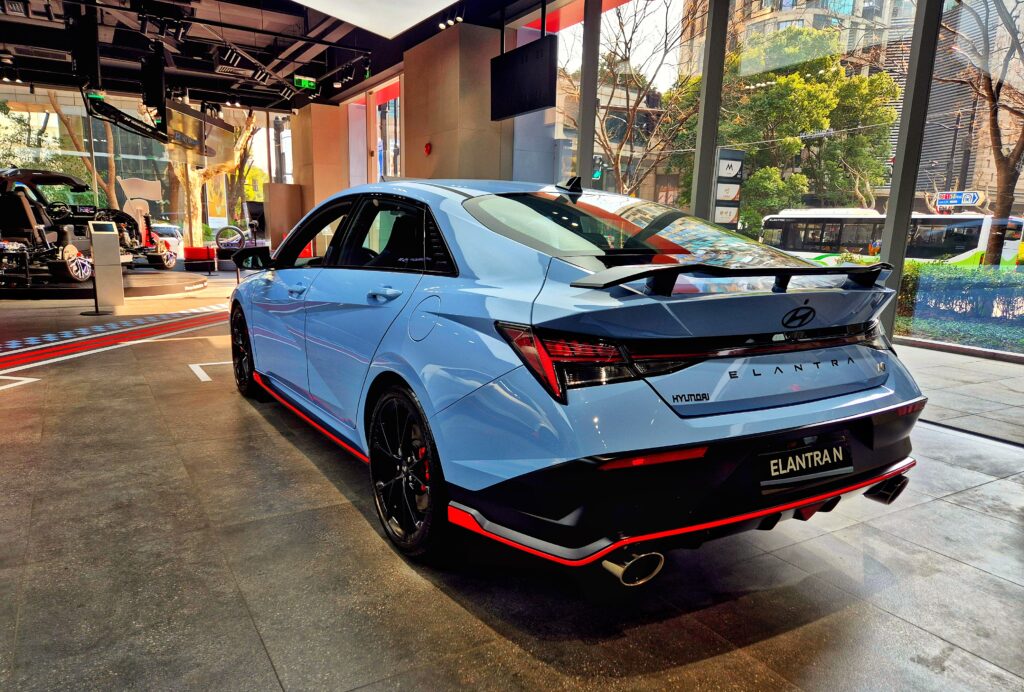
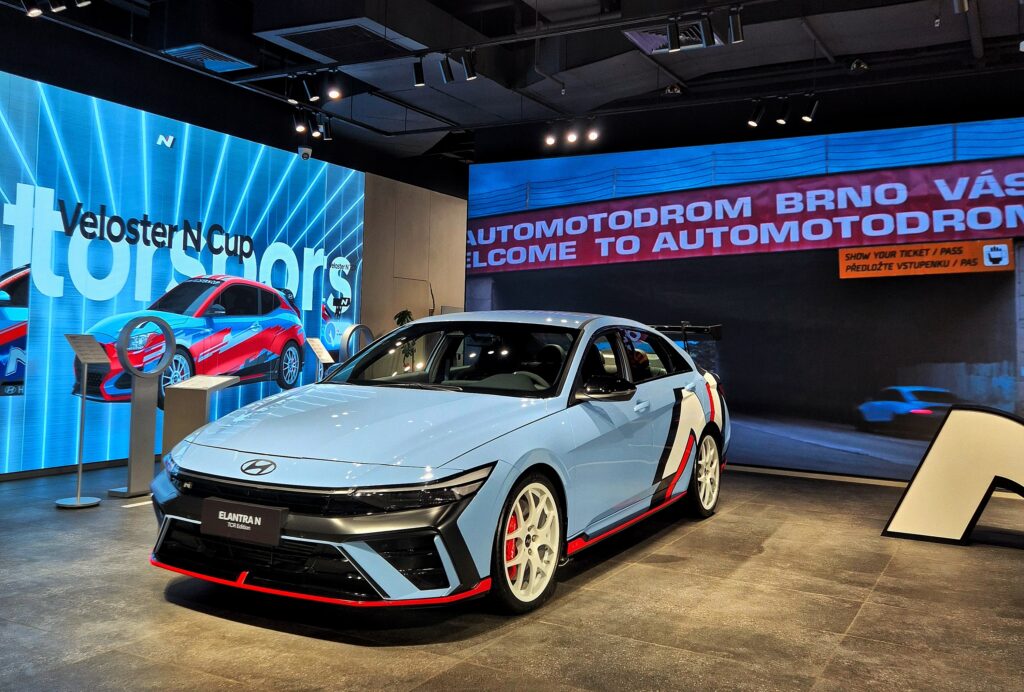
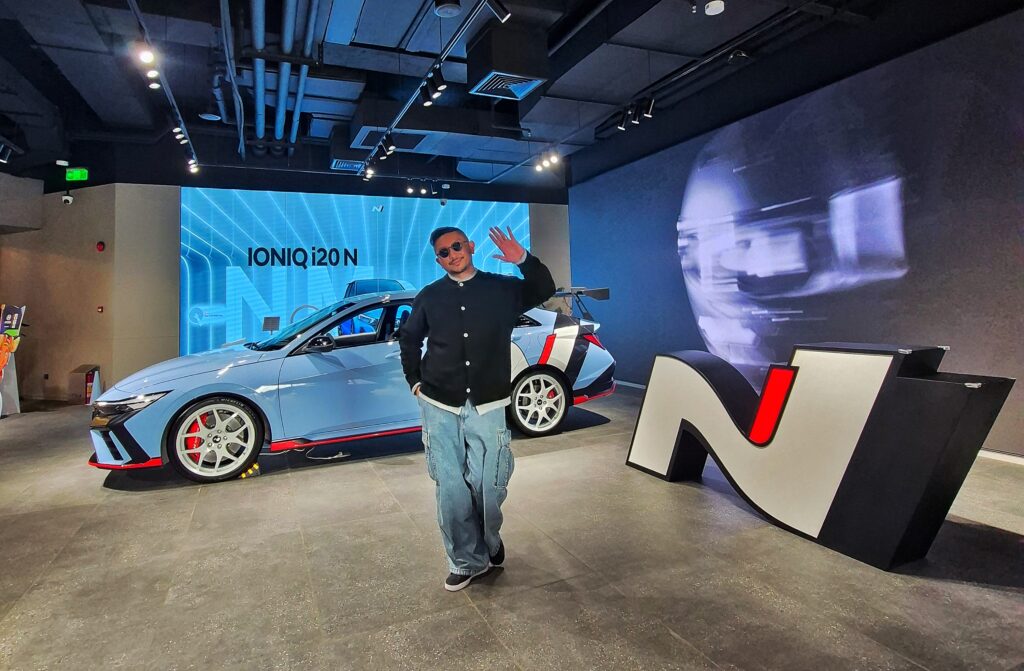
During my visit, the spotlight fell on the Hyundai Ioniq 5 N and the Hyundai Elantra N—two very different interpretations of driver-focused performance.
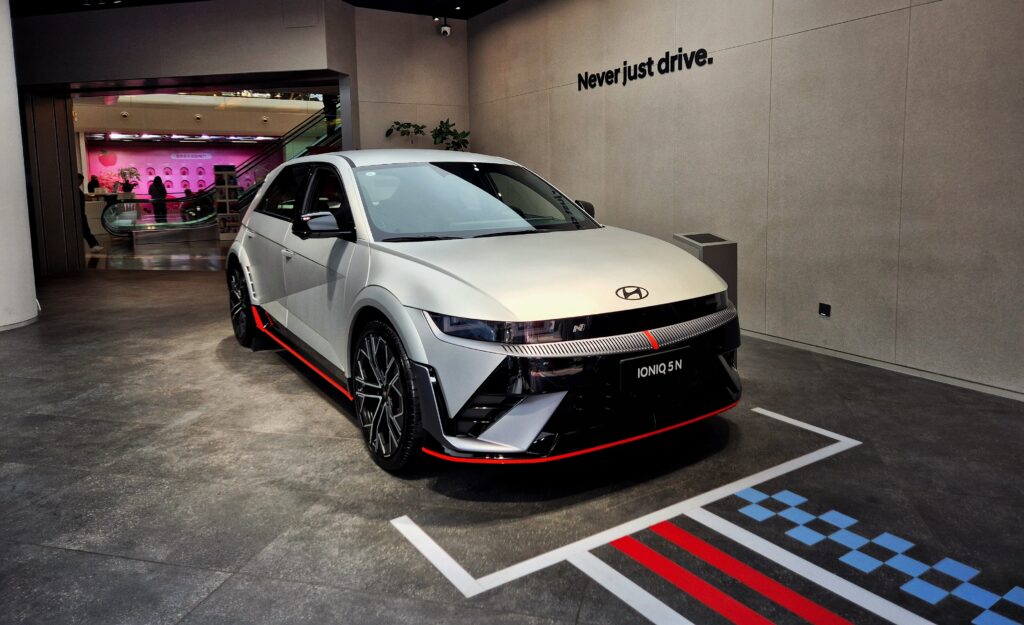
The Ioniq 5 N demonstrated how electrification can still deliver emotional engagement. Aggressive aerodynamic details, a purposeful stance, and a cockpit clearly designed around feedback rather than mere digital spectacle gave the car a surprising sense of character.
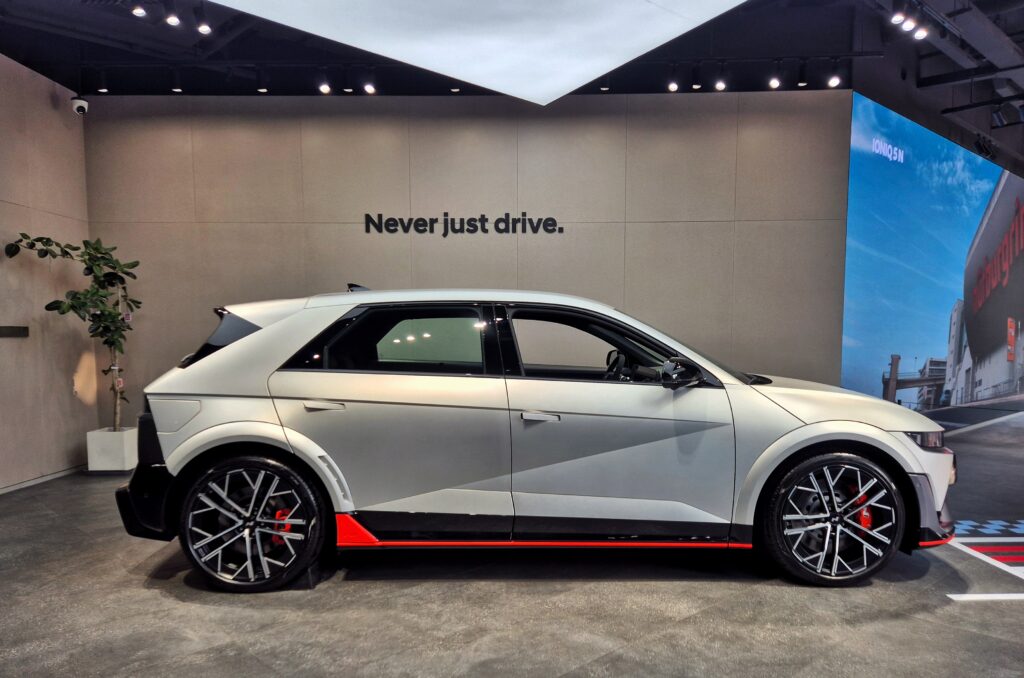
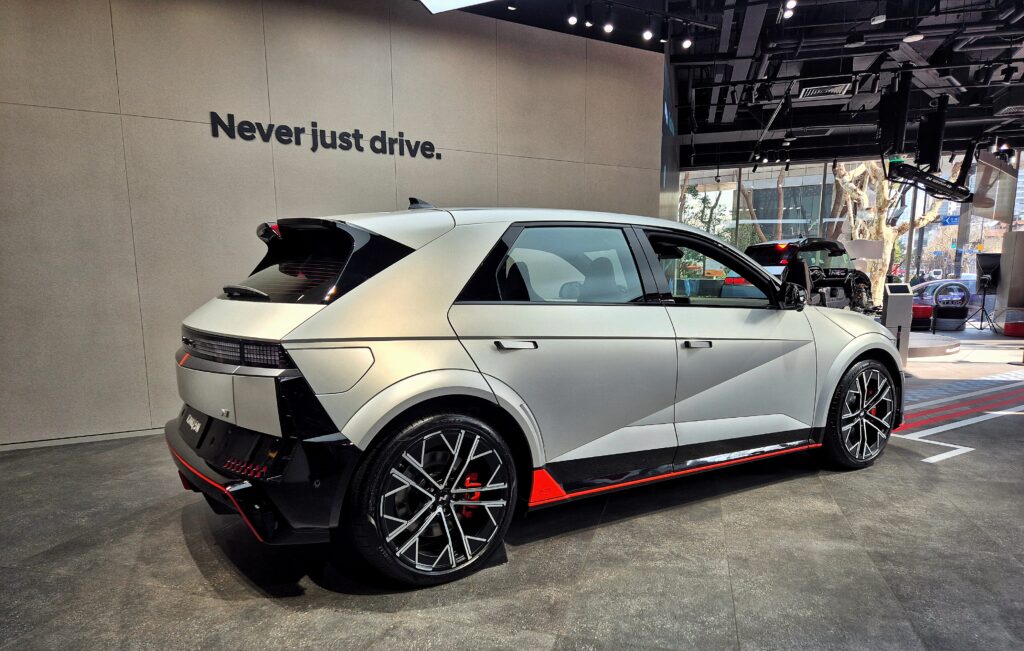
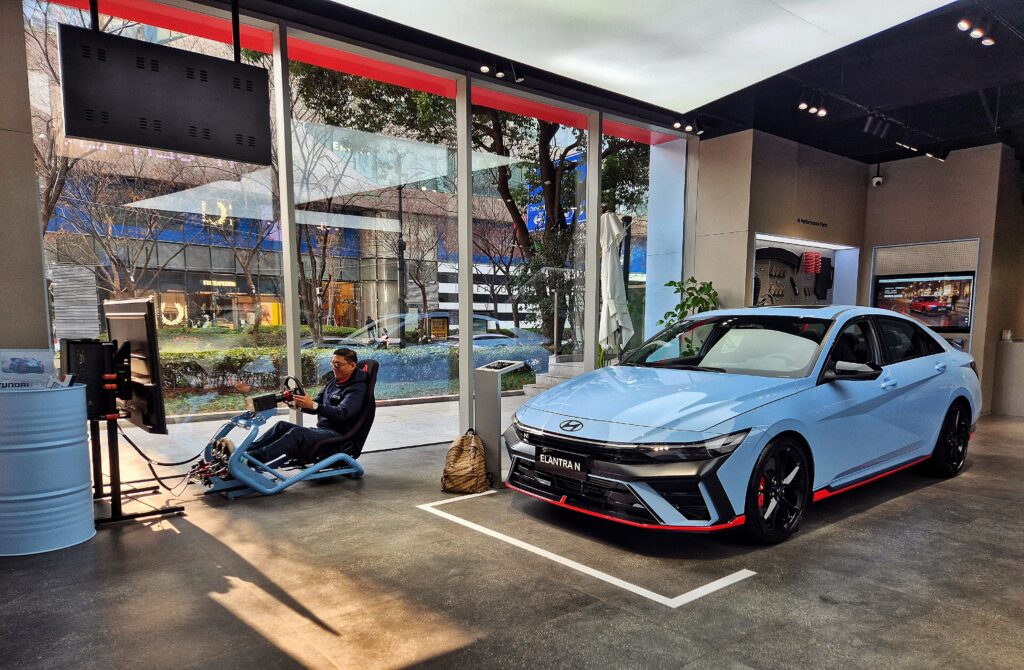
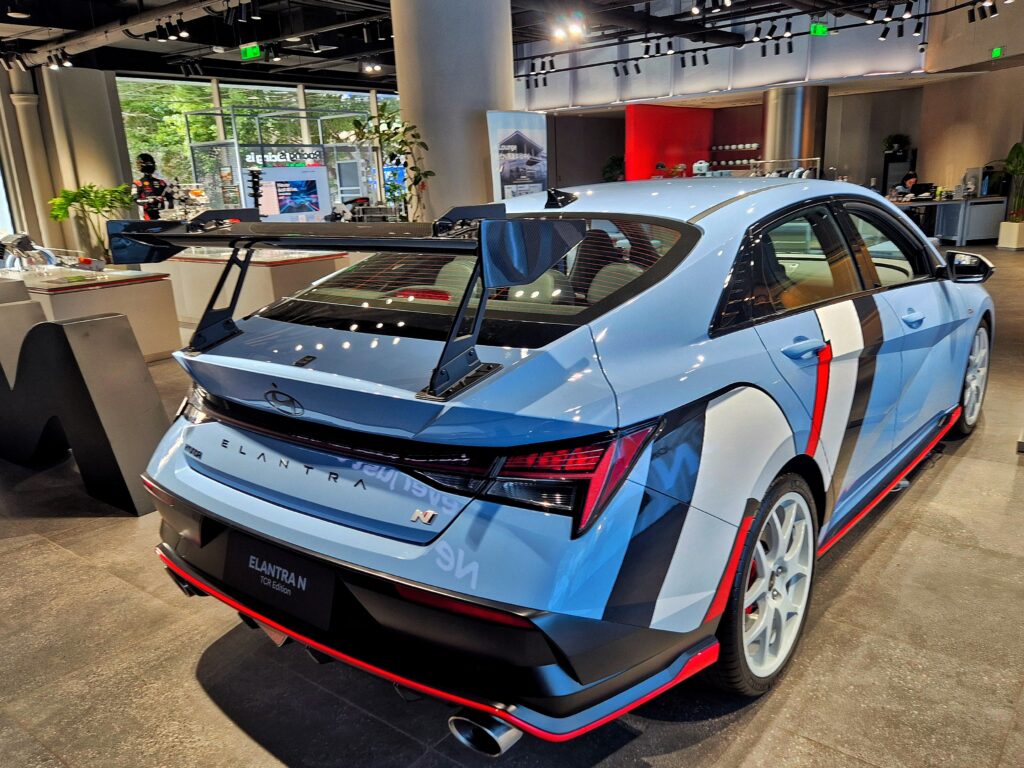
The Elantra N, meanwhile, leaned into a more traditional formula: turbocharged performance, sharp chassis tuning, supportive sport seats, and an exhaust note engineered to inject drama into everyday driving.
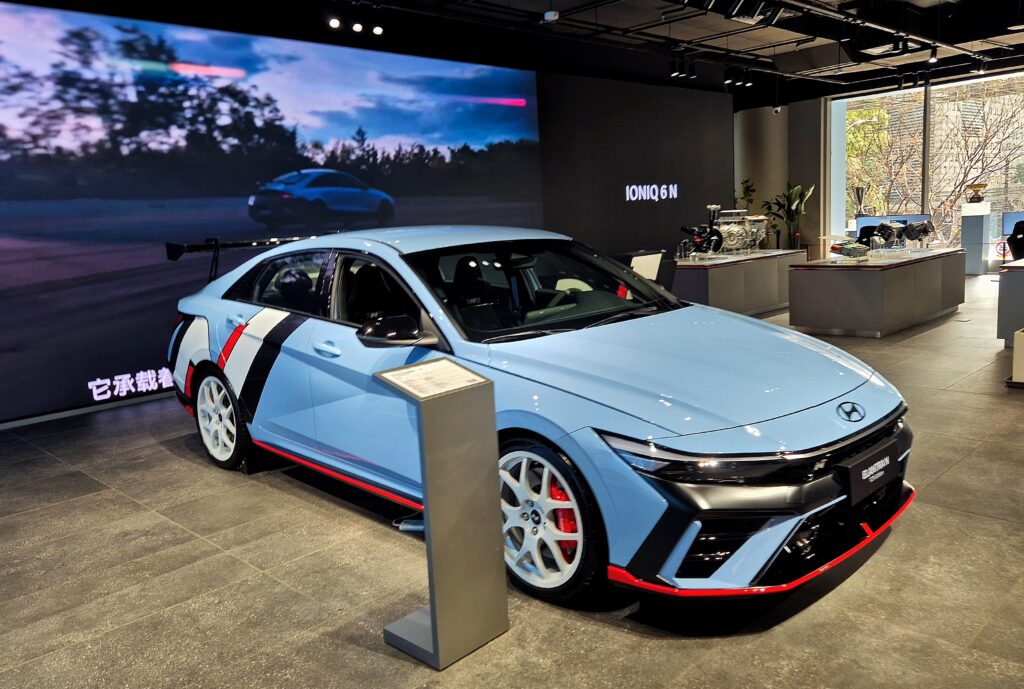
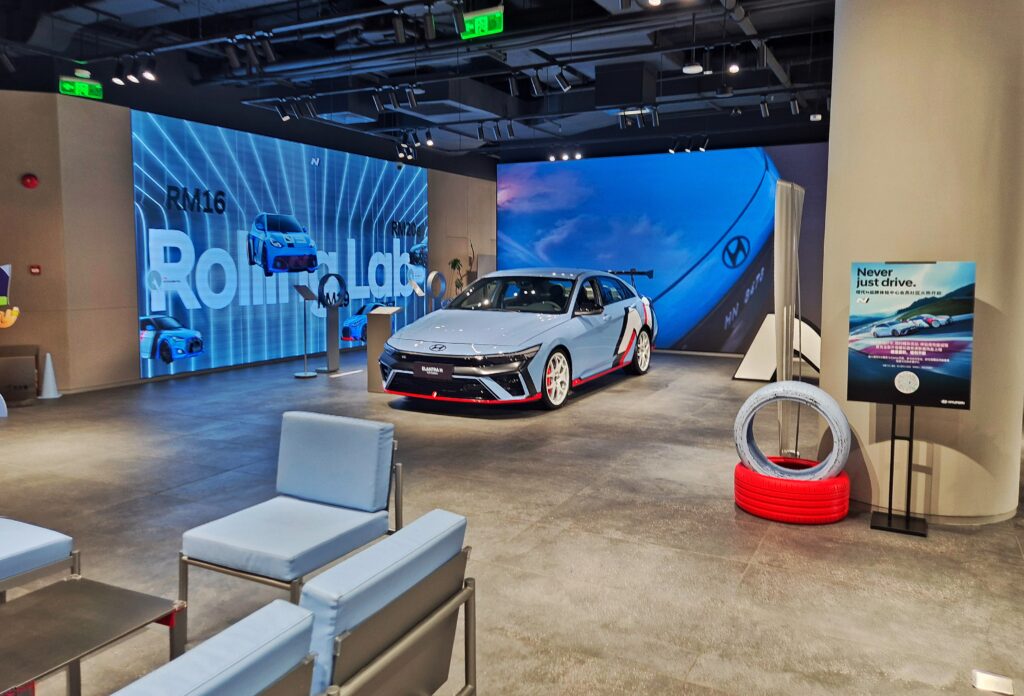
Upstairs, however, sat the highlight of the visit: a race-prepared Elantra N TCR car.
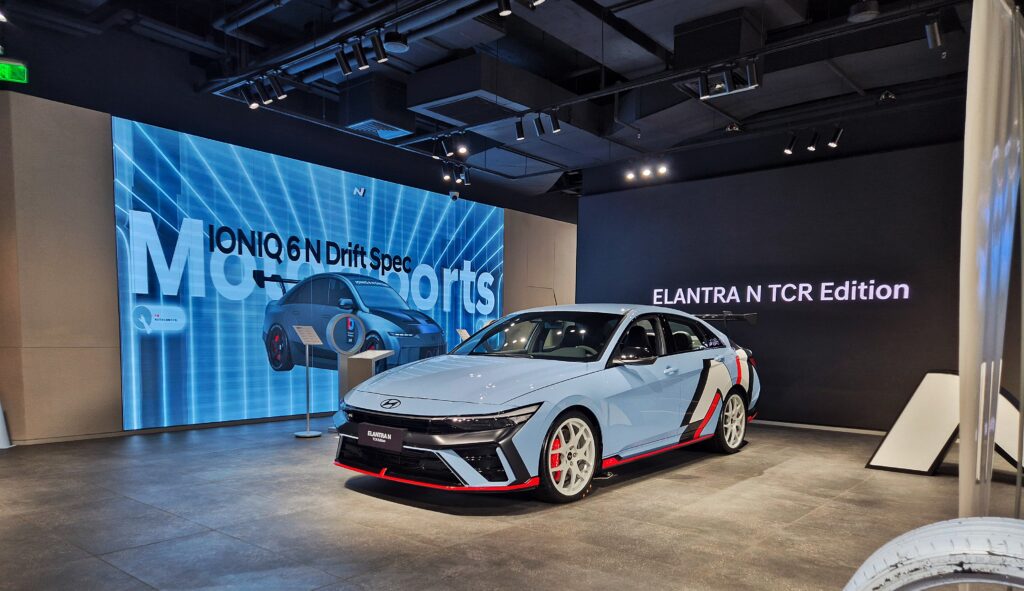
Stripped bare and fitted with a roll cage, racing suspension, aerodynamic enhancements, and slick tires, the TCR machine immediately revealed the seriousness behind Hyundai’s motorsport efforts. Positioned above the showroom floor, it served as a visual reminder that Hyundai’s road-going N models are not merely marketing exercises, but vehicles shaped by genuine racing development.
Perhaps the most entertaining part of the experience was the simulator area.
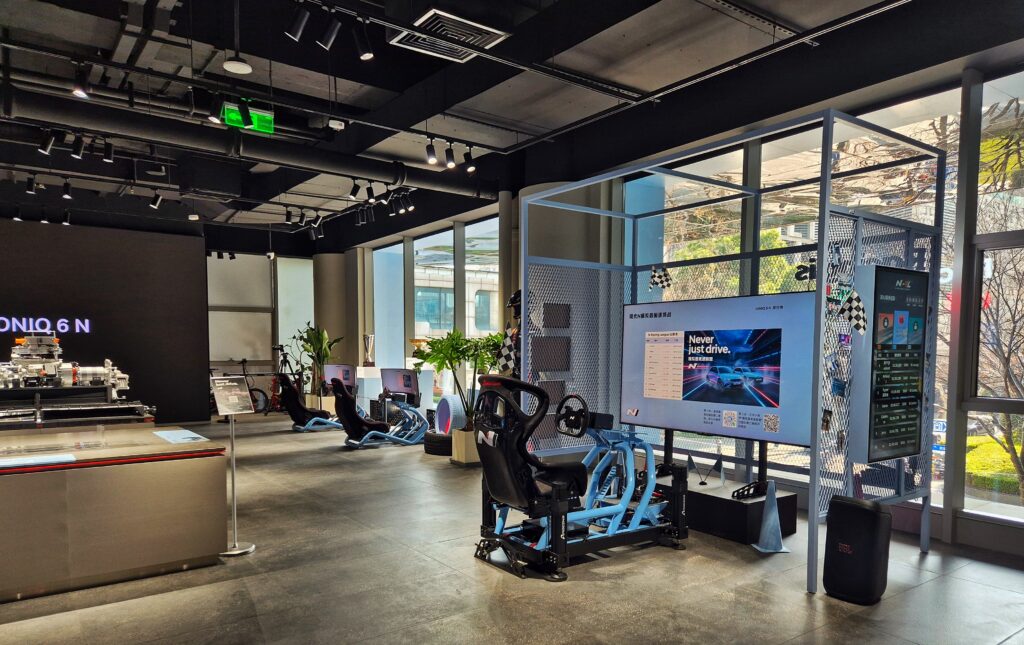
The center houses four high-fidelity racing simulators equipped with force-feedback steering, realistic pedal response, and detailed telemetry displays. While simulators can often feel gimmicky, these were surprisingly immersive.
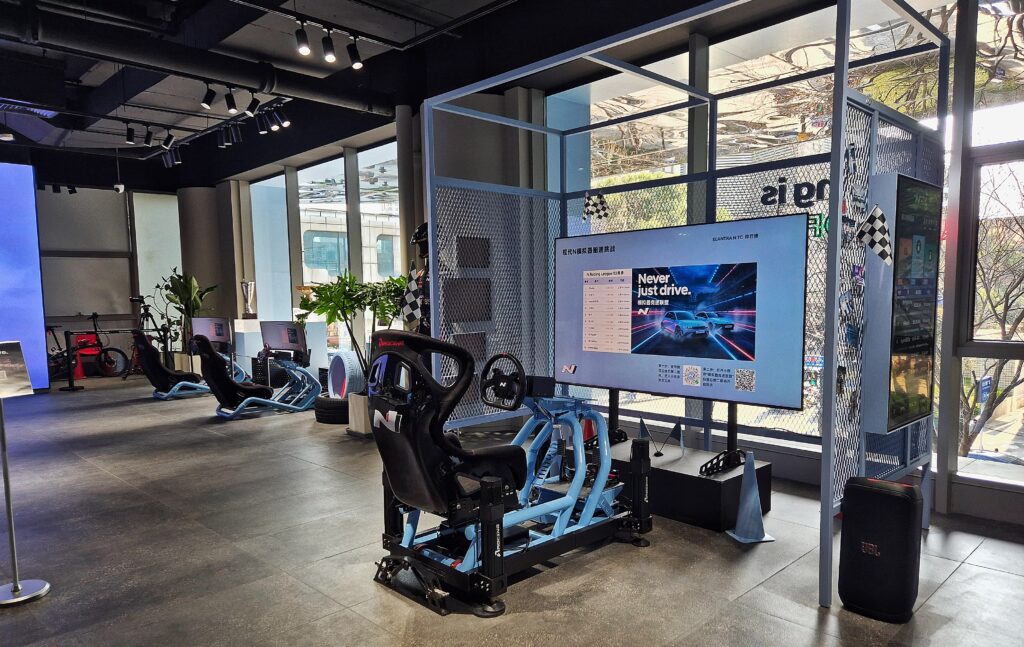
Running laps in both the Ioniq 5 N and Elantra N revealed distinct personalities. The Ioniq’s instantaneous torque delivery rewarded aggressive corner exits and quick directional changes, while the Elantra favored smoother inputs, trail braking, and careful weight transfer. Switching between drive modes altered steering feel, throttle response, and traction control calibration in ways that were immediately noticeable.
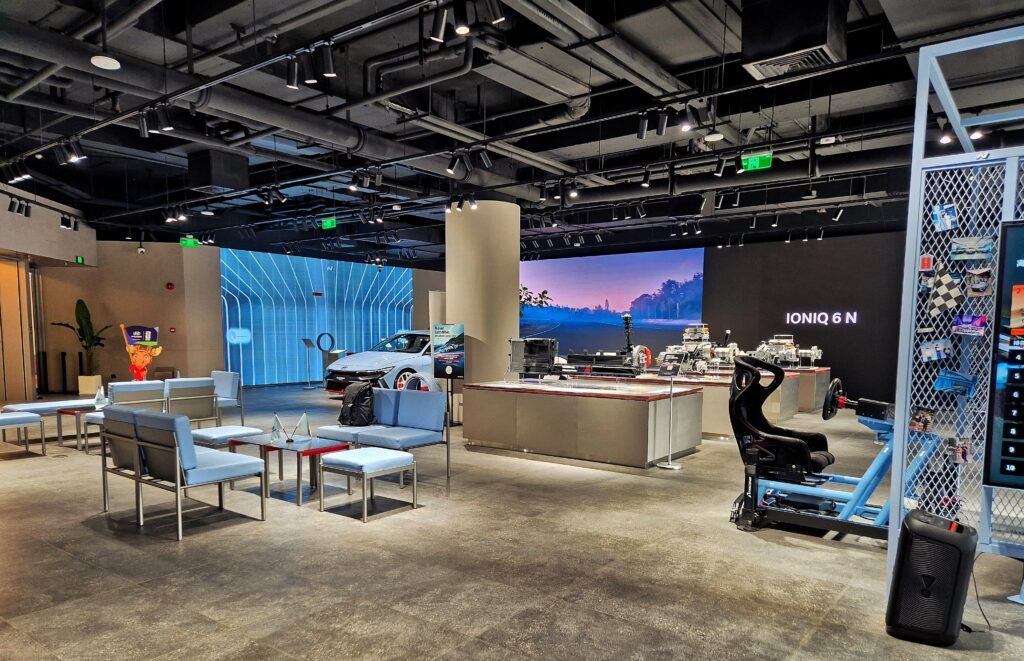
I also sampled the TCR car virtually, which proved considerably more demanding. The race car required far more precision and punished sloppy inputs, yet offered significantly higher cornering limits when driven properly. It was an engaging demonstration of how deeply motorsport engineering influences the broader N lineup.
The experience extends beyond the cars themselves.
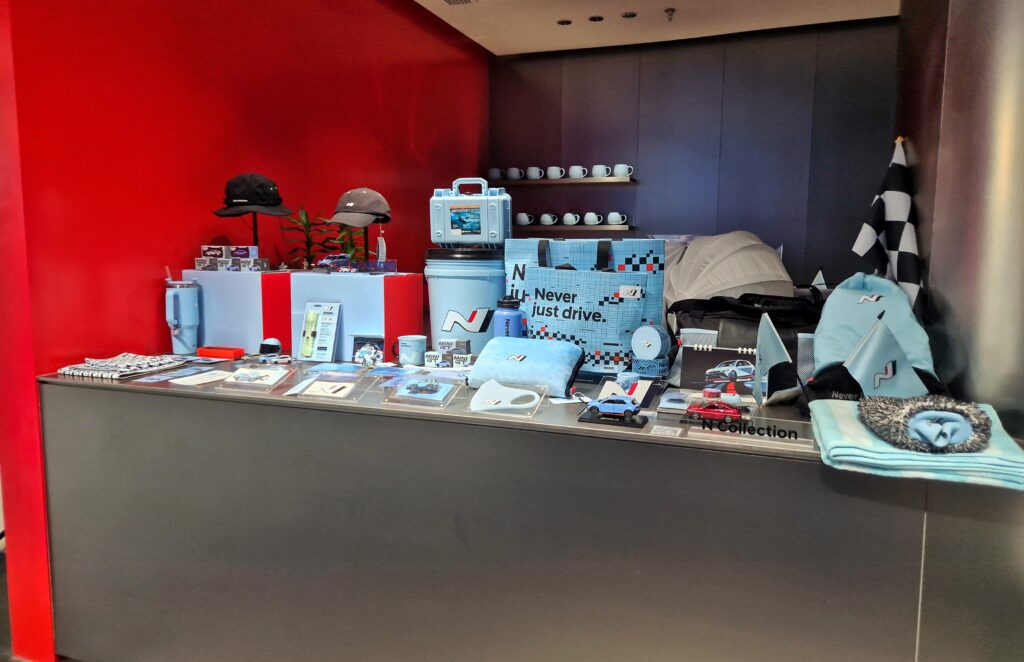
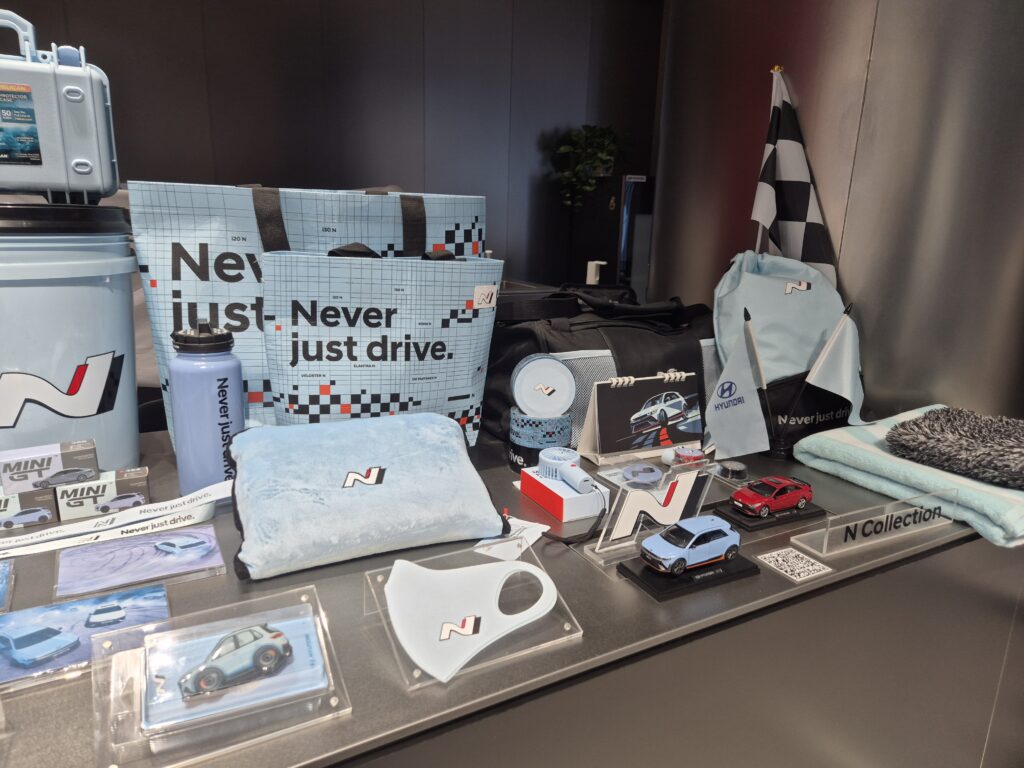
A café and lounge area encourages visitors to slow down, review telemetry data, or simply relax between simulator sessions. Exclusive N-branded merchandise caters to enthusiasts, while occasional workshops and Q&A sessions provide insight into vehicle development, software tuning, and racing feedback.
What made the N Center particularly memorable, however, was the contrast it presented against Shanghai’s wider automotive landscape.
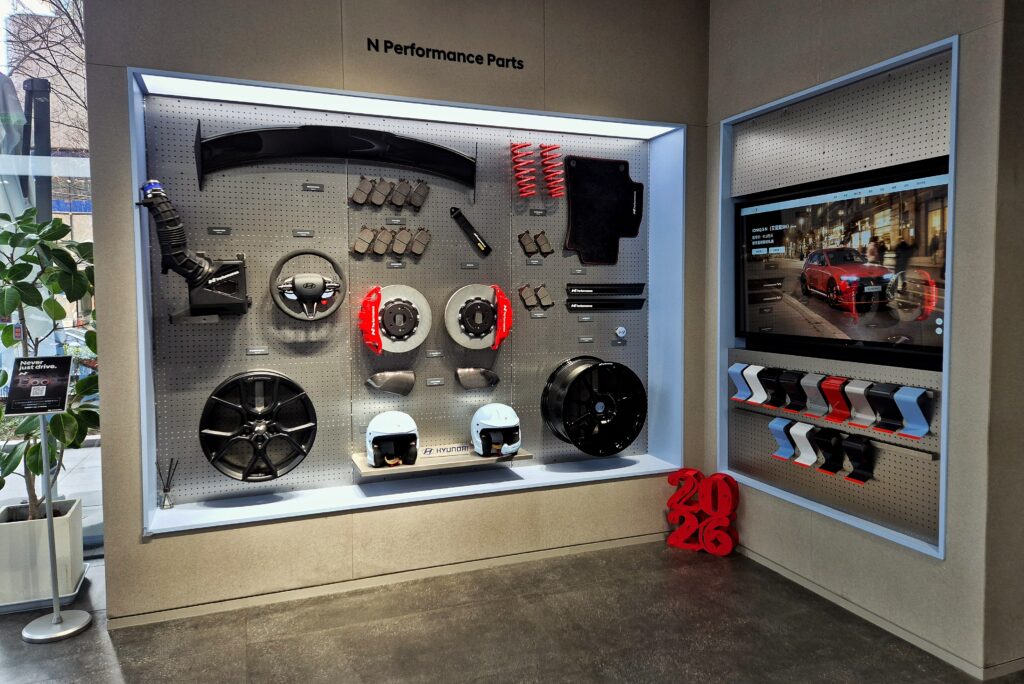
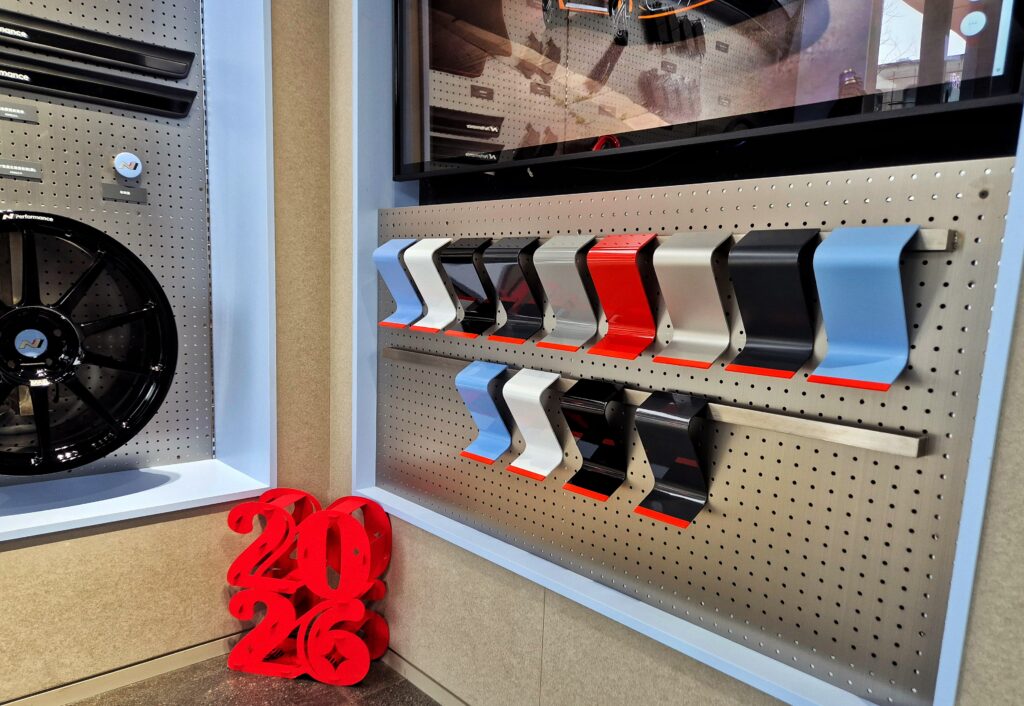
China’s EV industry currently moves at astonishing speed, with domestic manufacturers competing aggressively through technology, digital integration, and dramatic design language. Against that backdrop, Hyundai’s approach felt comparatively restrained—less concerned with spectacle, more focused on engineering substance and driving feel.
It was a reminder that even within an increasingly software-driven automotive future, there remains space for enthusiast culture.
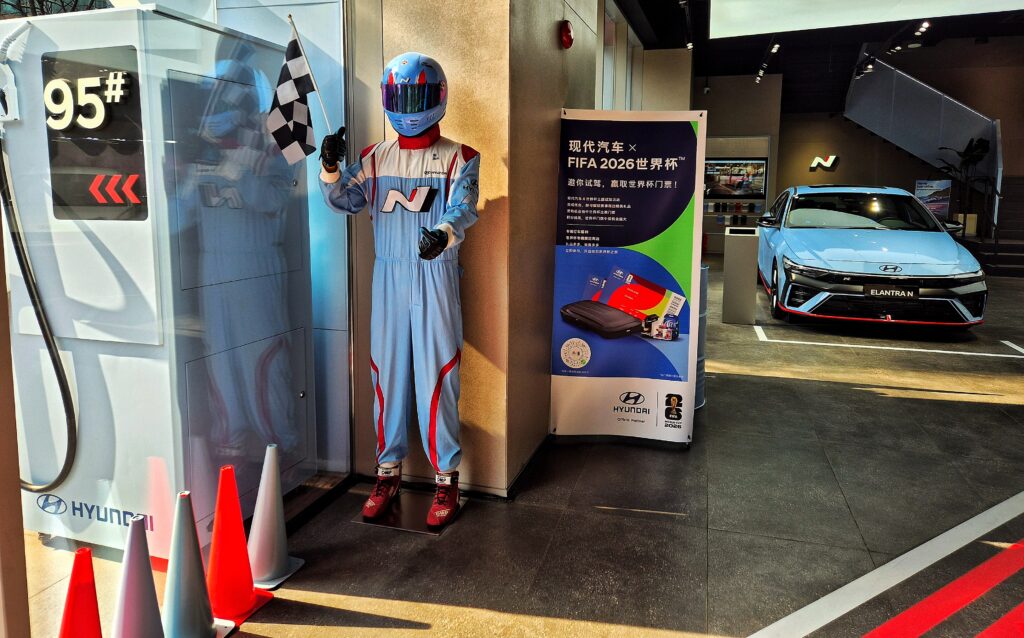
I had not expected a meaningful automotive experience to emerge from an otherwise routine business trip. Yet the Hyundai N Center delivered precisely that: a compact but thoughtfully executed immersion into modern performance engineering.
For travelers passing through Shanghai—particularly those with even a passing interest in driving—it is well worth seeking out. Not simply because of the cars themselves, but because the space captures something increasingly rare in today’s automotive world: A belief that performance is still meant to be felt.