
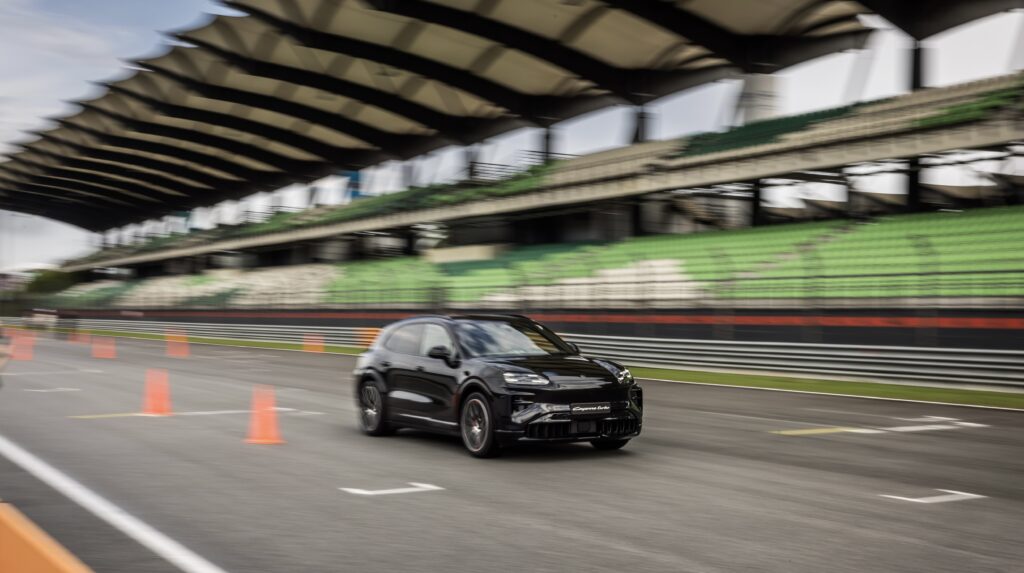
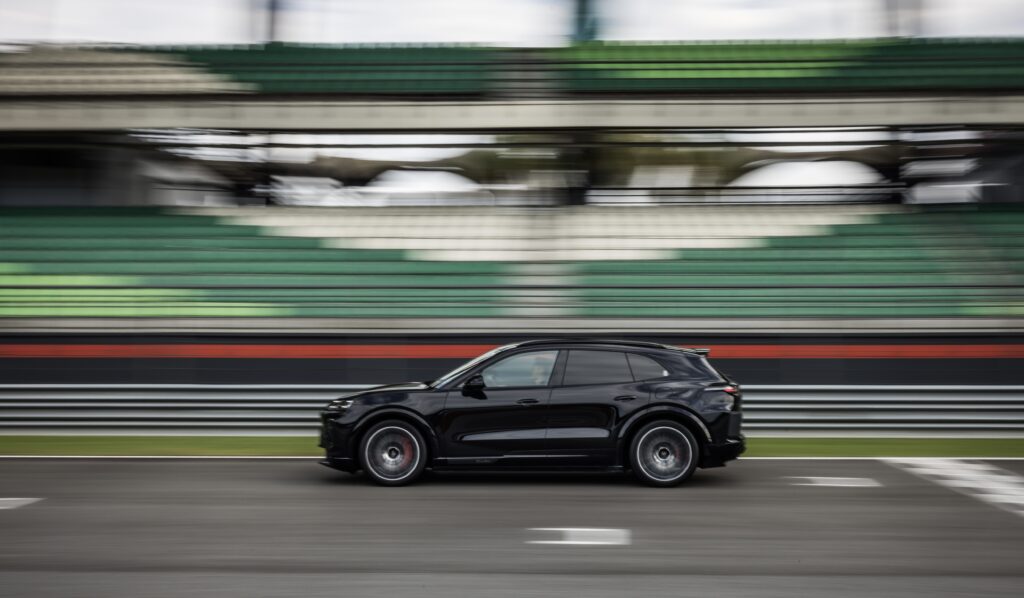
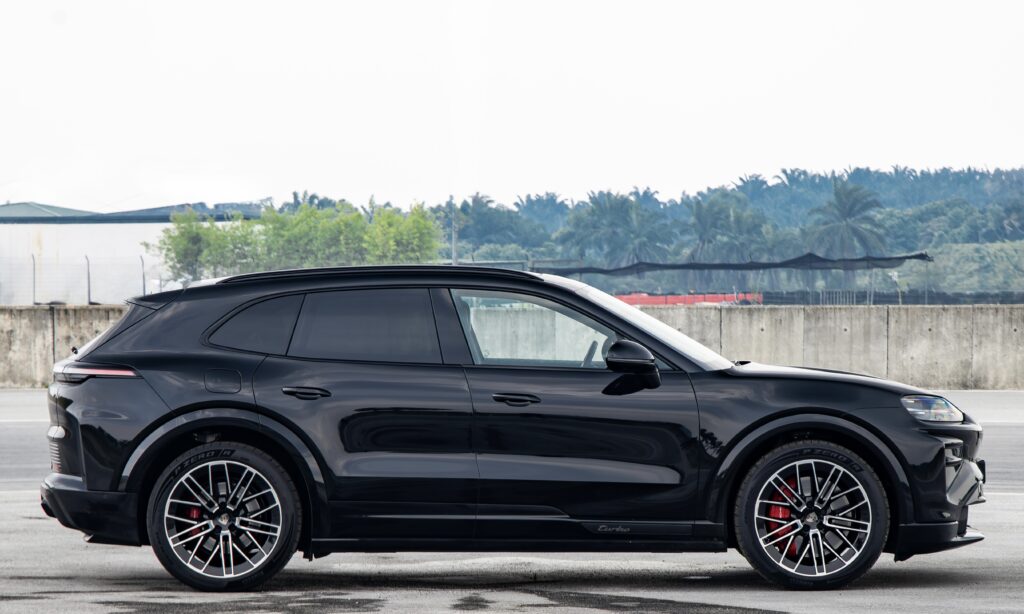
Perhaps the most comical aspect of all this physics-bending madness is that it is wrapped in a practical, four-door, five-seat sport utility vehicle body style rather than a rakish, low-slung supercar. This is Porsche. It feels entirely wrong the first time you take it all in and experience it firsthand.
But that’s okay. Porsche has been doing things “wrong” for the past 75 years, resolutely defying automotive convention at every possible turn. They put the engine hanging off the very back of the 911, placed the ignition on the left and abandoned the venerable air-cooled powerplants purists viewed integral to Porsche’s DNA. More recently, Porsche developed an SUV and a four-door saloon with performance worthy of bearing the crest.
Today, the brand’s ultimate challenge is surviving the transition to electrification while faithfully preserving the core Porsche ethos of performance, reliability, and sheer driving pleasure.
Thankfully, Porsche is doing swimmingly well, despite the rough roads before it, financially at least.
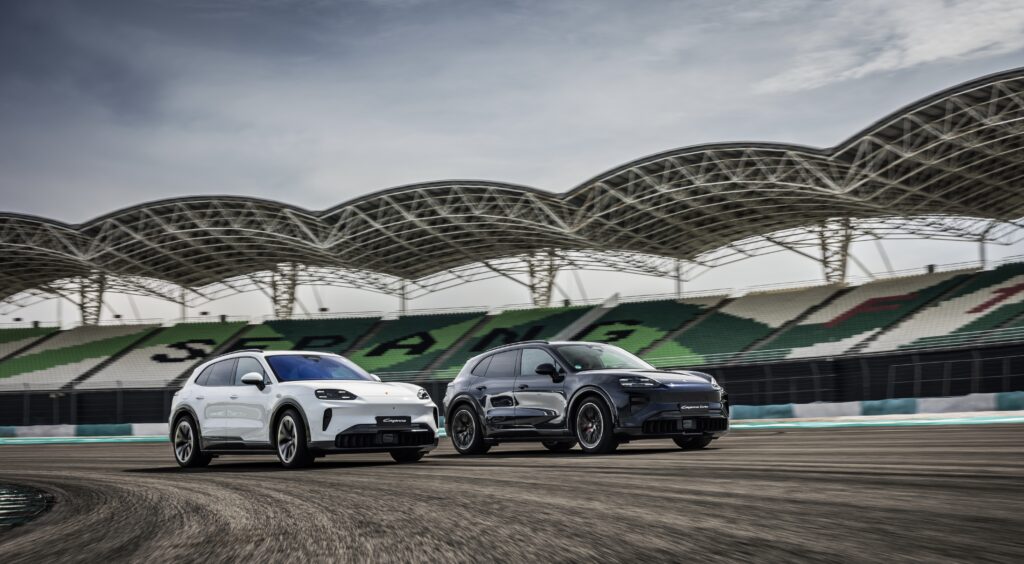
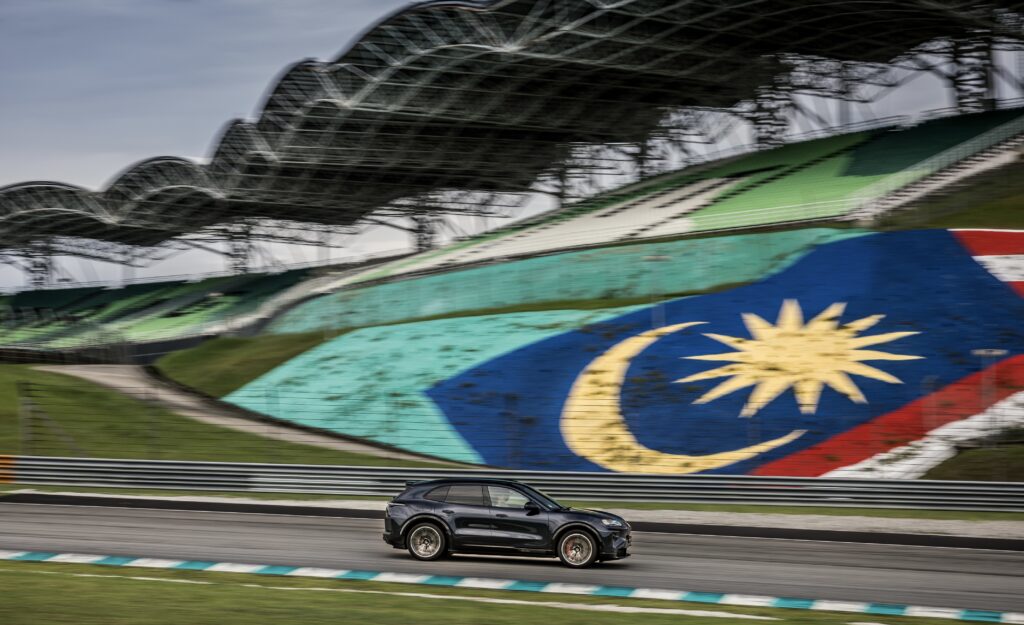
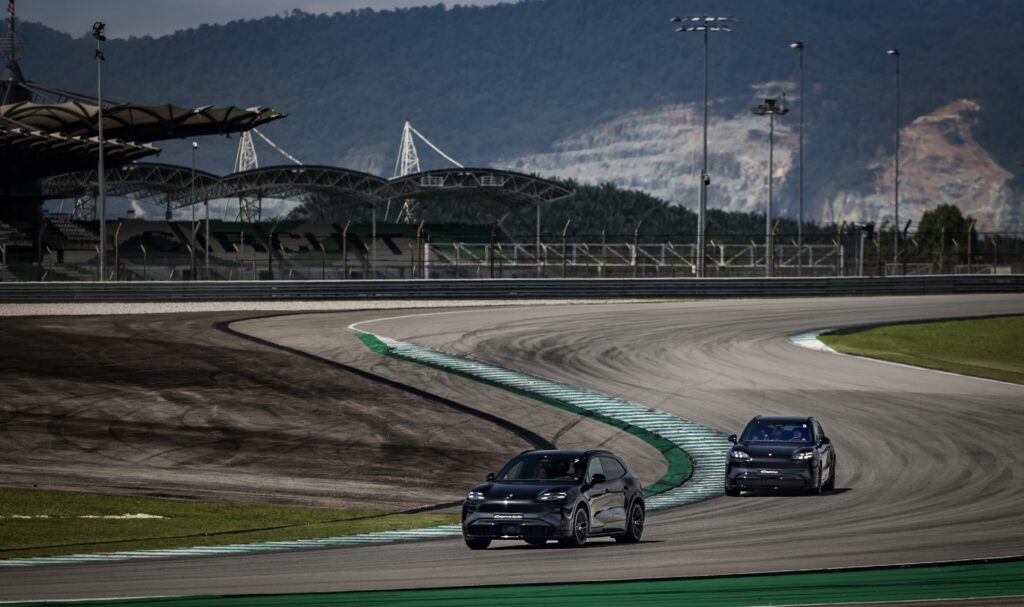
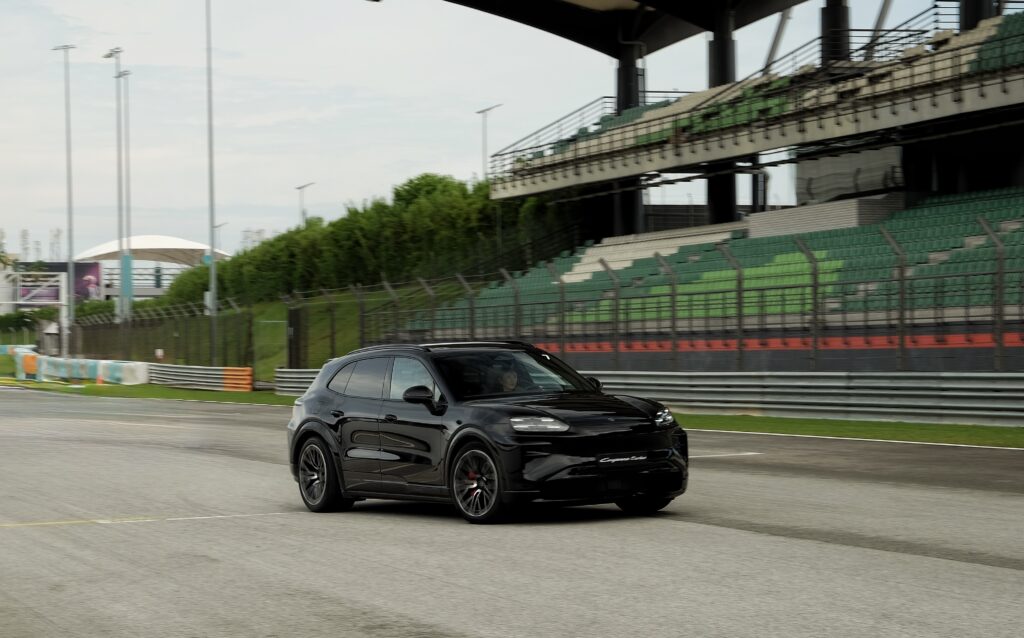
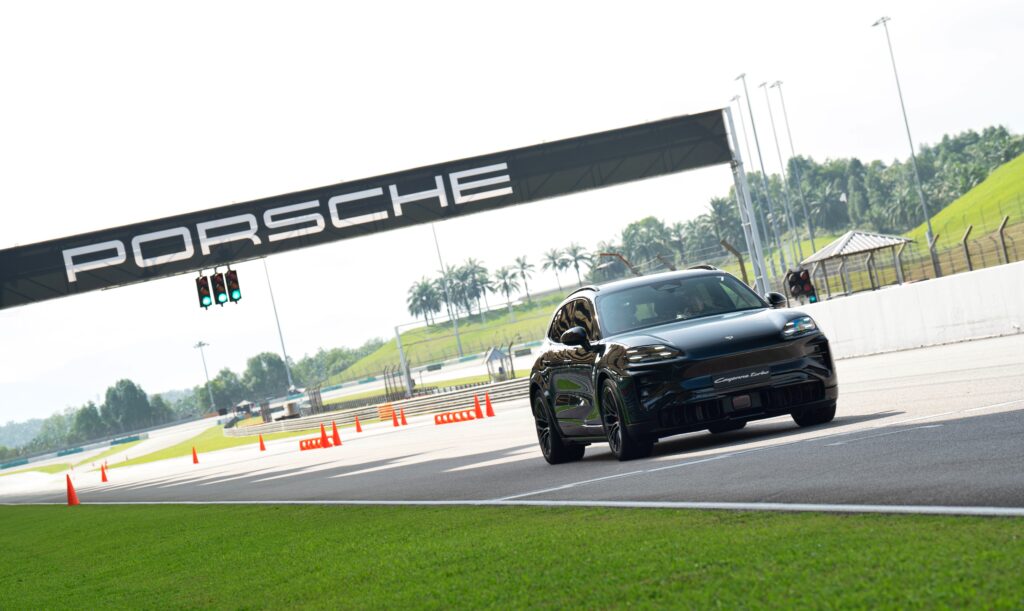
We recently found ourselves over at the Sepang International Circuit for the ASEAN launch of the all-new Porsche Cayenne Turbo Electric to experience its performance prowess firsthand, both on the racetrack and across a demanding off-road course, alongside the base Cayenne Electric.
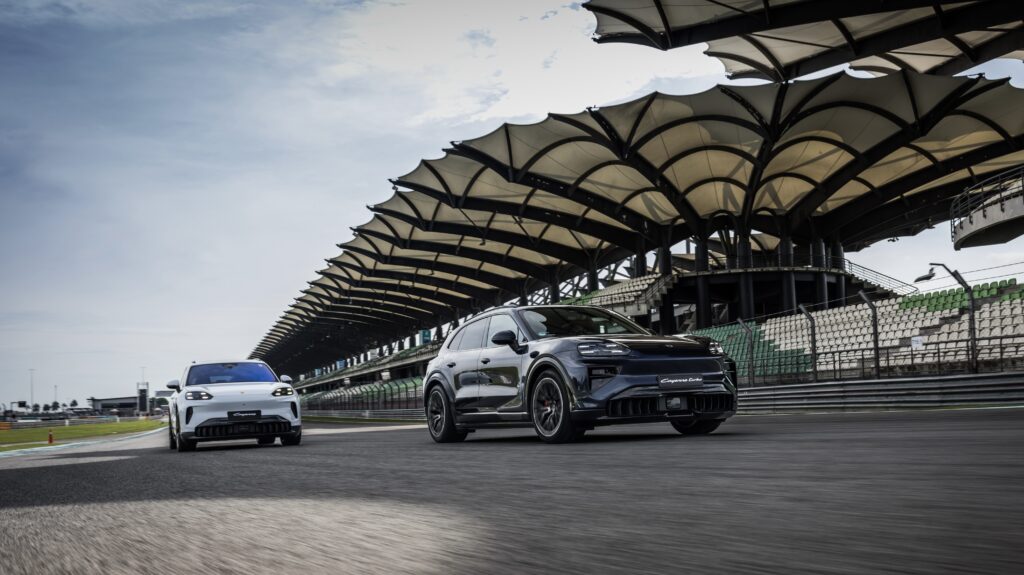
The event was divided into three major activities.
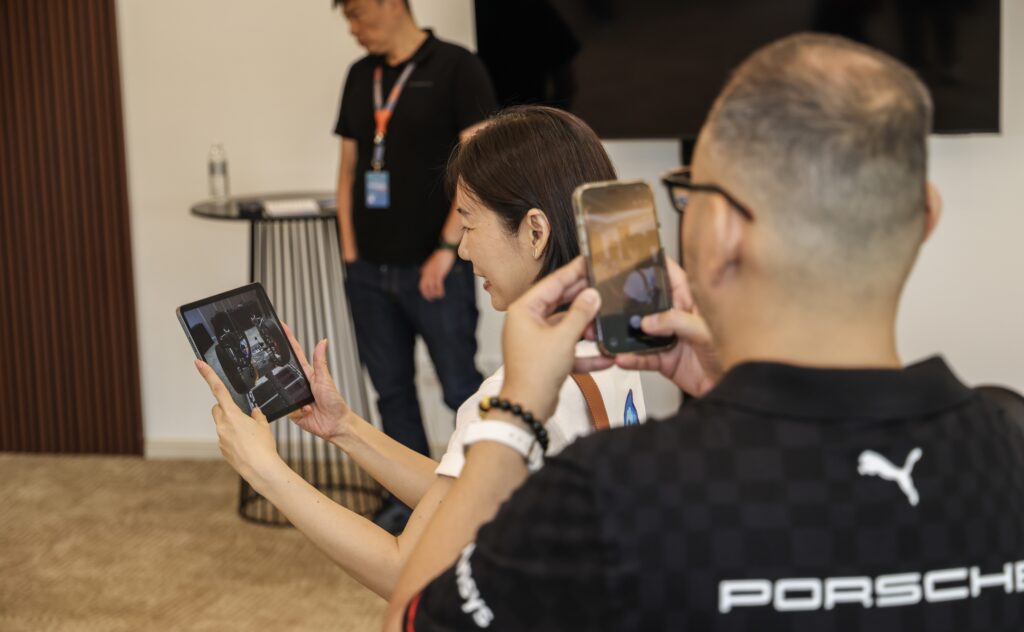
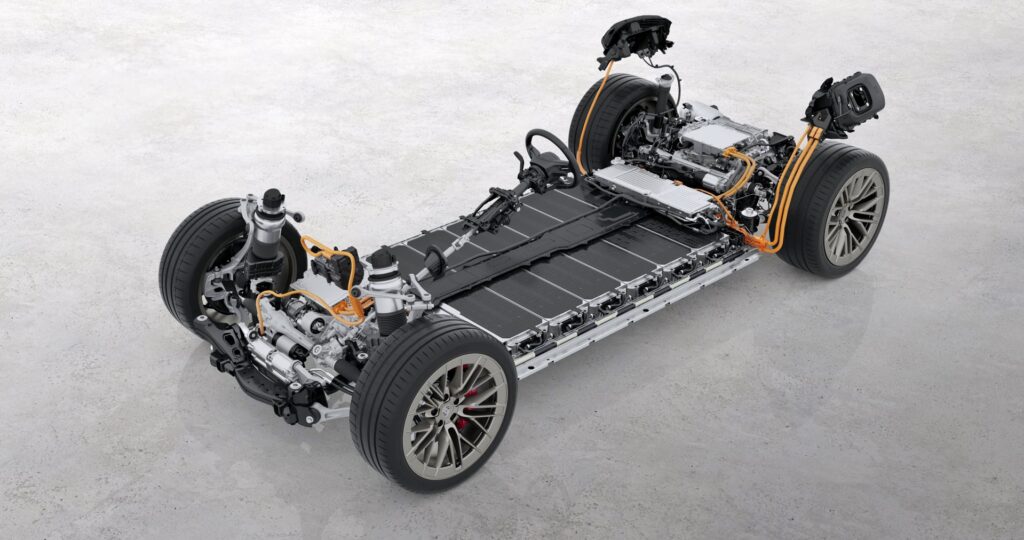
First was an immersive augmented reality tour of the Cayenne’s 800-volt battery-electric powertrain.
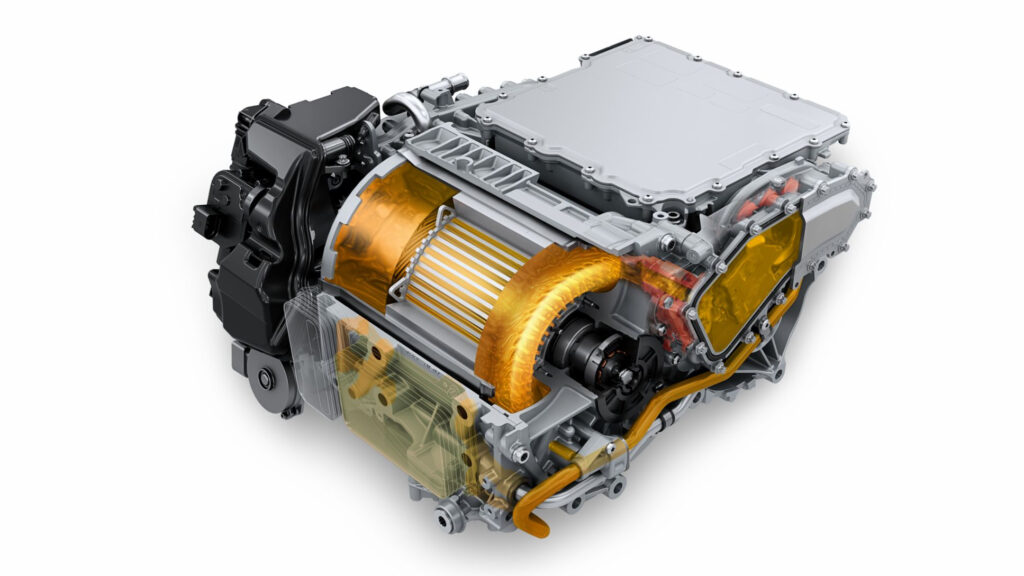
The Cayenne Turbo Electric has a massive 113kWh battery size, and can charge from 10-80% in as quickly 16 minutes with a 400-watt DC charger.
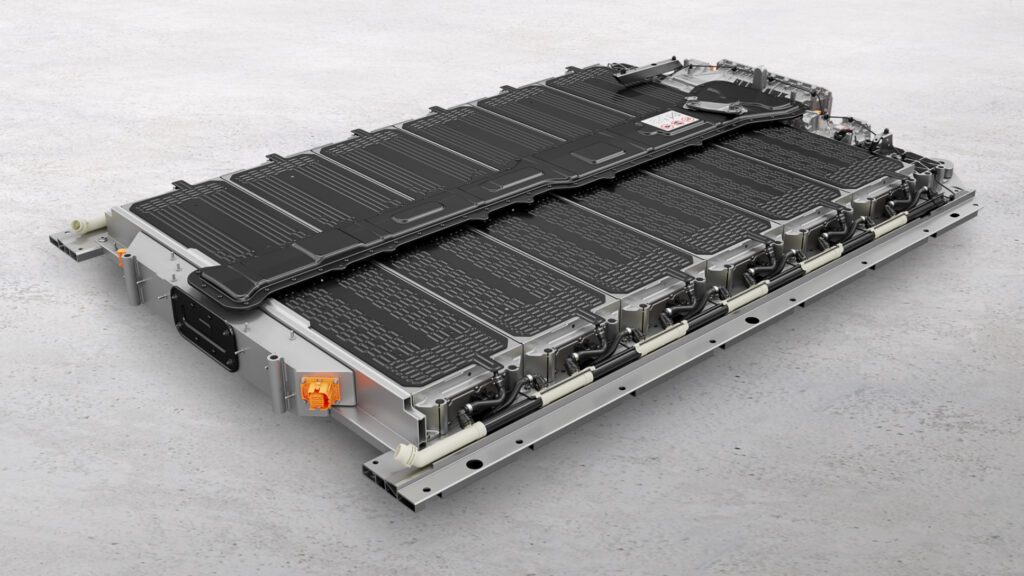
Range is promised to be as much as 623 kilometers.
The activity also showcased the interior and exterior trim options.
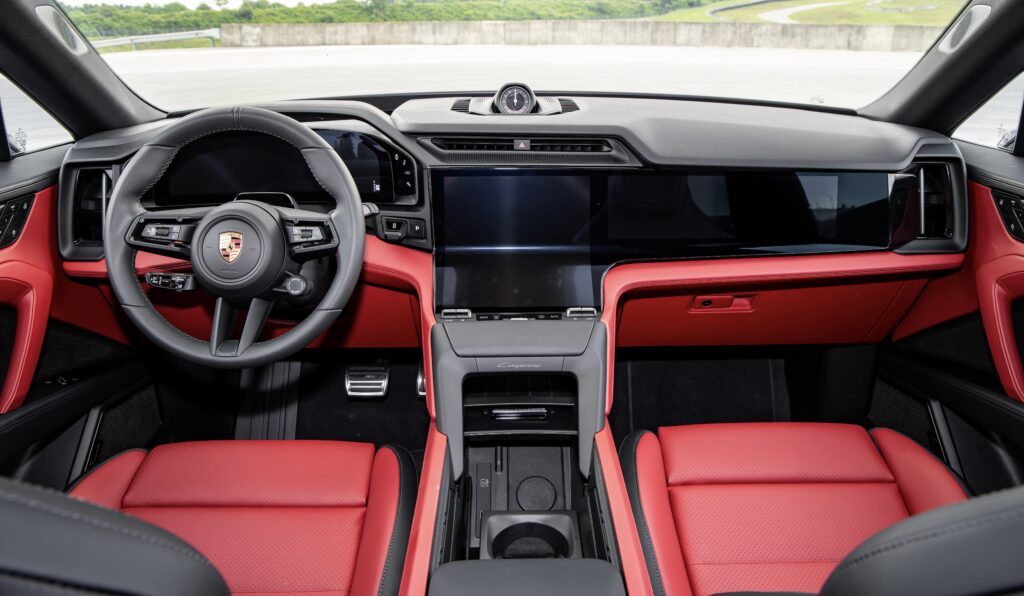
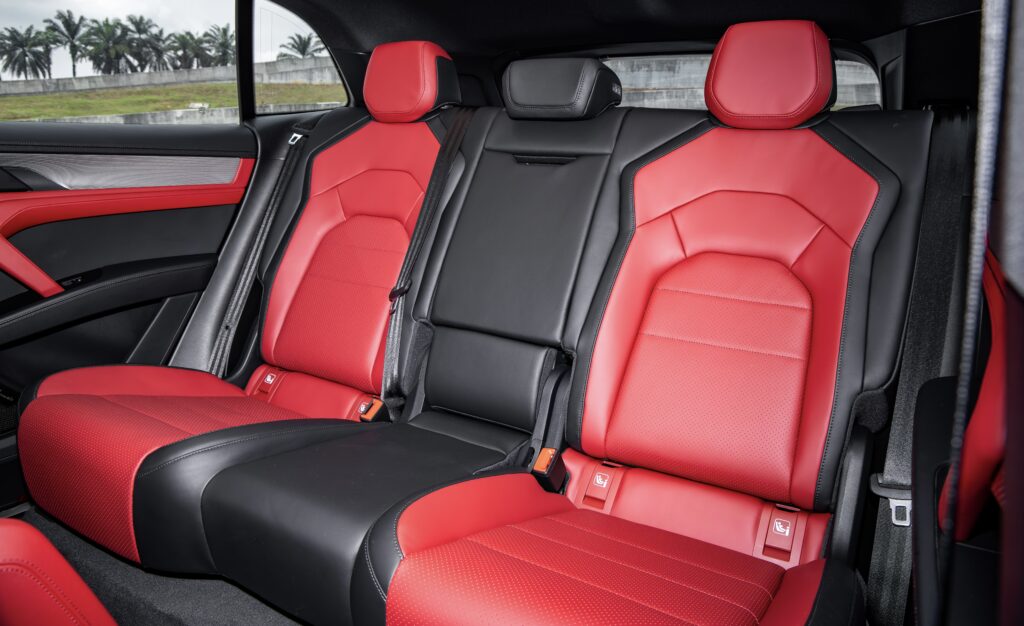
Porsche notes that there are an astonishing 110,000 possible design combinations, virtually ensuring that your Cayenne Electric can be a true “one of one.”
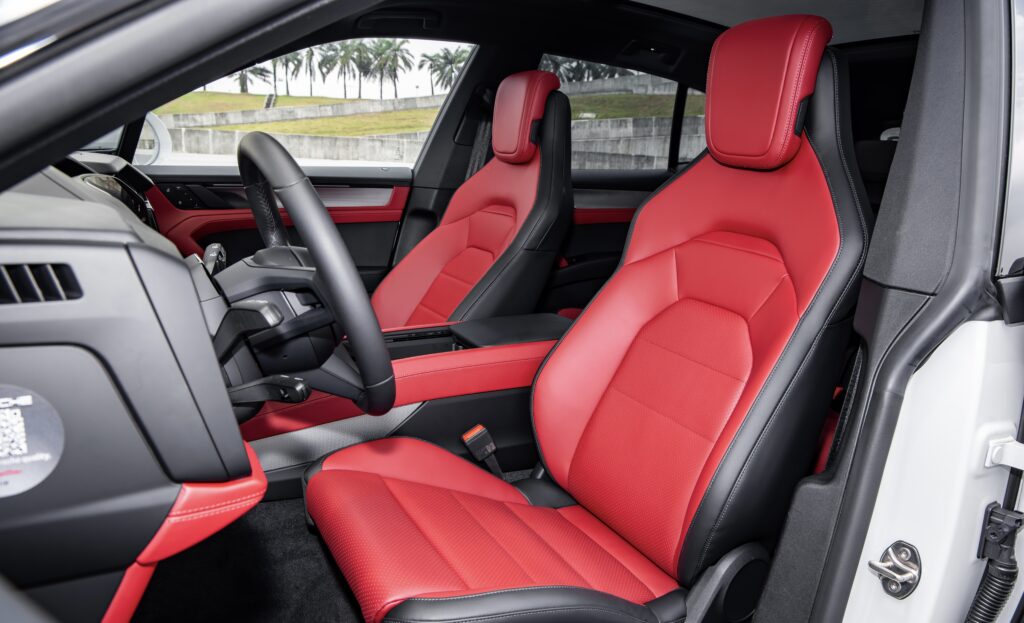
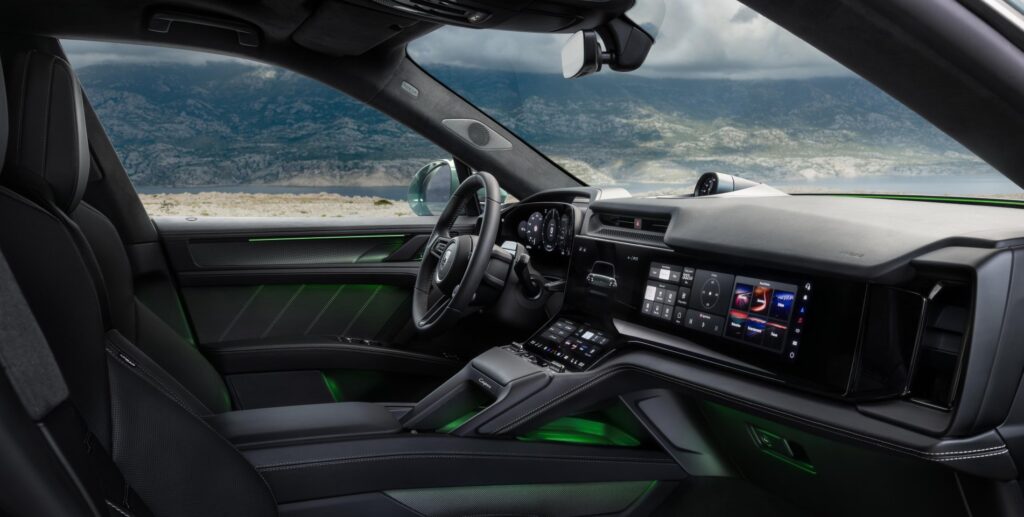
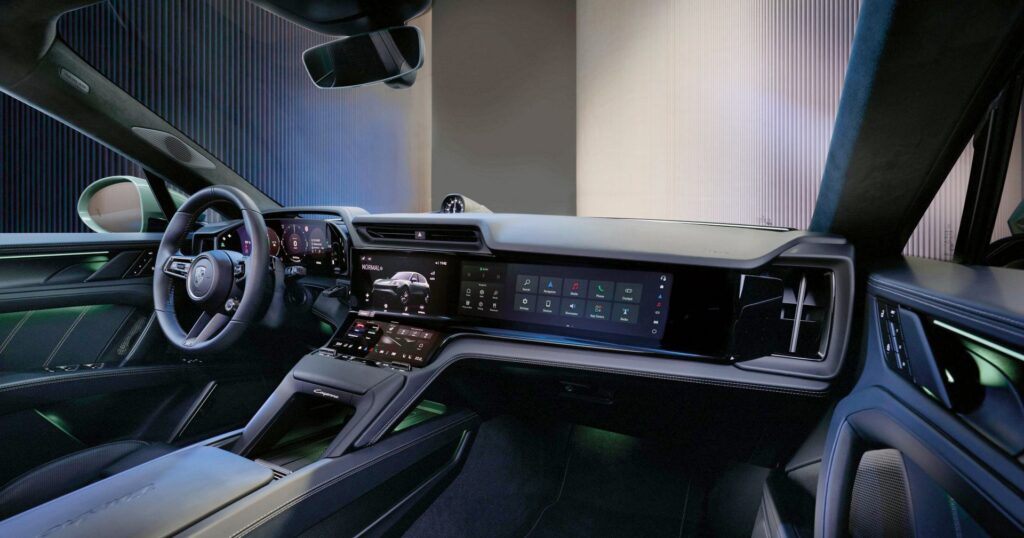
The interior features a new digital themed dash architecture with three massive screens: a 14.25-inch digital instrument cluster for the driver, while the center features a curved 12.25-inch OLED touchscreen Porsche calls the ‘Flow Screen.’ Not to be left out, passengers can opt for an even larger 14.9-inch display of their own. A heads-up display is also available for the driver.
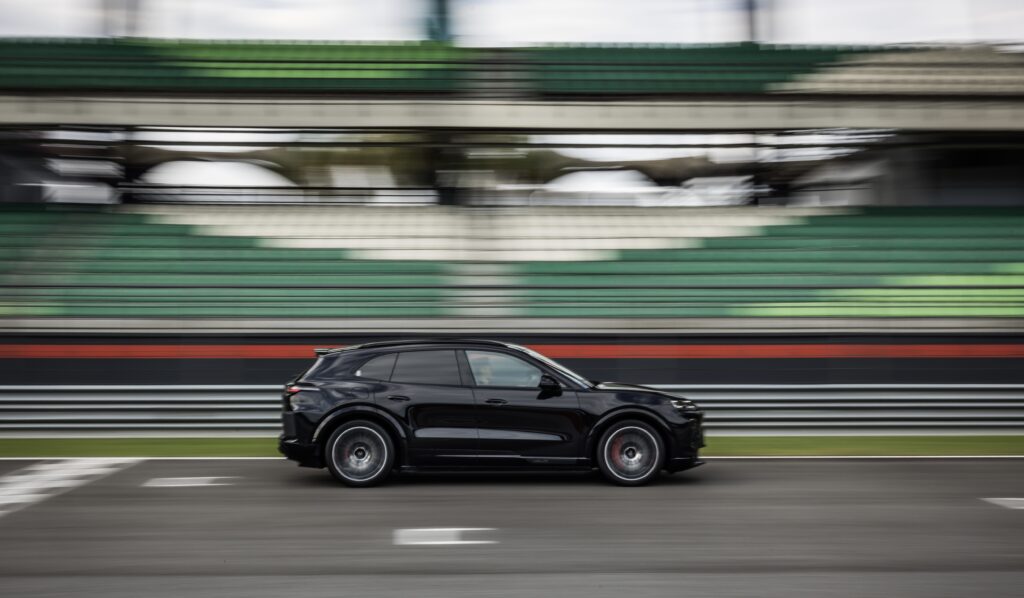
The other two activities involved dynamic driving. We took to the Grand Prix layout of the Sepang International Circuit—the former home of the Malaysian F1 Grand Prix and current host to the Petronas Malaysian MotoGP and Japan’s Super GT round in Malaysia.
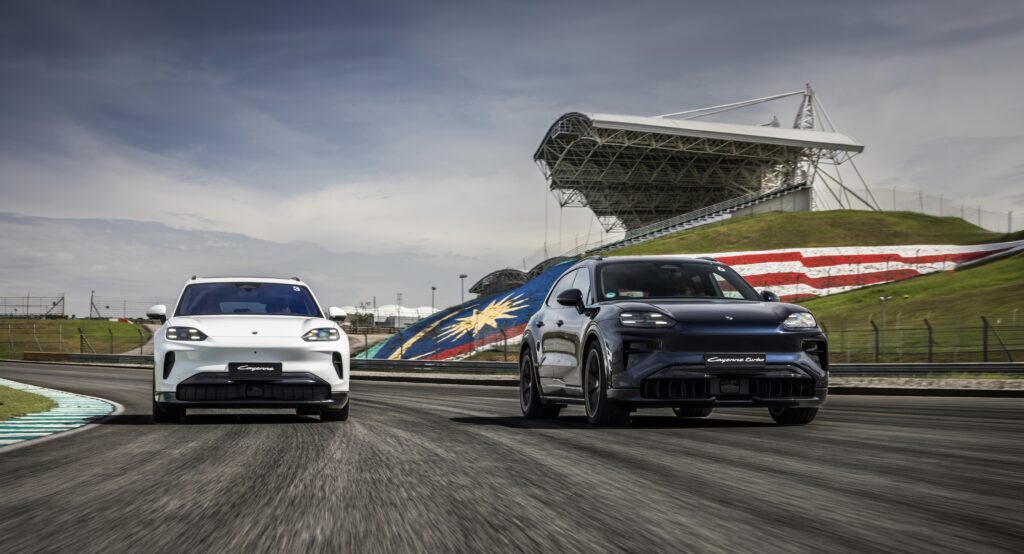
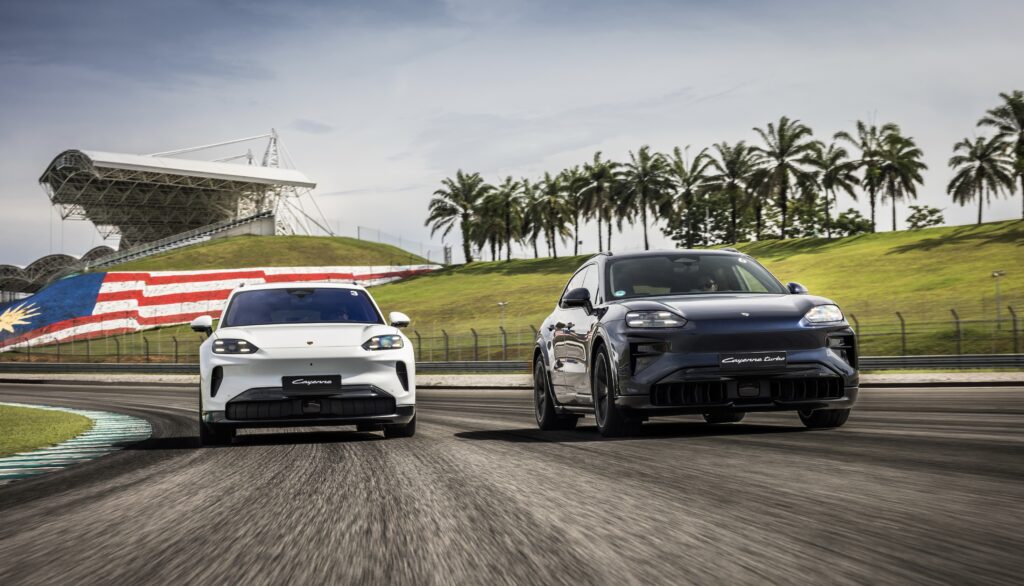
It is a full-on, high-speed, highly technical track that appears deceptively flat on TV but actually features numerous blind crests and sweeping, decreasing-radius corners. It was, unsurprisingly, the highlight of the weekend.
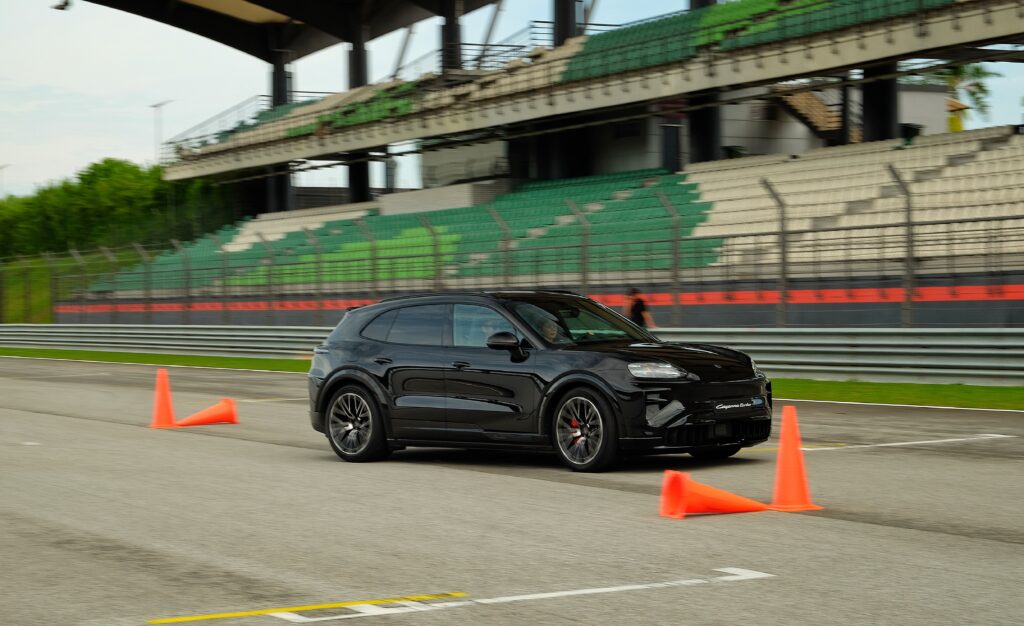
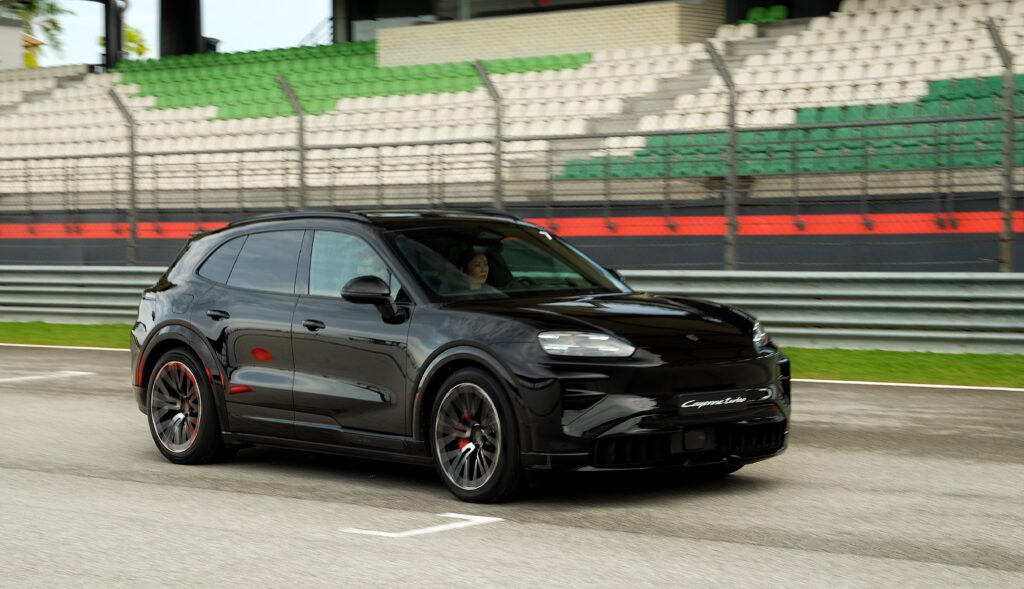
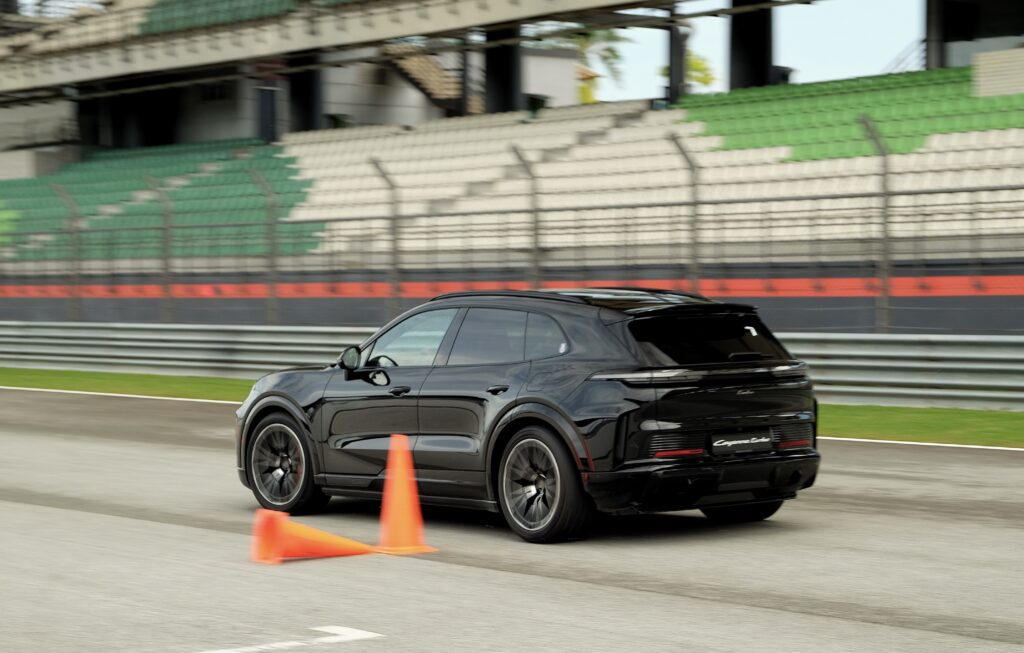
The track session included a slalom test to demonstrate the new Porsche Active Ride system, which keeps the chassis uncannily flat by actively compensating for ride height and firming up individual dampers during hard cornering.
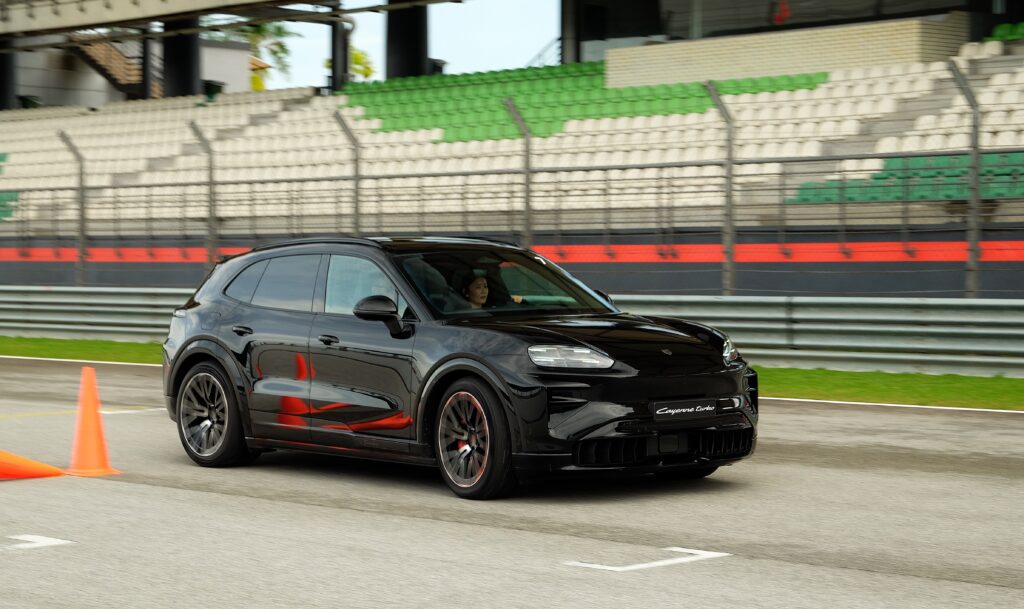
We also subjected ourselves to acceleration runs using Launch Control—an activity that left me feeling distinctly unwell afterward.
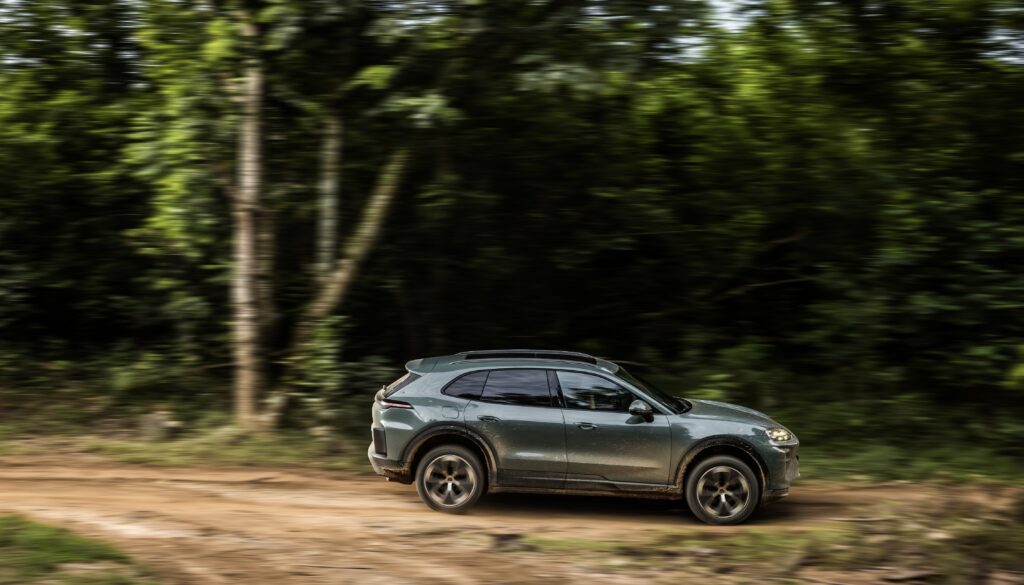
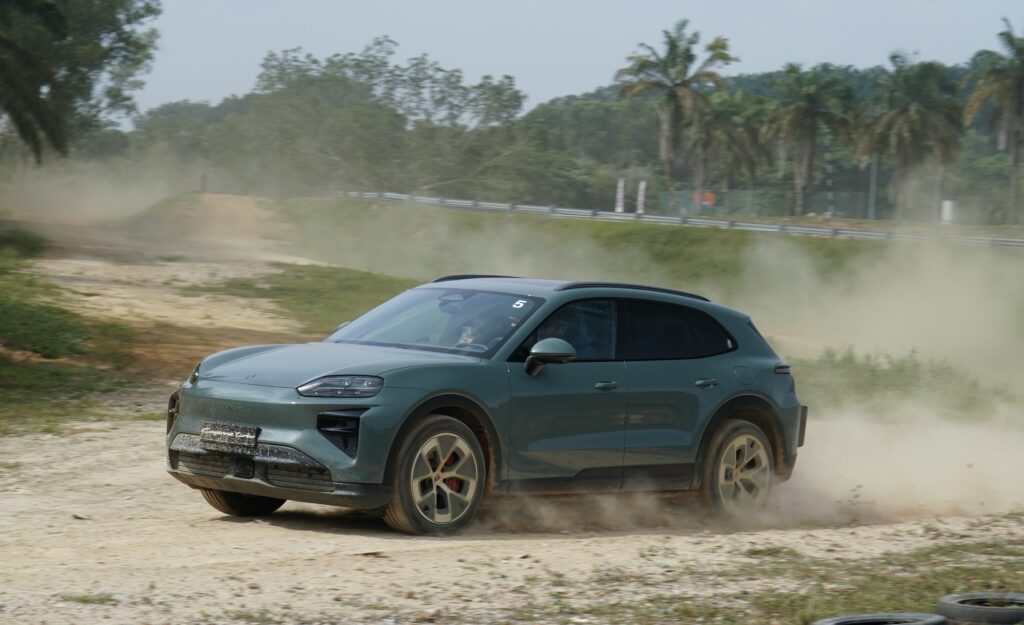
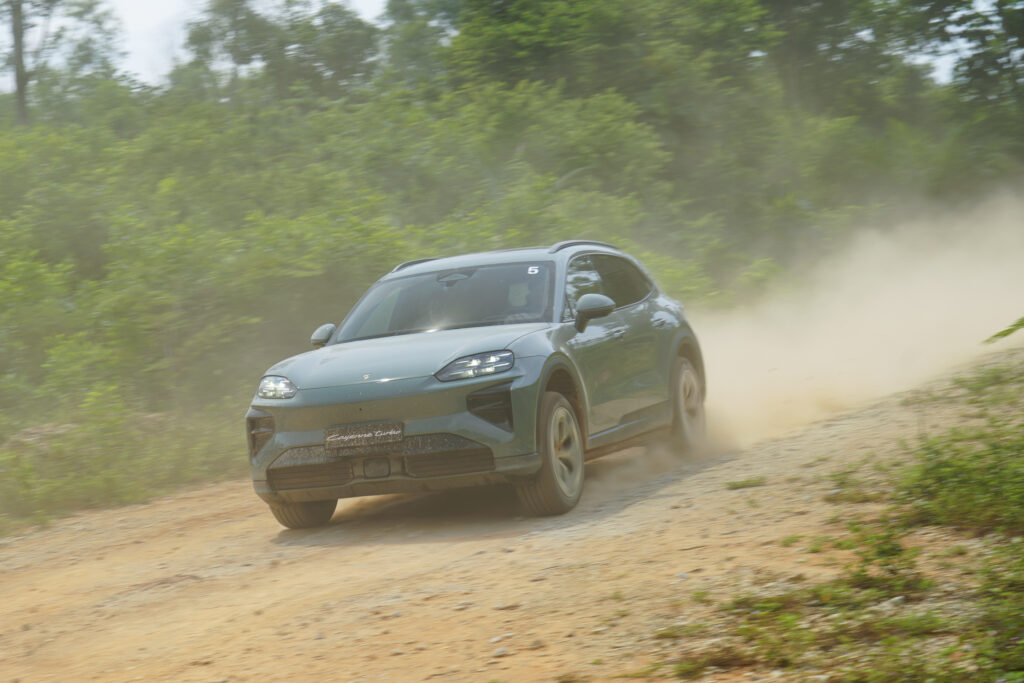
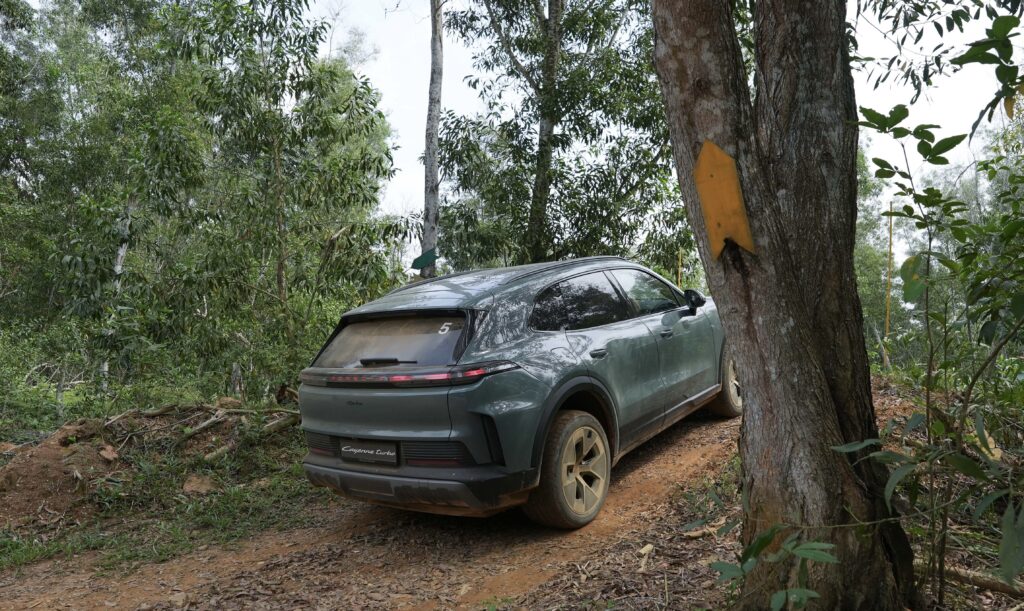
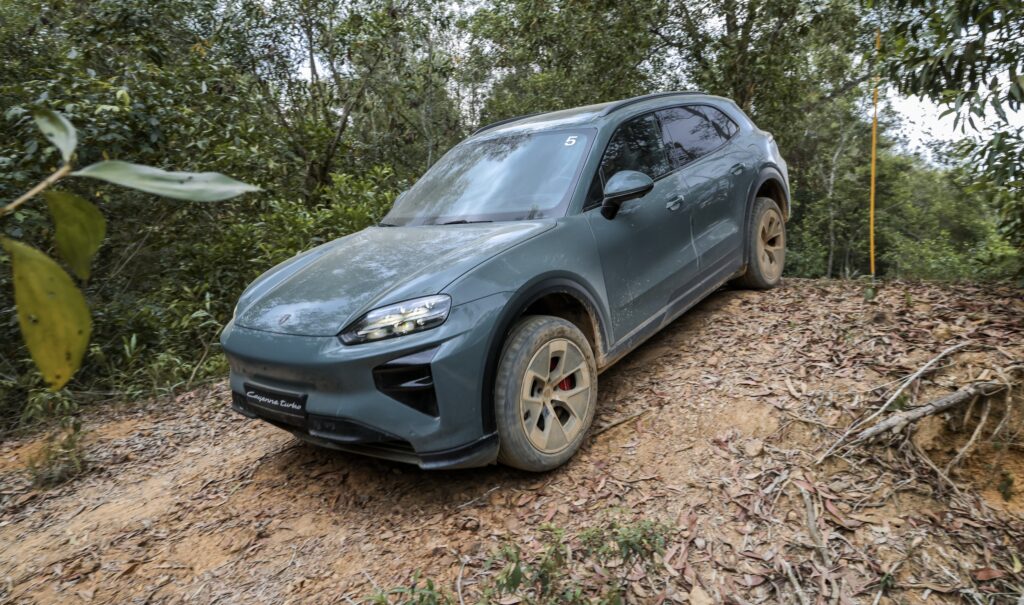
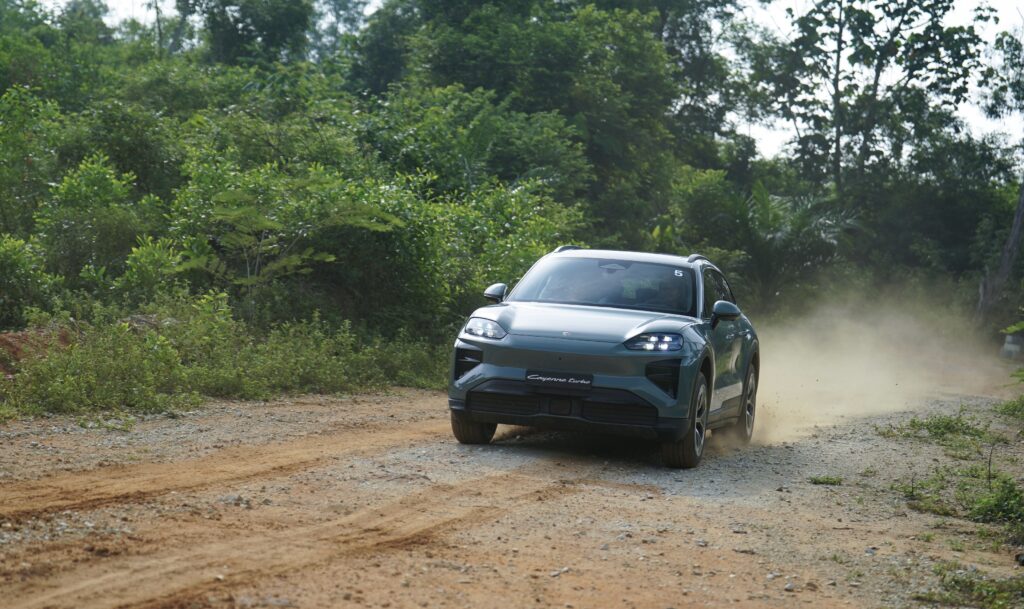
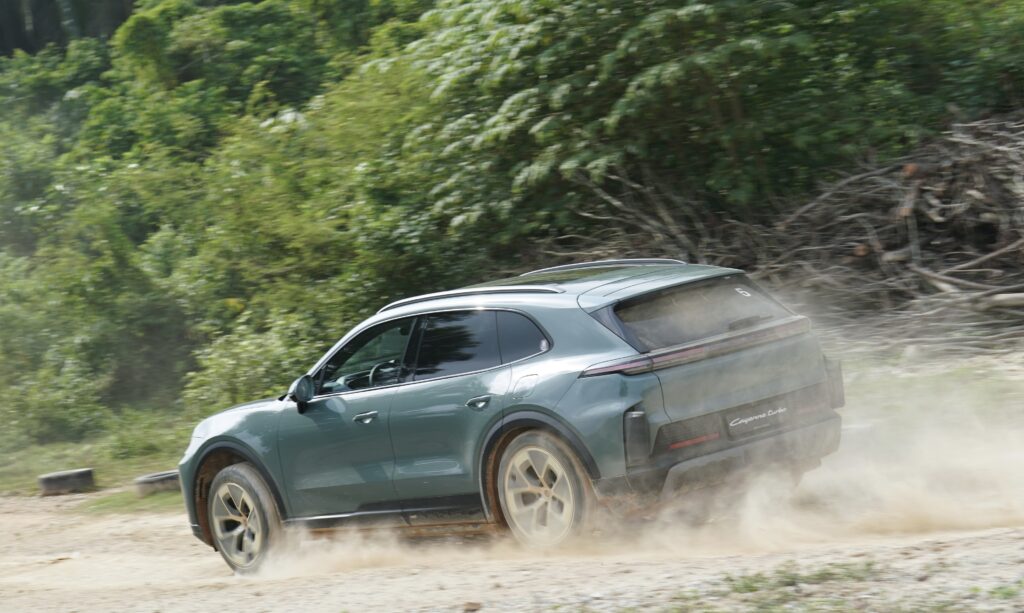
The final activity was the most surprising. Track days are one thing, but you rarely expect luxury SUV owners to tackle genuine, axle-twisting off-road trails. Porsche set up a course featuring steep, muddy ascents and descents to highlight the hill-descent control and hill-hold assist,
a deep water trough to test the 550mm wading depth,
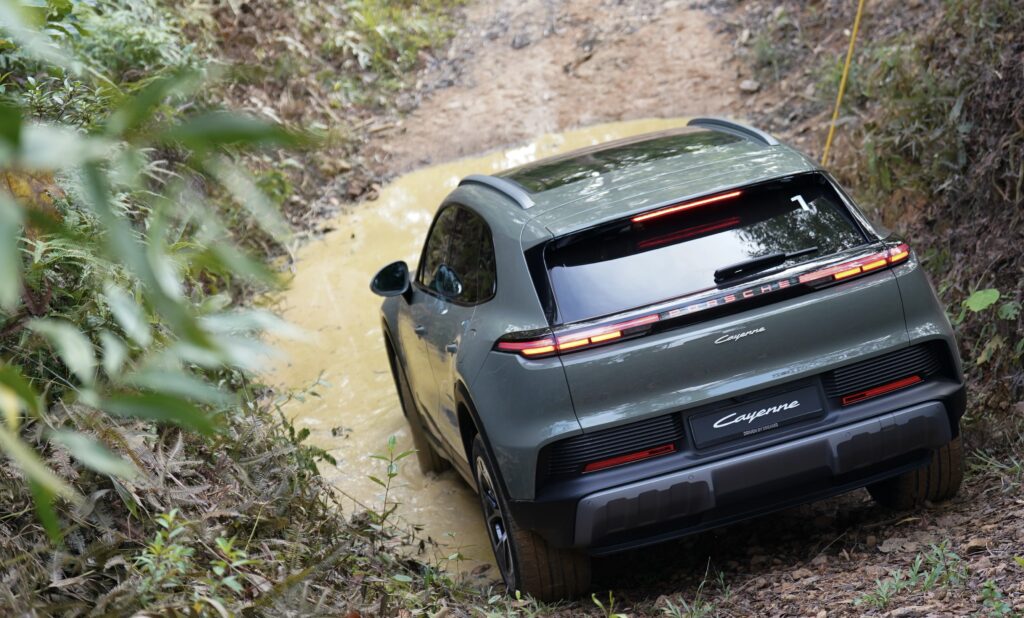
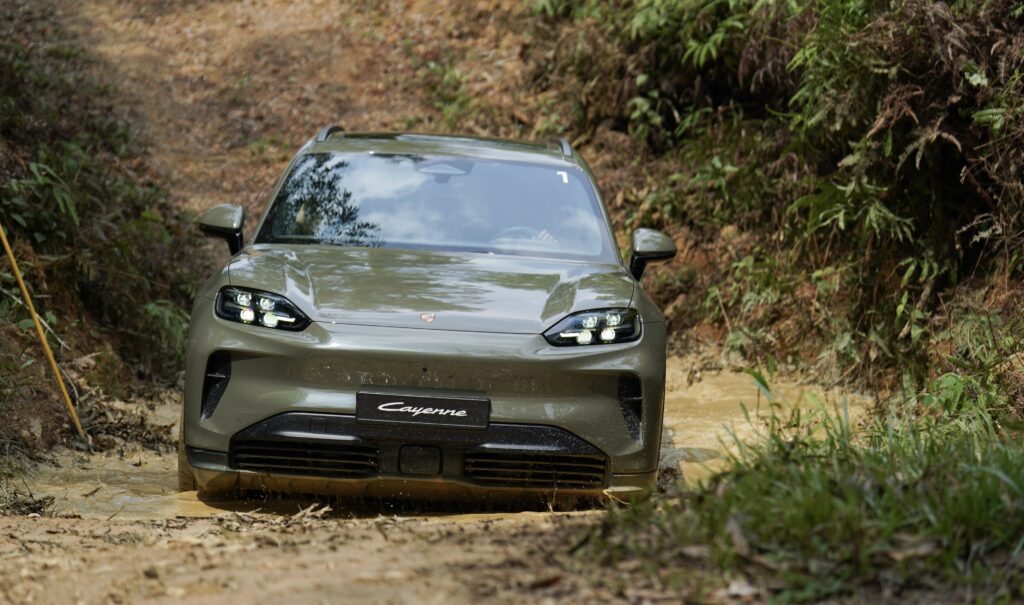
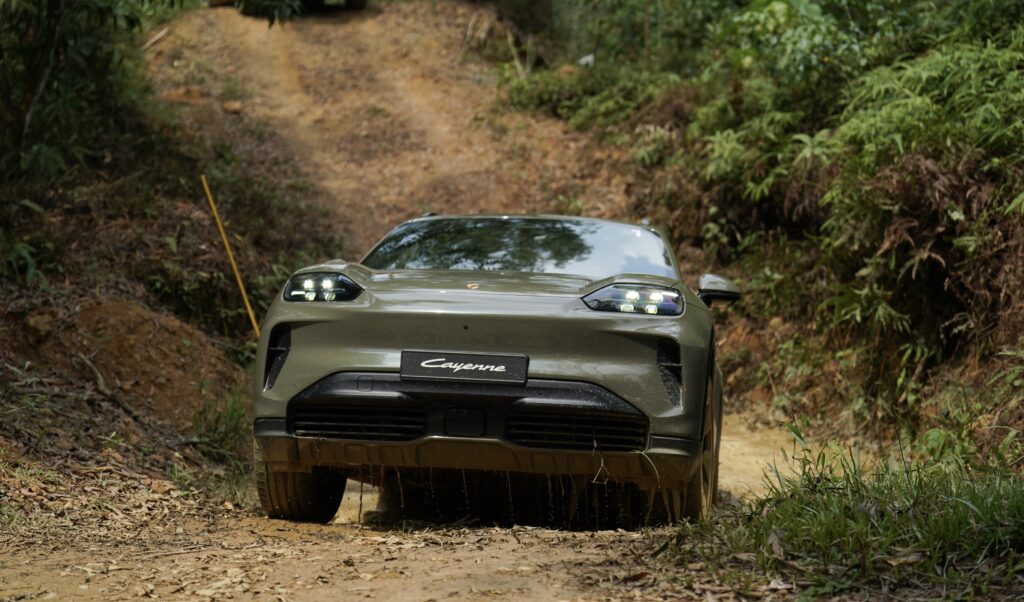
and massive moguls (or “elephant steps”) that repeatedly lifted two wheels completely off the ground.
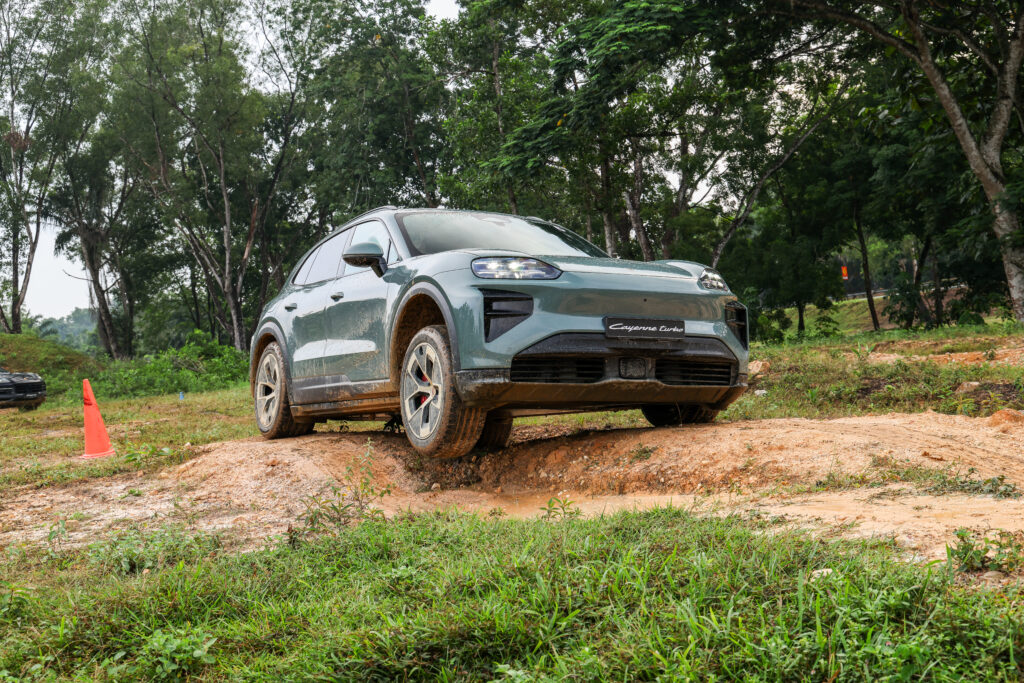
The Cayenne’s Active Traction Management system sorted out the power distribution instantly, keeping us moving forward effortlessly—all while rolling on high-performance, highway-terrain street tires. Lesser SUVs would have stumbled here, even with aggressive all-terrain rubber.
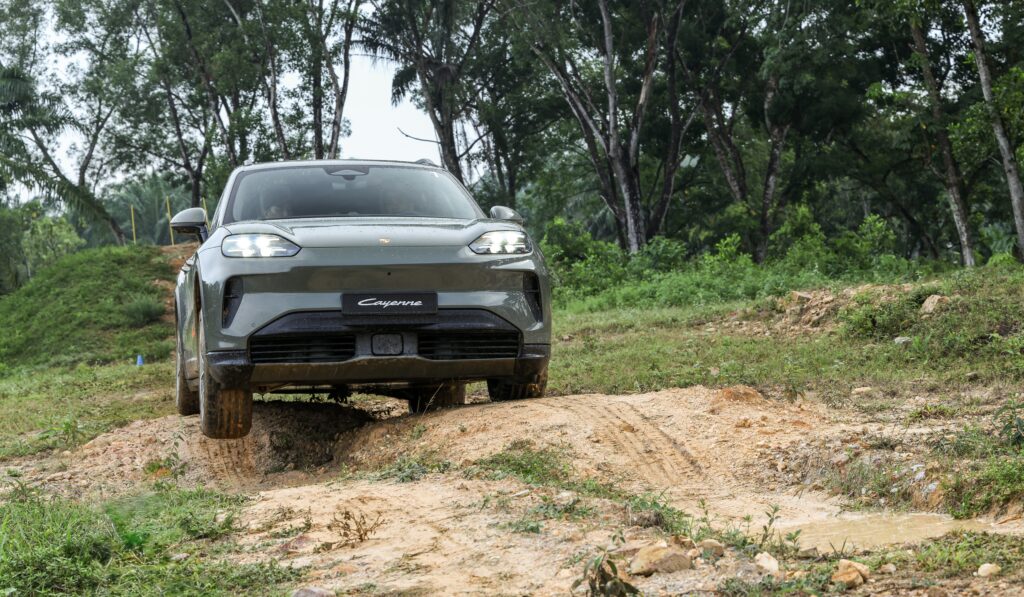
We can thank the ground clearance: from a low 162mm on tarmac, all the way to 245mm in Off-Road II mode, offering a maximum water wading depth of 550mm.
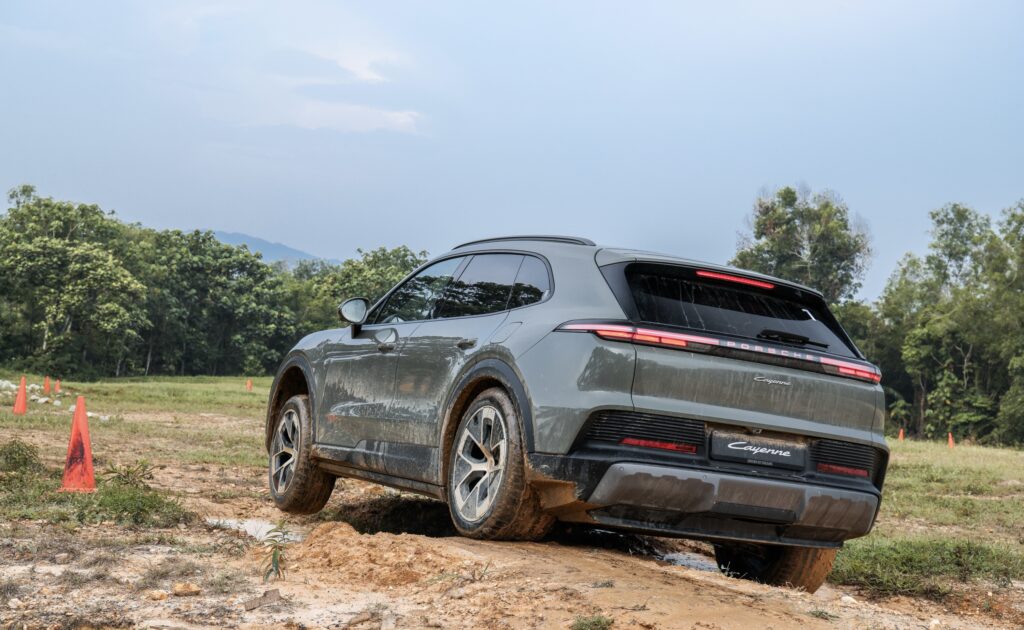
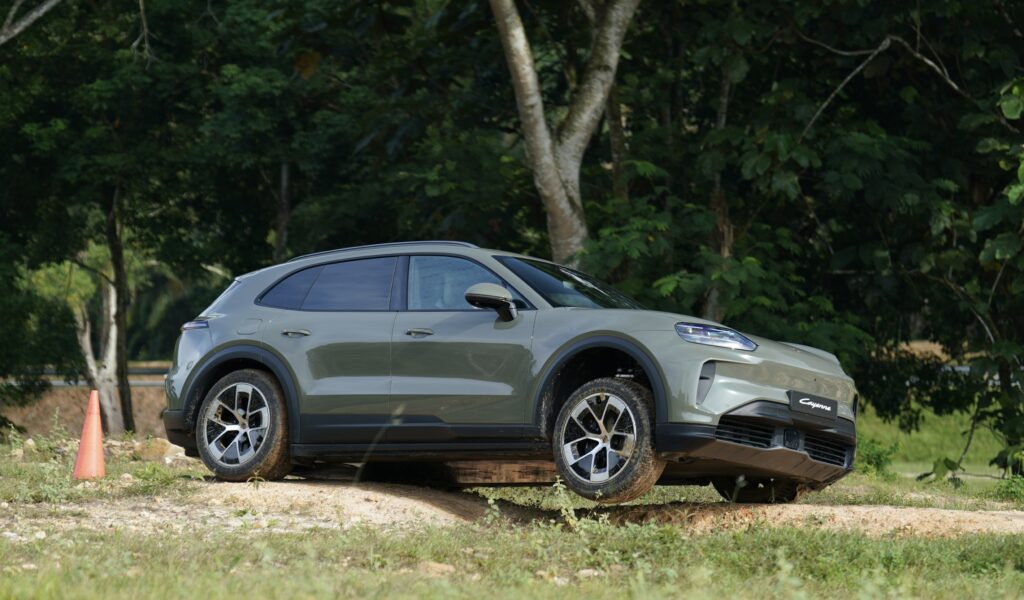
Through it all, the electric Cayenne Turbo and base Cayenne never missed a beat.
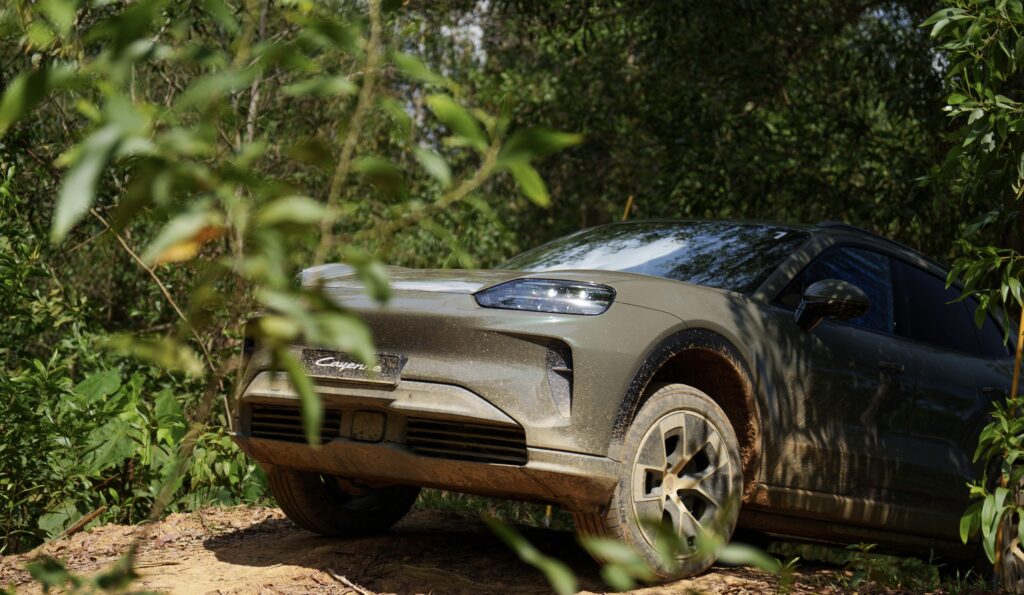
The German brand will continue to sell the internal-combustion and hybrid third-generation Cayenne alongside the all-electric fourth-generation model, giving clients total freedom of choice regarding their means of mobility.
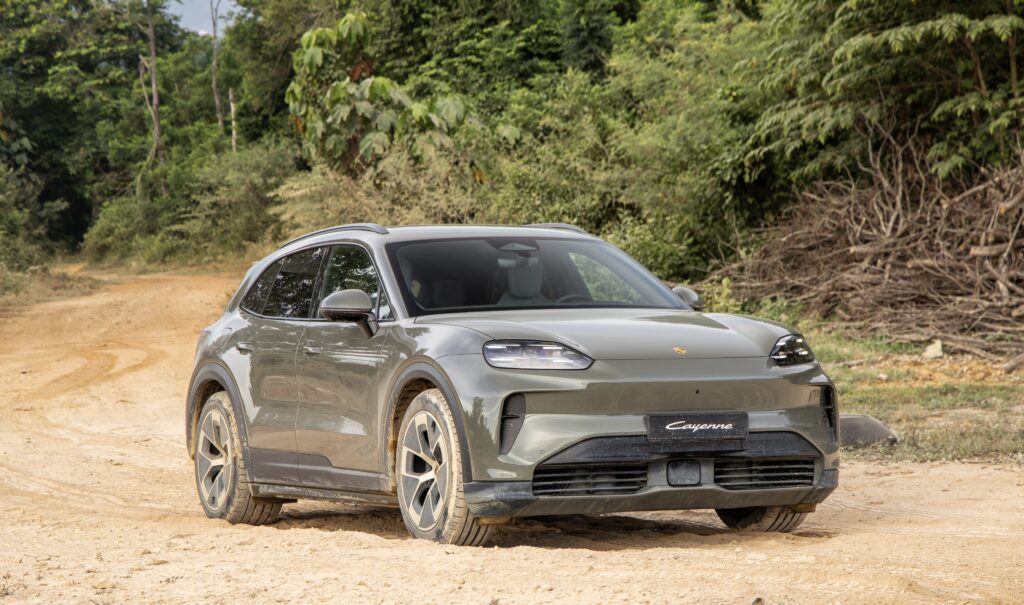
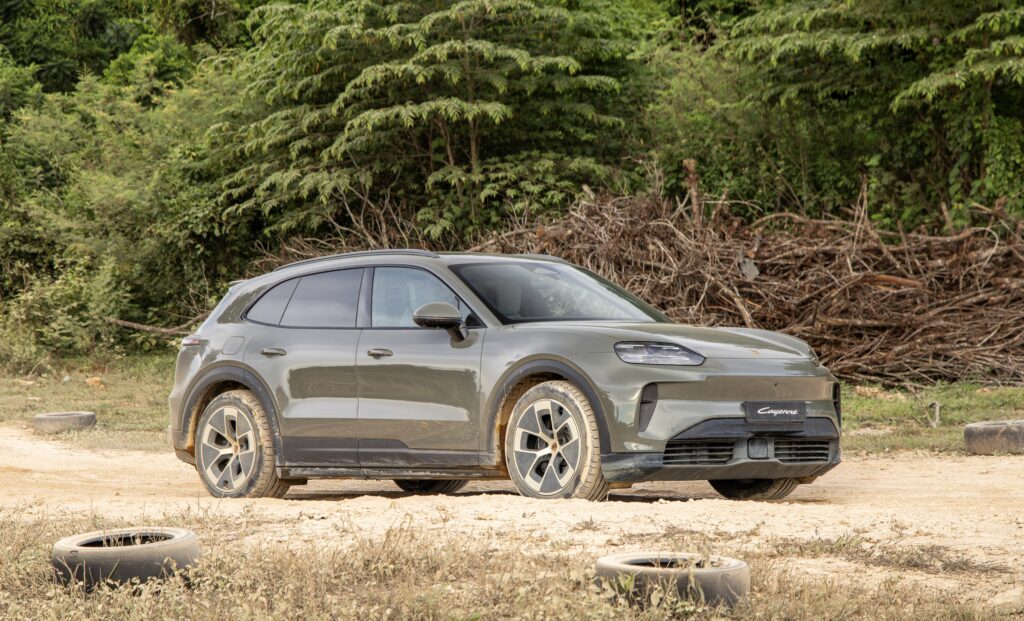
What became overwhelmingly clear over the weekend was the new electric platform’s sheer technical dominance.
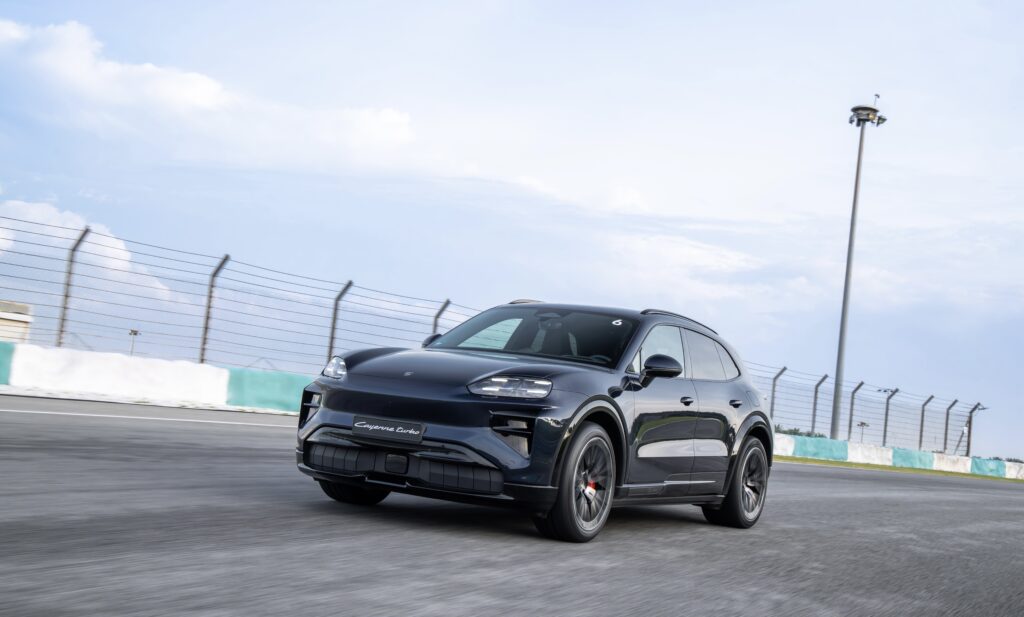
Despite its 2.5-tonne heft, the Cayenne Turbo Electric drove with staggering composure around Sepang.
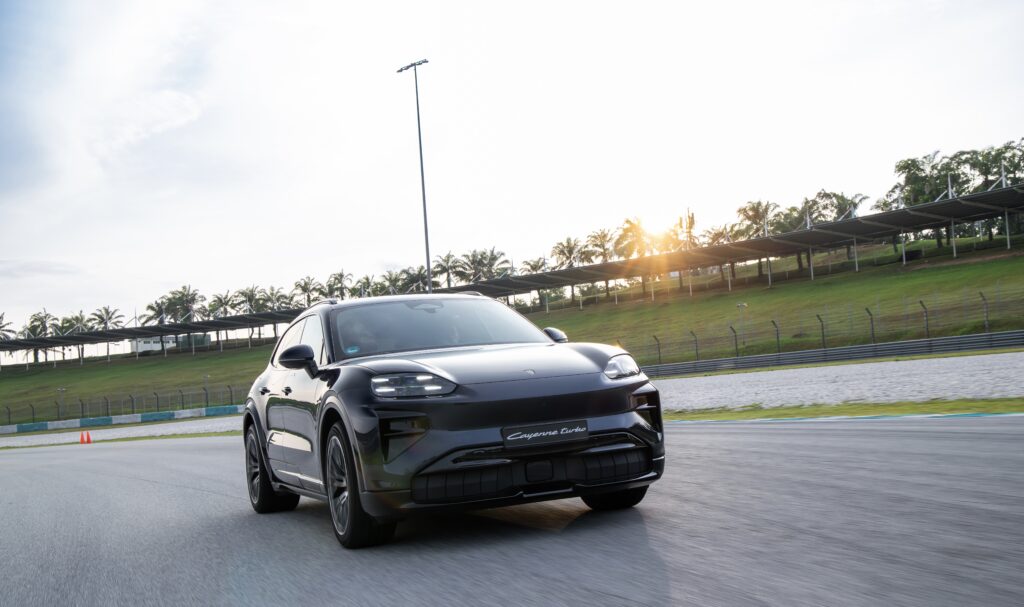
It felt confident, capable, and entirely predictable.
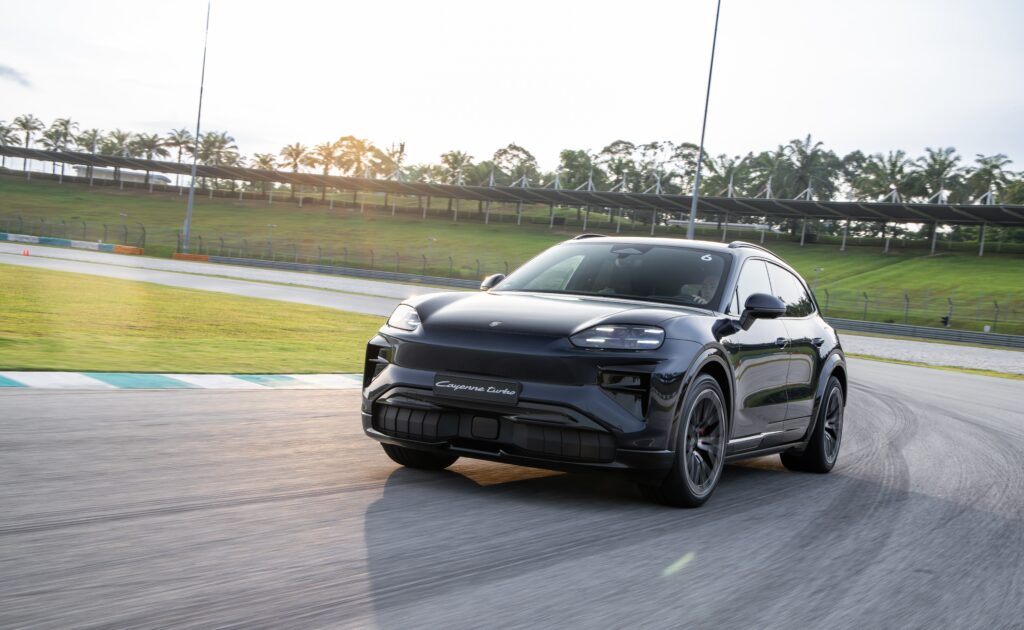
Even though we were only lapping at roughly seven-tenths (or less) of the vehicle’s actual limit, there was an unmistakable feeling that massive reserves of performance were left untapped—and that pushing into that final 30% would have been entirely approachable.
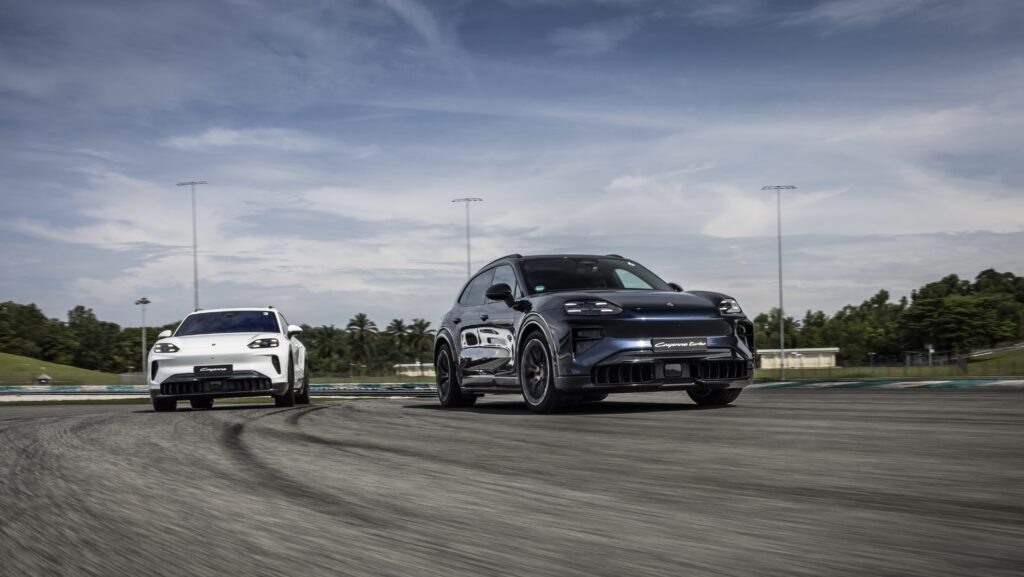
On the absolute limit, the car remains familiar and friendly, a trait largely credited to the Porsche Active Ride suspension and the rear-axle steering system, which grants this massive machine a tight, physics-defying 11.1-meter turning circle.
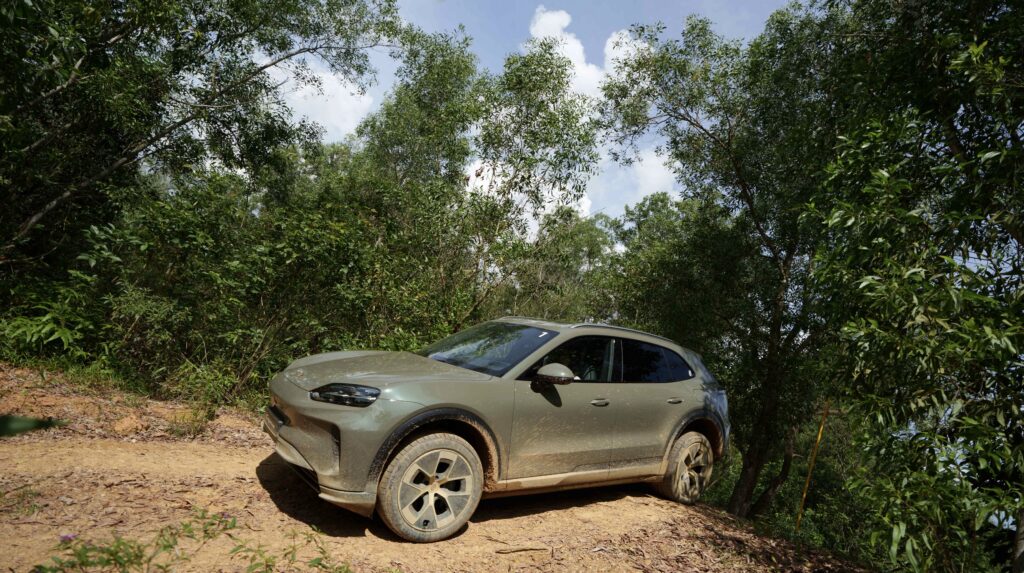
Off the asphalt, that same Active Ride system allowed us to traverse a rally-style dirt trail like a proper World Rally Car.
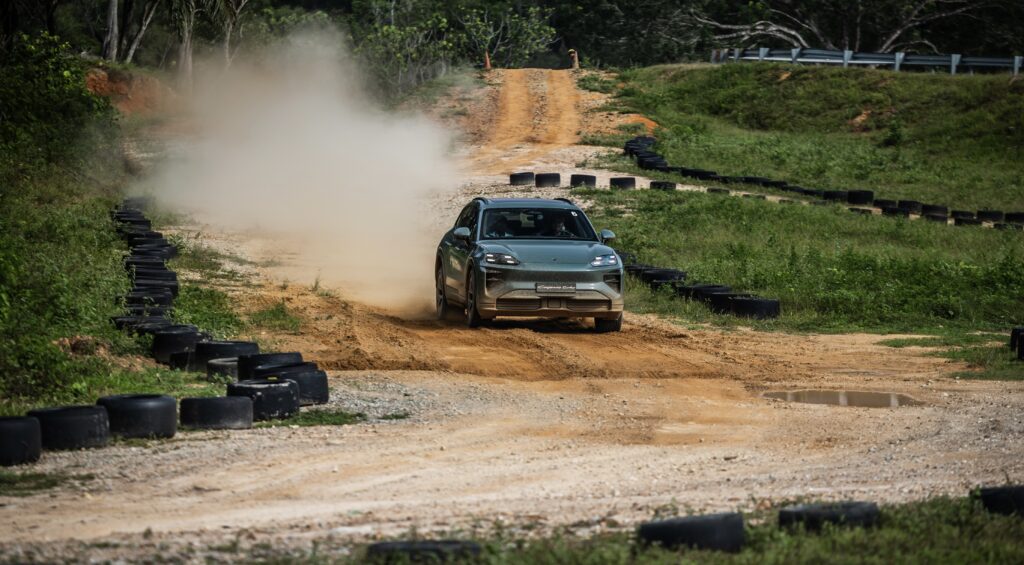
It was fast, flowing, and stabilized by incredible mechanical grip, keeping the cabin level without throwing the occupants around or sliding off the line.
This technology is flat-out amazing and honestly deserves to be standard equipment on every vehicle Porsche builds.
Finally, there was that launch control test. Launching a 2.5-tonne vehicle carrying three adults inside in the proverbial blink of an eye is an undeniable engineering marvel, but it is also a physically violent experience. The uninitiated will find the sheer immediacy of the torque terrifying; nothing quite prepares your body for the pure physicality of it.
From launch, your chest instantly tightens, the blood drains from your head to your extremities, and you momentarily lose focus due to the sudden G-force onset.What follows is an outright assault on your internal organs as you transition seamlessly from positive 1.13 Gs of acceleration to an even more violent negative 3.1 Gs under full carbon-ceramic braking.
Your innards are effectively rearranged. After four consecutive back-to-back runs, I stepped out of the cabin visually shaken and fighting the urge to regurgitate my breakfast. You have been officially warned.
It feels completely alien, unbelievable, and fundamentally “wrong” that a vehicle as heavy and as massive as the Cayenne Electric can perform at such an astronomical level both on the track and in the mud—all while comfortably seating five adults with a massive 781-liter boot (expanding to 1,588 liters with the rear seats down).
But then again, Porsche has a grand history of doing things entirely wrong. Long may they continue to do so.