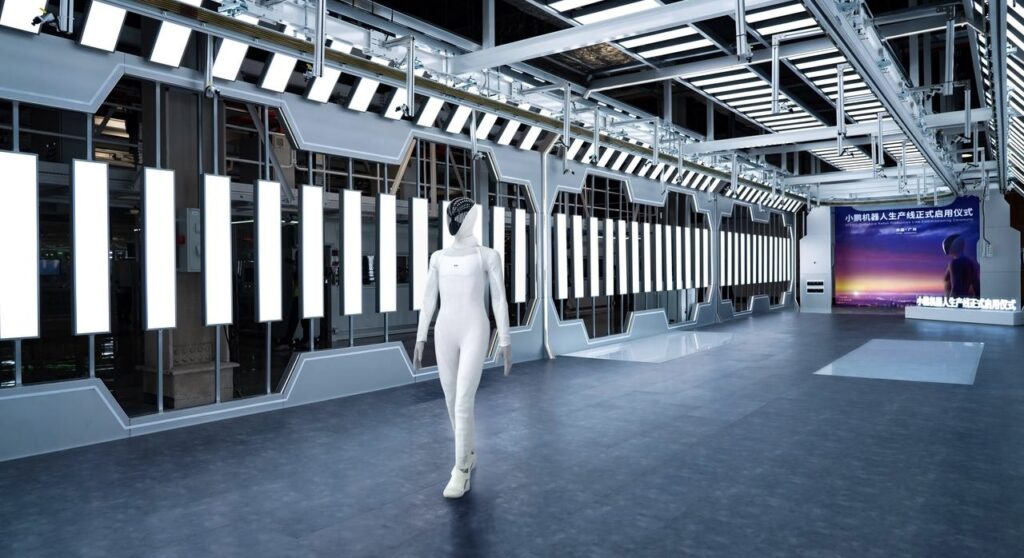

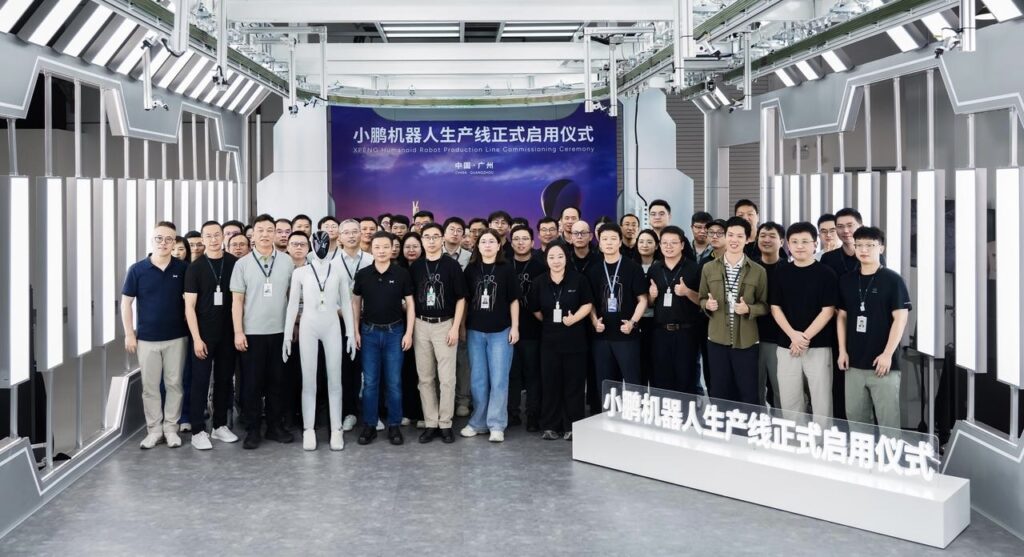
In a high-tech facility in Guangzhou, China, where the precision of electric vehicle manufacturing meets the frontiers of artificial intelligence, history stepped into the room on its own two feet. As automated assembly tools finished their cycle, a sleek, bipedal machine completed its final diagnostic checks and autonomously walked off the factory floor. It didn’t roll out on a cart or rely on a tether; it simply walked.
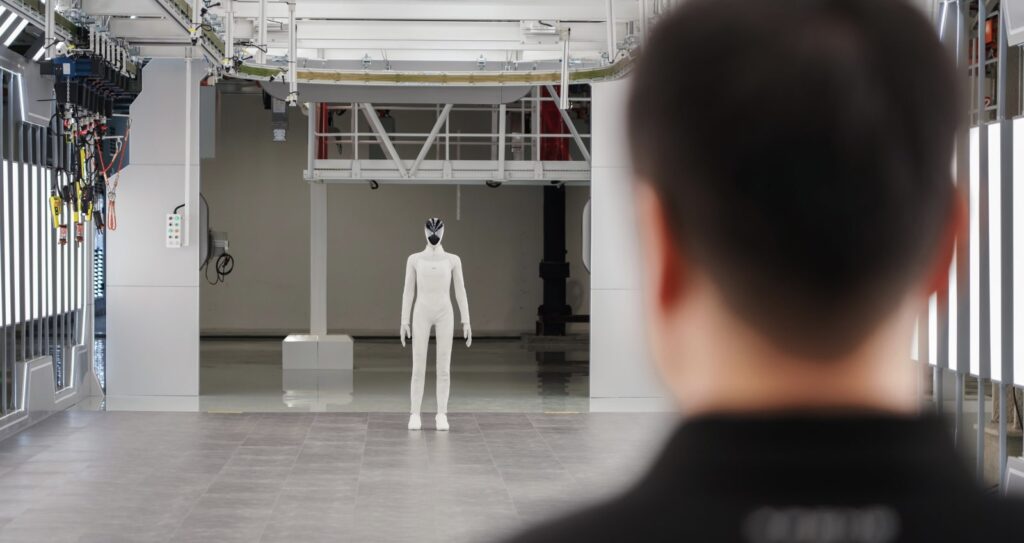
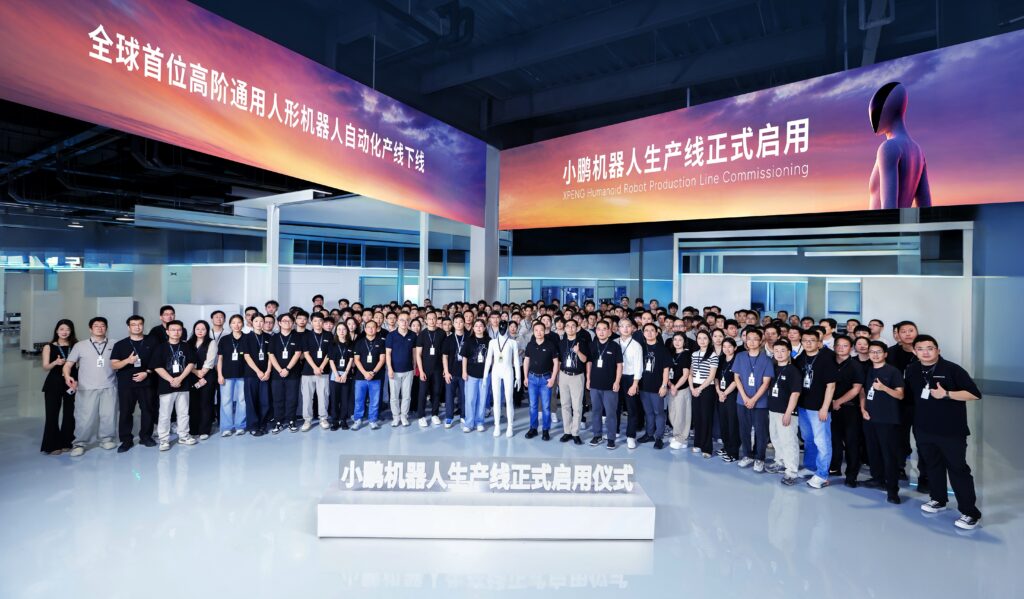
This was the public debut of IRON, an advanced general-purpose humanoid robot born from an automated, automotive-grade production line. Created by AI-enhanced mobility manufacturer XPeng Inc., the milestone signifies a critical transition from experimental laboratory prototyping to mass-scale line manufacturing.
“The robot production lines were created from scratch with no precedent to follow,” said He Xiaopeng, Chairman and CEO of XPeng. “Today’s step is small, but XPeng is building the production lines for an entirely new product category.”
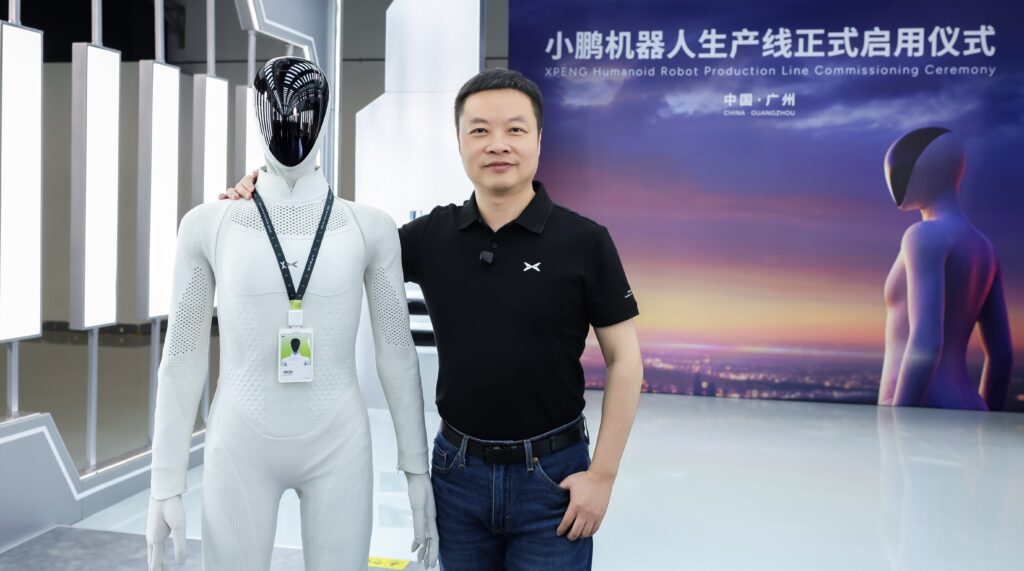
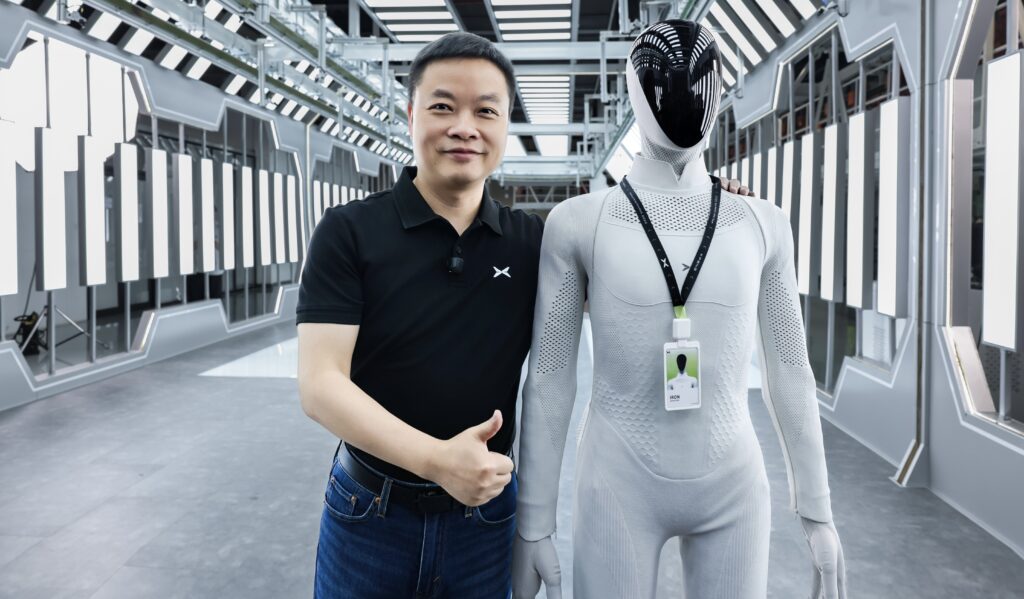
Following the demonstration, He Xiaopeng stepped forward and pinned an official employee badge onto IRON’s chest—symbolizing the machine’s formal integration into the company’s workforce. Building a bipedal robot is a complex engineering task, but constructing an automated production line capable of mass-producing them requires a different level of industrial rigor.
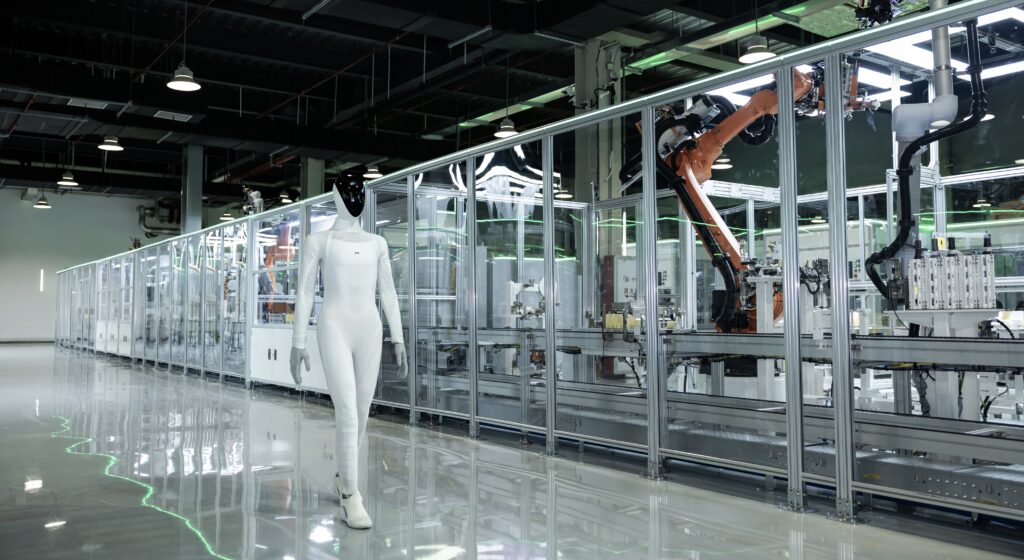
XPeng addressed this by adapting the mature, highly standardized quality systems of the smart electric vehicle industry directly to precision robotics. With over 80% of its core assembly processes automated, the line provides a flexible manufacturing system that ensures consistent critical-process quality while laying the groundwork for rapid capacity expansion.
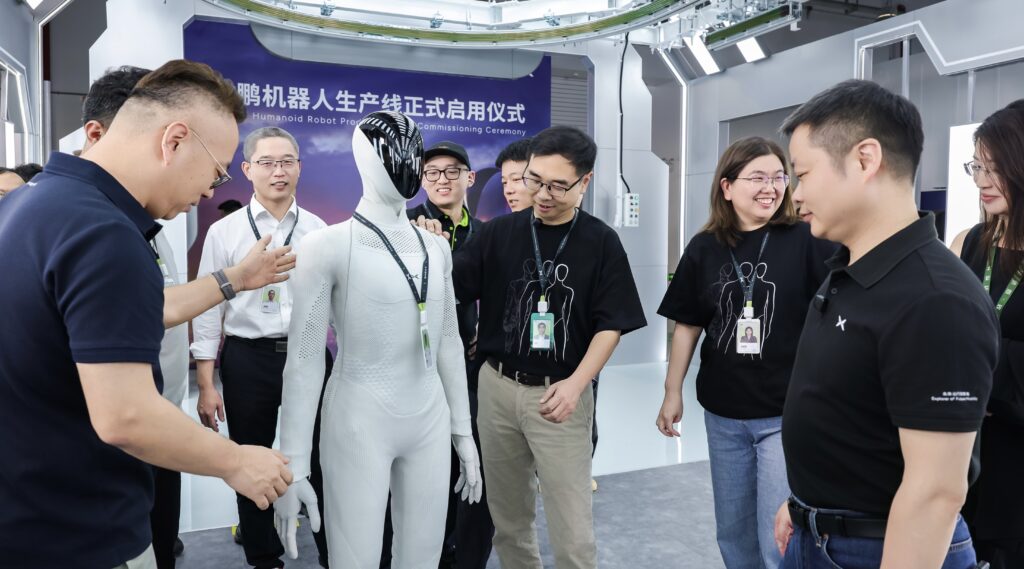
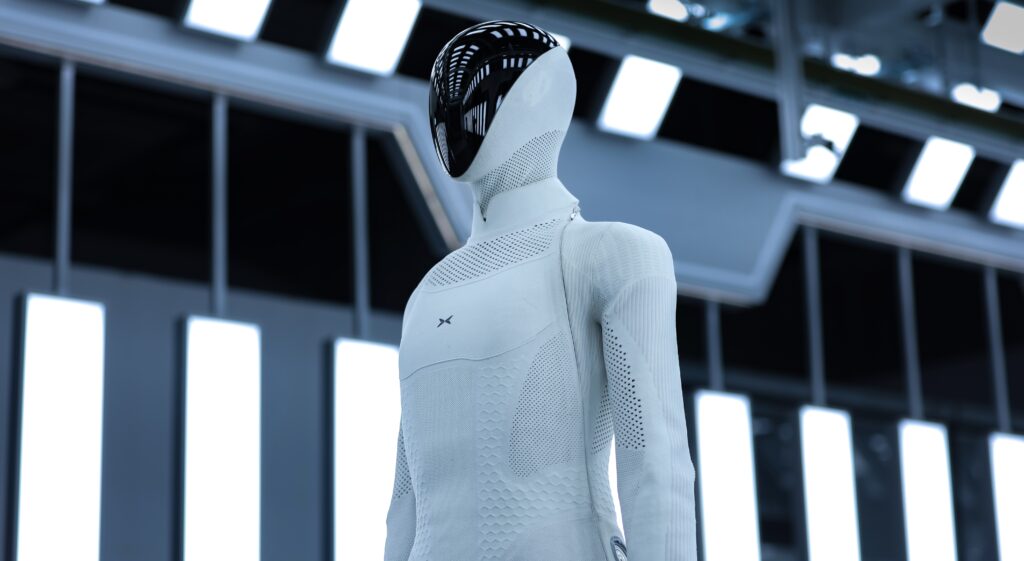
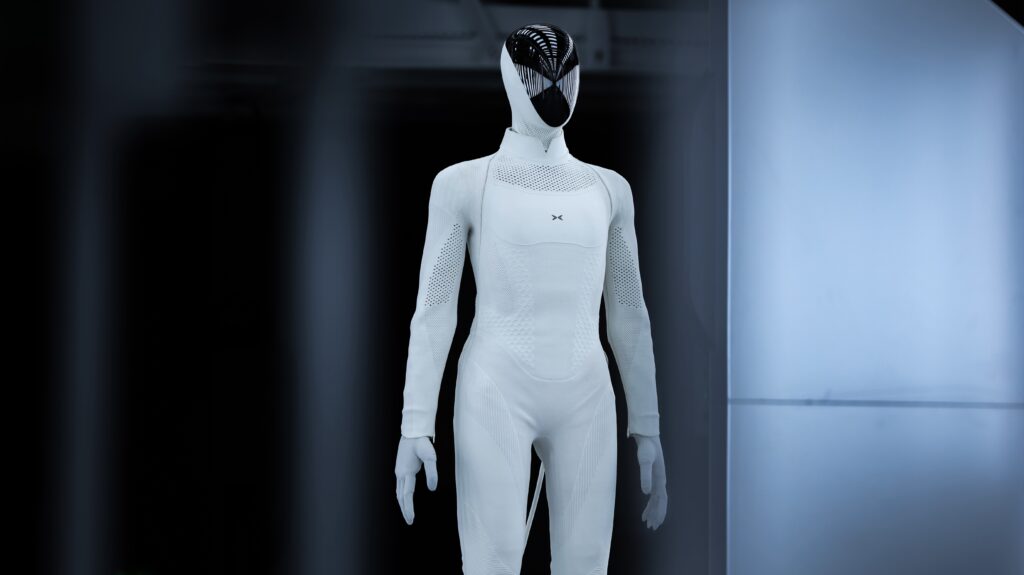
Underneath its smooth exterior, IRON is engineered for both physical dexterity and high-level computation. It features a fully enclosed flexible lattice structure designed to balance aesthetics with physical safety. To execute complex real-world tasks, its body operates with 76 degrees of freedom, including 21 degrees of freedom in each hand.
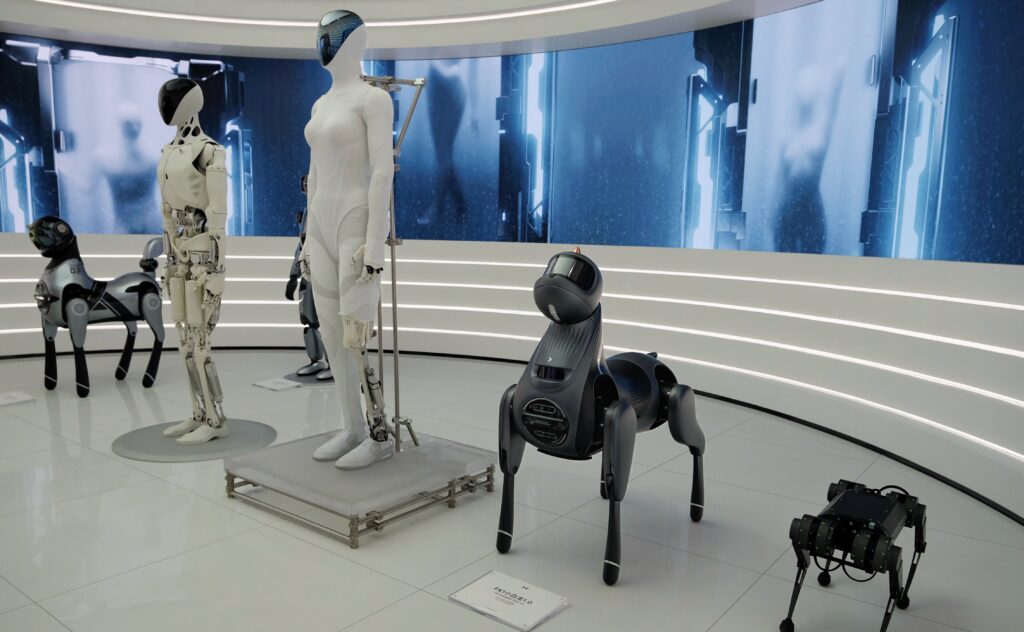
Driving its autonomous behavior are three proprietary Turing AI chips delivering up to 2,250 TOPS of effective computing power. This hardware enables XPeng to run its Physical AI foundation model natively on the machine, granting low-latency inference and enhanced data security without needing a remote human operator.
The commercial backdrop for this development is moving just as quickly. On August 24, XPeng’s robotics arm secured over $900 million in a private funding round at a post-money valuation exceeding $6.3 billion—marking the largest single-round capital raise in China’s embodied AI industry to date. Capitalizing on high technical barriers and limited market supply in advanced robotics, XPeng expects per-unit gross margins for humanoid units to be noticeably higher than those of traditional new energy vehicles, establishing robotics as a clear second growth curve alongside its automotive and international operations.
“We aim to build a new type of robot with full generalization capabilities that can truly become part of everyday life, create a better life for people, and ultimately become a companion in their lives,” He added.
The road from the production line to real-world deployment is already mapped out. XPeng plans to begin mass production of its humanoid robots by the end of this year, initially deploying them within its own retail stores and corporate campuses for commercial testing.
Official market launches and customer deliveries across China and international markets are slated to begin in 2027, bridging the gap between digital artificial intelligence and physical labor on the factory floor.